
The CEO of NVIDIA has found himself yet again in an unfamiliar position, but this time, it’s on the defensive side. Unveiling about DLSS 5 at the GTC 2026, Jensen Huang faced huge criticism from the gamers who called the AI-powered graphics tech as soulless and uncanny. Now, in the new podcast appearance, Huang has been attempting to control the narrative, saying that he understands backlash, as he does not AI-slop either. But as many believe, it’s all pure slopium and the damage has already been done.
Jensen Huang tries damage control but critics are skeptical
The damage control attempts by Jensen Huang, the CEO of NVIDIA, have kicked into high gear during his recent interview with Lex Fridman. He in talks, referring to widespread criticism, stated, “I think their perspectives make sense and I can see where they’re coming from, because I don’t love AI slop myself.” The CEO further acknowledged that the much AI-generated content, “looks similar” increasingly, despite being technically impressive.
However, the gaming community is not buying it. One of the X users did not hold back, calling out Huang. As per the comment, Jensen is lying, and who knows what his real goal is. Just like many, some even believe that, his end game is “to make everything homogenized and uniform garbage that takes no effort to shit out.” Apart from this comment, there are many other critics who have called out this tech for stripping away the artistic intent from gaming visuals.
Huang has attempted to clarify that DLSS 5 is not just some AI filter that is slapped into finished games. He has emphasized that the developers would maintain control, with this tech just being “3D conditioned” to respect the original geometry as well as textures. He explained that this system would just enhance visuals, without altering the foundational work that is created by artists.
The tone of the CEO marks quite a sharp shift from his remarks made days before. He during that Q&A, dismissed the critics, as “completely wrong.” Such an initial response just made anti-AI backlash over DLSS 5 to intensify. It forced NVIDIA to get in the cleanup mode.
How did Jensen Huang made DLSS 5 demo, a PR nightmare?
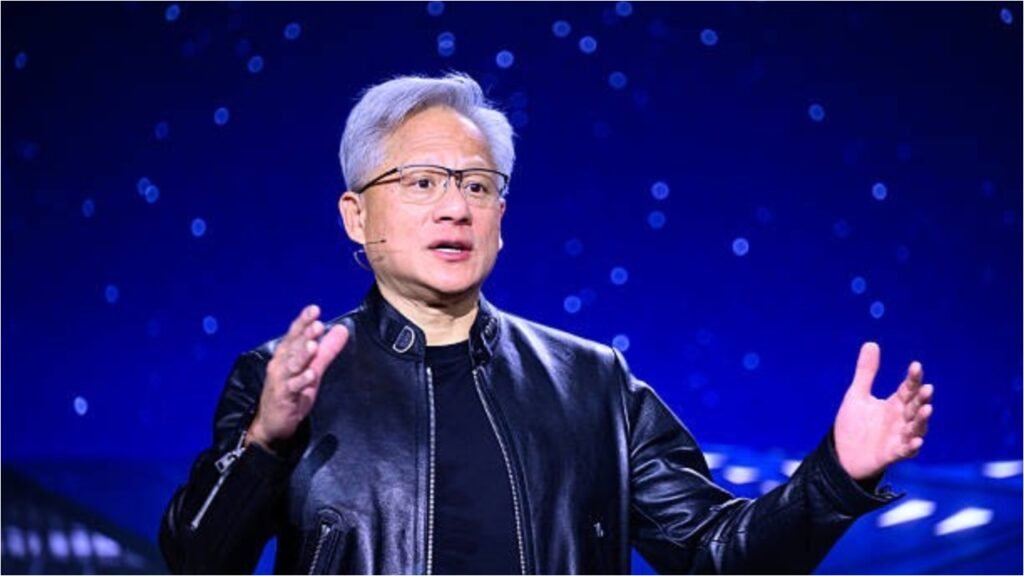
The entire controversy traces back to the GTC 2026 conference, where NVIDIA demonstrated DLSS 5, running on 2 RTX 5090 GPUs. The side-by-side comparisons that was shared, showed characters from the games like Resident Evil Requiem and Starfield, appearing way too smooth, with almost plastic quality which gamers did immediately labelled to be as “AI slop.” As per them, NVIDIA is making Generative AI push.
Even the developers whose games got used as part of the demo expressed their shock at how DLSS 5 tech clearly altered their work. The creator of Thomas Was Alone, Mike Bithell even suggested that the tech seems to be designed for when one, “absolutely, positively, don’t want any art direction.” One of them even went more direct, dismissing it all to be just some garbage AI filter.
Huang, since then, has clarified that this demo represented maxed-out version which was running upon specialized hardware. The version which consumers will have this fall, will get optimized for the single-GPU setups. Also, developers will be able to fine-tune the implementation. He even compared this entire situation to the rocky debut of ray tracing in 2018, noting that the tech eventually became an industry standard.
Despite all, backpedalling by Huang might prove to be too little and too late. NVIDIA is now facing uphill battle, trying to convince gamers that DLSS 5 will enhance the artistic vision instead of erasing it. It will be especially when the company’s own demonstrations of the company suggested otherwise.

