
Boys’ Love web novel, a controversial title, has been abruptly pulled back from major digital platforms, just in a day, after its release. This swift removal comes after readers’ accusations that the main character of the story is a thinly veiled copy of Lee “Faker” Sang-hyeok, a globally renowned esports icon of League of Legends. The main contention here revolves around the alleged appropriation of pro gamers’ unique career trajectory and iconic Unkillable Demon King persona.
Controversy surrounding League of Legends Faker
The novel “A Mad Dog Hunts A Tiger” appeared on Ridibooks, a South Korean platform, on October 24, 2025. It centered around the professional gamer Beom Juhwan, nicknamed Tiger. Described as the undefeated legends for Critique, a fictional team, the character was portrayed as a dominant force in five championship wins. His personality was written to be the right mix of social inexperience and commanding leadership, traits that are explained by his young age at debut.
Readers, however, immediately noticed that this character’s profile was a near-perfect match for Faker’s real-life story. The legend, also known as Unkillable Demon King, also debuted as a teenager and built a career with T1, holding the record number of World Championship titles. The parallels just went far beyond some simple inspiration, venturing into biographical territory. The plot of the novel, including a failed three-peat attempt that was followed by a triumphant comeback years later, mirrored the ups and downs of Faker’s own journey with his team.
Social media forced the author’s hand to step back
As criticism started to explode all across the social media platforms like X and amidst Korean online communities, the initial defense of the author was to label undeniable similarities as a coincidence. The author’s response, though, just served to intensify the entire backlash from the fans. They found parallels to be quite specific and too much to be accidental.
Like, the novel referenced the character achieving re-peat of the championship win. The arc is a life from the history of Faker with T1 (formerly known as SKT T1), including back-to-back World Championships (2015 and 2016). It was followed by the failed “three-peat” defeat (2017) and then triumphant return (2023) to secure the title nearby decade. This situation then escalated quite rapidly. It put huge pressure on both creators as well as the publishing platform.
Facing a growing public relations crisis, the author then retracted the previously made statement and then issued an apology. The author expressed regret to Faker and all his fans. As per the acknowledgment, the author was “short-sighted” in judgment.
While the author maintained that using the life of Faker as a direct template wasn’t her intention, she conceded that her failure to review her content properly resulted in widespread harm and confusion. The admission comes with a promise of revising problematic elements of the story, though damage was already done.
Inevitable fallout and all lingering questions
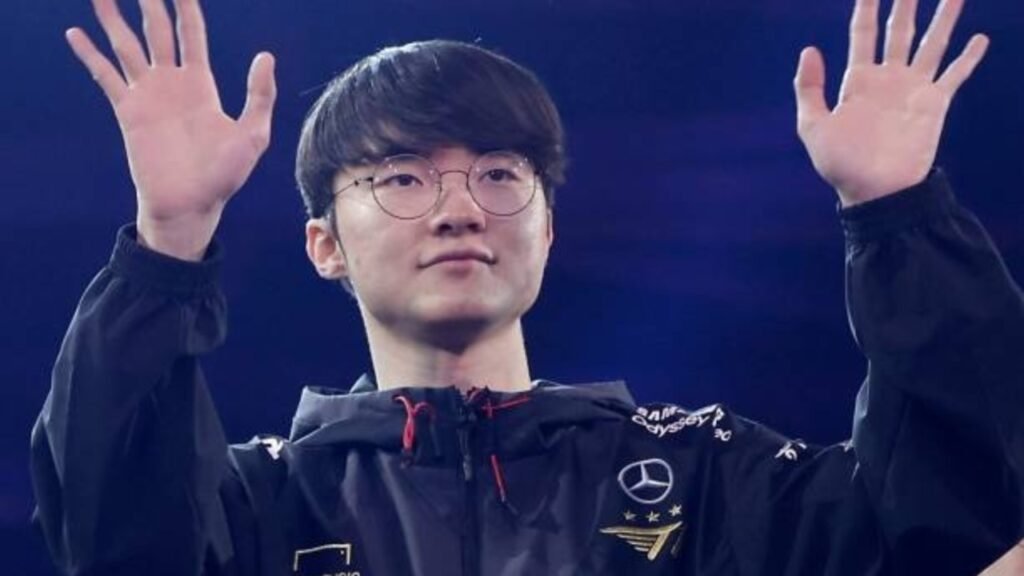
After a lot of criticism on platforms like X and Ridibooks, the publisher ultimately intervened, suspending the novel entirely. To say, anyone who searched for the title on the website now encounters a notice, stating the work has been temporarily removed at the request of copyright holders.’ This action has halted this entire controversy but sparked a broad conversation on ethical lines that creative works are to navigate. This incident highlights the delicate balance that must exist between drawing inspiration from the lives of physical figures and then appropriating their real-life and unique narratives.
It raises critical questions on creative responsibility, especially as the figure’s career is historically significant and distinct, like one of Faker’s. So, when does a fictional tribute cross the line into exploration? This cause clearly demonstrates that for a global icon like him, even specific details of his professional life are to be considered inseparable from their public identity. It makes them off-limits for all unauthorized fictional adaptations.

