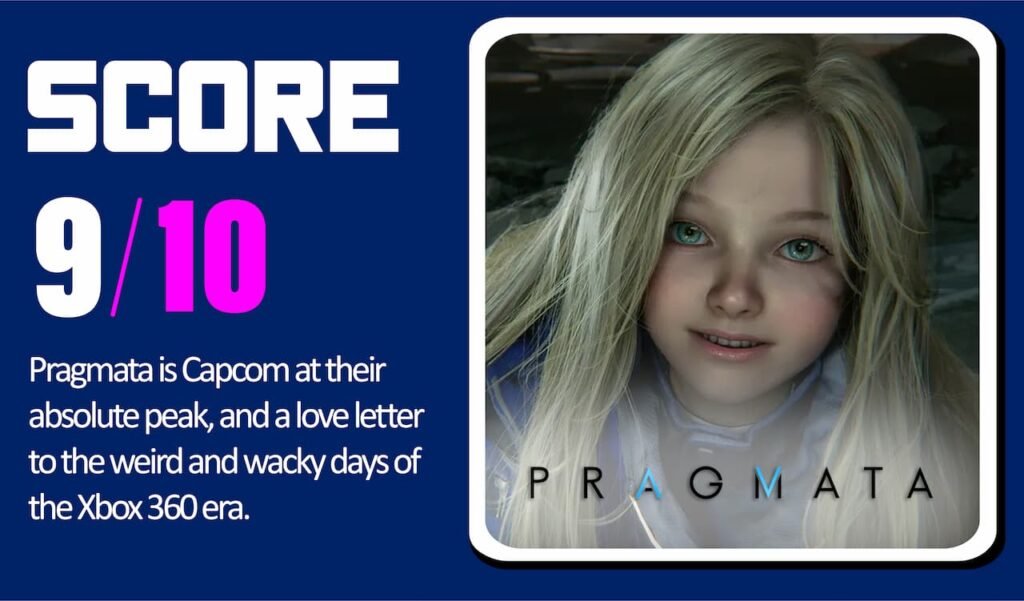
Resident Evil 7 was a massive return to form for Capcom, and despite initially lukewarm sales managed to top it all off as one of the best Resident Evil games of all time. But Capcom didn’t stop there. They slowly but surely began to churn out more and more titles that were released within a surprisingly short development time-frame.
And they’ve all been hits so far, and their latest, Pragmata, is no different. Pragmata’s been a long time coming though. The game has been in development for over half a decade, and is also coincidentally Capcom’s first original IP in eight years which is quite a bit fascinating.
The game was initially slated for a 2022 release, but underwent multiple delays (to the point of it becoming a meme), and at long last it is finally here for PC and console.
Going through the game’s roughly 10-hour long campaign was somewhat of a rollercoaster, and this may just be one of Capcom’s greatest hits. In a way, it does remind me of the Xbox 360 era, when companies weren’t afraid to experiment, and this is Capcom at their absolute best.
Combat Is Dynamic and Surprisingly Enjoyable
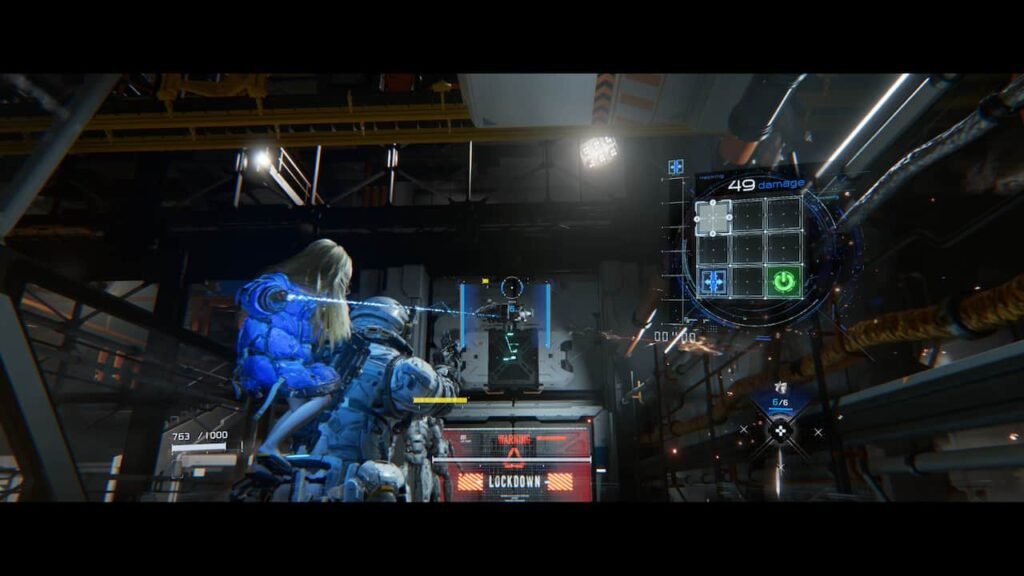
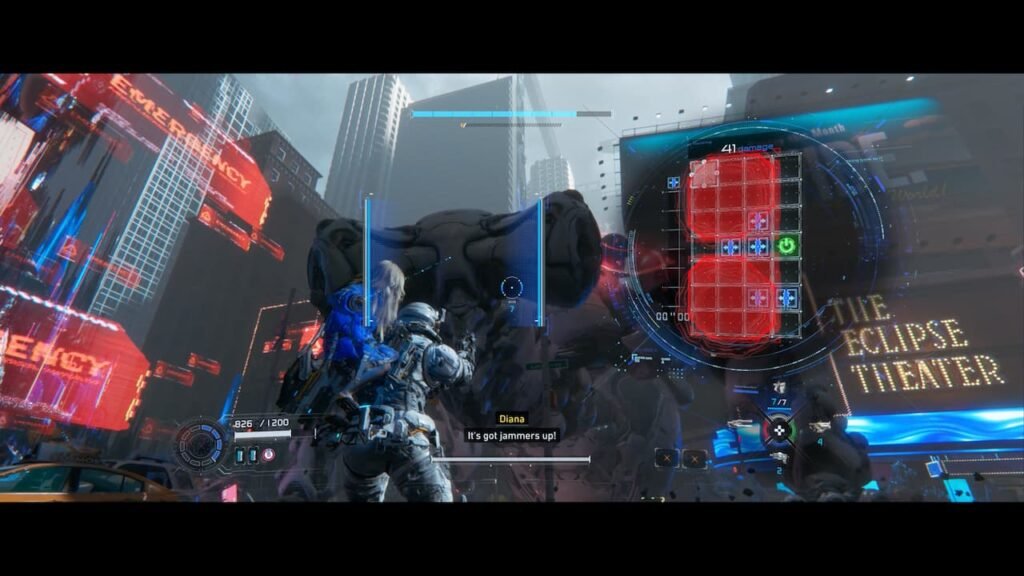
Combat deserves a special mention. I’ve never seen anything quite like it. Pragmata combines a visual hacking matrix with traditional third-person shooter mechanics. You aim and fire using the analog stick and triggers, but ABXY is assigned to navigating the hacking matrix in a WASD-like fashion.
Enemies are otherwise basically invulnerable, and the only way to deal any real damage is by hacking in to expose their internals and proceeding with a barrage of weapon fire.
This isn’t a one-off thing, and you’ll constantly find yourself hacking enemies multiple times to dish out a decent amount of damage. All of this is while avoiding enemy fire.
It sounds terribly complicated and almost impossible to pull off. Almost. I stumbled along the way at first, but after a while it just started to click. Combat felt natural, and the frustrations I had earlier felt intentional, and often as well-designed counters to keep the tension just right.
Pragmata isn’t a particularly challenging game, but that doesn’t mean you can rush through it without a thought. The hacking sim has a strategic element to it, which manifests in the form of ‘nodes’. Each node has special effects, and the longer the chain, the longer the hack duration and damage output.
Of course, your enemies don’t stop moving when you start hacking. You’ll have to counter enemy attacks and watch your step while this all of this goes on. The game does start off easy, but once multiple mobs are thrown into the mix, things get complicated really quickly.
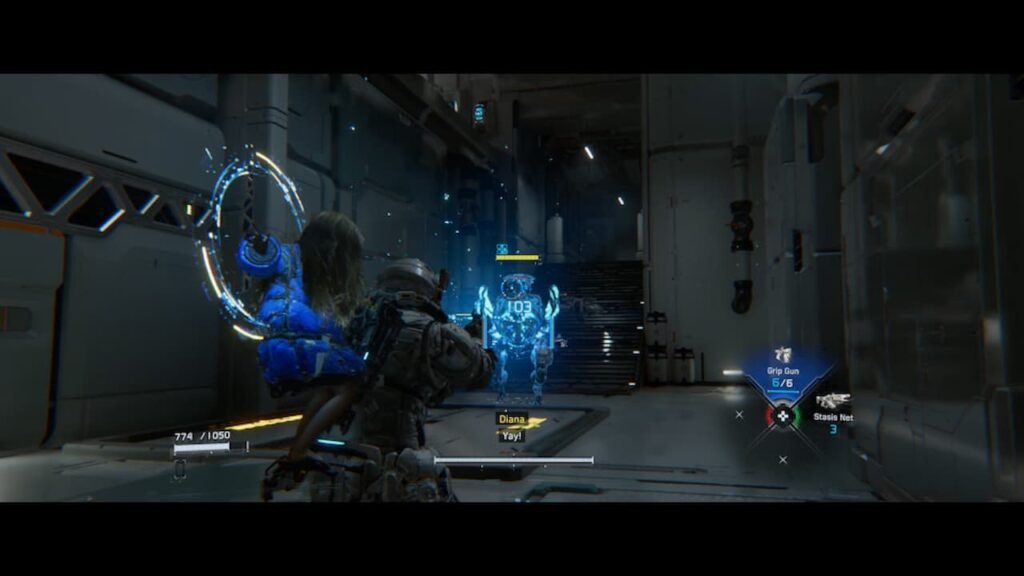
I really can’t say the same about the gunplay, though. It’s adequate but nothing mind-bending. If anything, gunplay feels secondary to hacking. There are a bunch of different weapons (some of which I found to be surprisingly useful, such as the Decoy Gun), but I really don’t see it being the real appeal here.
That’s not to say that the weapons in Pragmata are useless. They’re fine, and you will most certainly have to use them in conjunction with the hacking to actually deal any damage. It’s just that they’re sufficient enough, and don’t get in the way, which is good enough.
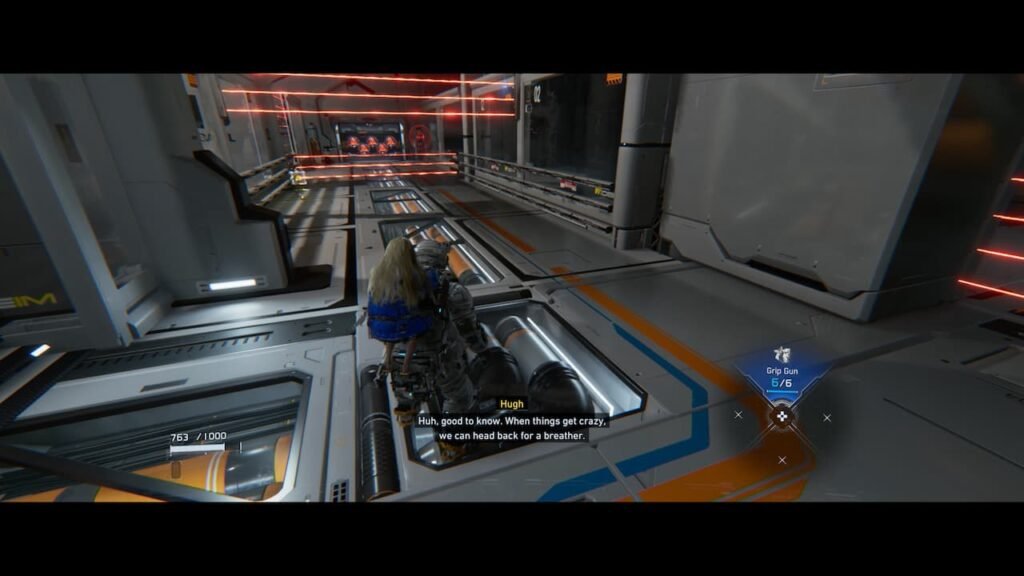
Weapons in Pragmata are also 3D printed, and with the sole exception of your starter weapon, have limited uses. Each weapon has its own purpose, but you’ll really find yourself sticking to the clearly Dead Space-inspired Plasma Cutter most of the time.
You’ll also often come across sections where you’ll be forced to choose between two weapon types. The Stasis Net, for example slows down enemies, while its alternative, the Riot Blaster is very much more of an offensive weapon. This approach keeps things fresh, and you’ll have to strategically choose between options.
That being said, the game hands out weapons like candy, so you ideally won’t be running out of damage options anytime soon.
Non-Combat Gameplay Is Just As Good
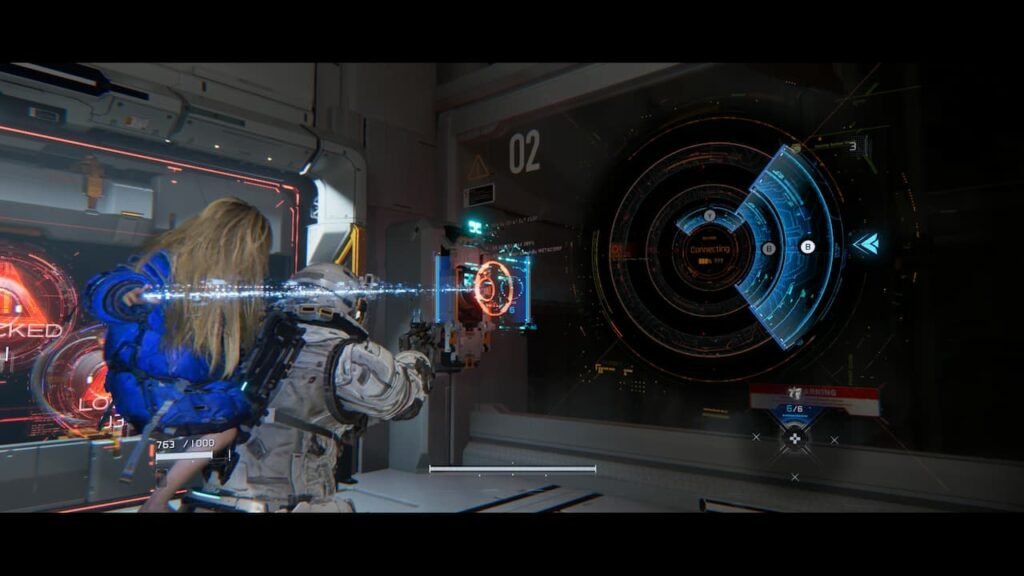
Outside of combat, Pragmata is pretty straightforward and linear. Gameplay segments are divided into hallways, and the game is usually as easy as going from Point A to Point B, while dealing with a few enemies and puzzles along the way.
Speaking of enemies, the game throws a curveball mid-campaign, forcing you to adapt to deadlier foes instead of the basic robots you face off against earlier. It’s even more of a challenge once you face multiple foes at once, and you’ll have to choose between a quick, less effective hack or a longer chain just to rack up some additional damage, at the risk of being instantly pummelled by the enemy.
It’s exactly this aspect of the combat that’s so intricate and well done, having no business being so addictive as it is.
Going back to the puzzles, they’re pretty easy, often disappointingly so. But that’s okay, since puzzles aren’t the main focus here at all. There’s still quite a handful of interesting collectibles and well crafted challenges that should keep players busy for a few extra hours.
Speaking of the extra challenges, these involve fights against an overwhelming number of foes, where even the environment can go against you. Ignoring the collector’s itch of having to 100% a game, these are genuinely well done and should be played through. There is a fair bit of content here, even if it is optional.
Movement abilities also complement the combat, and are wholly upgradeable. The dash ability has saved my sessions way more than I’d like to admit, acting as a dodge.
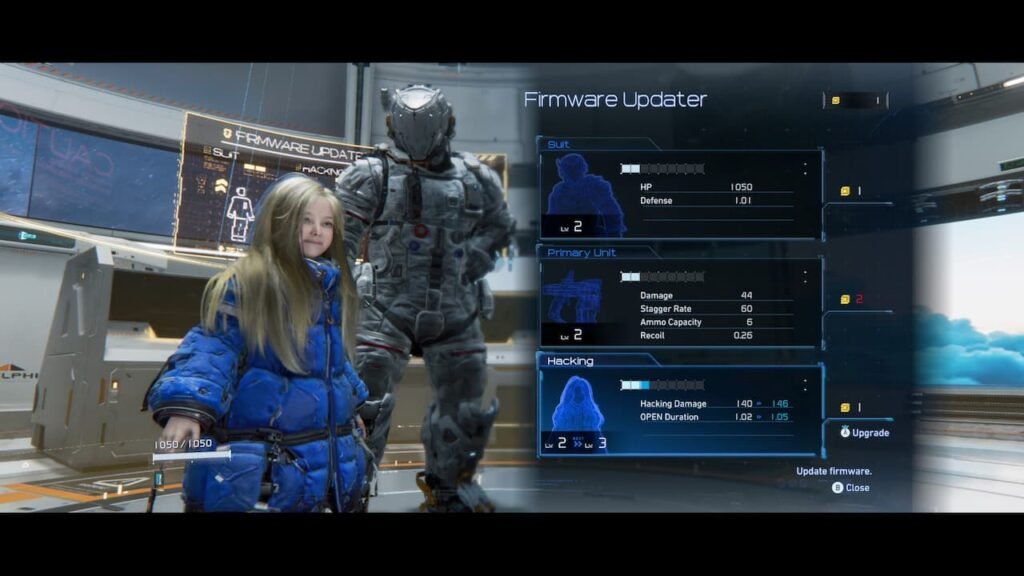
Of course, it’s also possible to upgrade your abilities and stats through the course of the game to give you a sharper edge. In my case, I dumped all my upgrades on Diana’s hacking and Hugh’s primary weapon unit for a glass cannon build.
Timing my dodges and hacks correctly, I could quite easily get away with most combat scenarios, barely requiring me to tank hits. However, Pragmata does allow for varied builds which should interest those looking for a second playthrough.
Visuals and sound
Pragmata is built on top of the RE Engine, first introduced with the release of Resident Evil 7: Biohazard. This game engine has seen many improvements over the years, and Pragmata (despite its age and long development cycle) seems to be using a modern iteration of the same.
RE Engine’s optimization has always been legendary, and I’m happy to report that Pragmata is no different in this manner either. On my Radeon 8050S (roughly equivalent to an RTX 4060 Mobile GPU), I can quite easily push over 60 frames per second on an ultrawide resolution (3440×1440), without frame generation, at High settings.
Of course, there’s some heavy upscaling in play, but the game still looks phenomenal. It’s even better when you enable ray tracing, although it is a fair bit more computationally expensive.
Going back to the visual design, Pragmata is pretty clean in its presentation. White, futuristic interiors line up the moon base, and the humanoid robots often look disturbingly anthropomorphic.
It’s a clean, sci-fi world which explores a world where 3D printing and AI applications have grown tremendously in their importance. Almost everything in the moon base is 3D printed ranging from the interiors to even trees.
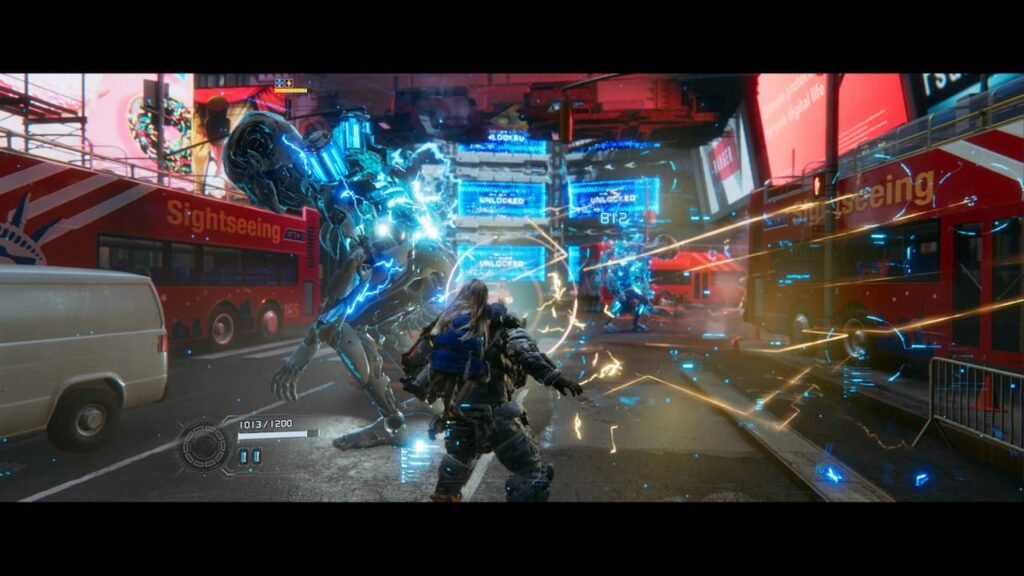
Of course, none of this would matter without proper presentation, and despite its rather short campaign runtime, Pragmata has 3 very distinct ‘zones’ to speak of. The first zone takes place in a Lunafilament replica of New York City, and man, does it look gorgeous.
Obviously, this isn’t a 1:1 scale of NYC, but there is a real sense of awe when exploring the cityscape, with just about enough ‘imperfections’ in the printing process (along with a few intentional blockades) that make it feel a bit more grounded in reality.
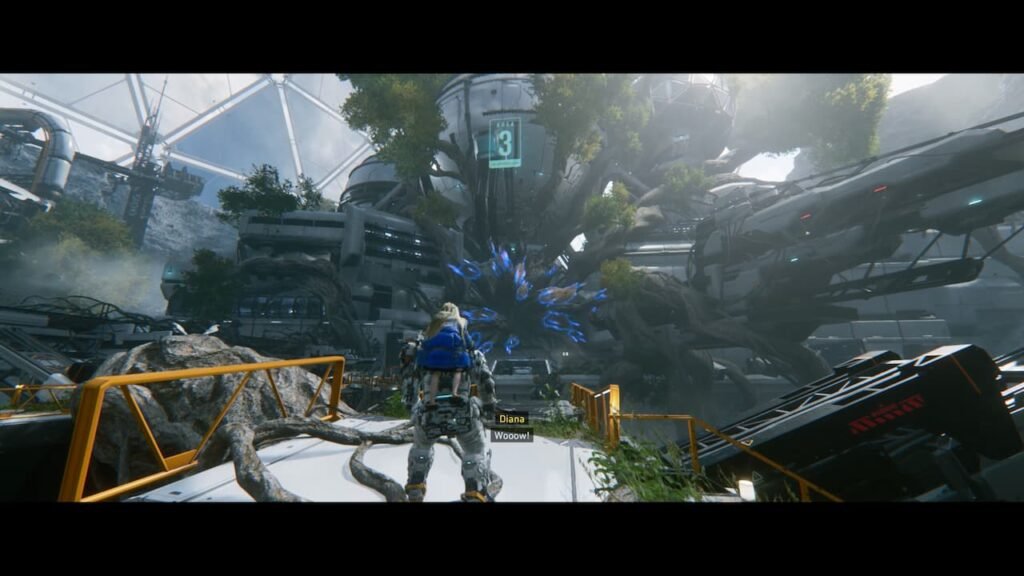
The second zone takes place in a forest-like setting, where the Lunafilament has been used to grow shrubbery and trees. It’s a clear departure in the design direction of the NYC area. Lush, green forests and dense foliage make for a dramatically different scenery.
The third ‘zone’ is technically spoiler territory, so I’ll be skipping it.
Each zone never overstays its welcome, and has tightly-knit, hand-crafted areas full of secrets and enemy encounters to unravel. In a way, each zone feels unique and keeps things fresh but not for too long as to get boring.
Capcom has always had great character and NPC designs, and Pragmata does not disappoint here either. Ignoring the designs for Diana and Hugh (which are well done), enemy designs are also rather intricate, reflecting how ordinary helper bots got transformed into killer machines.
There’s also clearly some RE DNA infused in here too. Capcom does horror reality well, and Pragmata has a few suspenseful moments that are complemented by stunning character design.
Going back to sound design, it’s pretty good. Gunplay sounds impactful, as does the overall ambient noise. The music also has a bit of an ambience to it, and actually complements the combat pretty well with its pumped-up kicks.
Campaign and characters
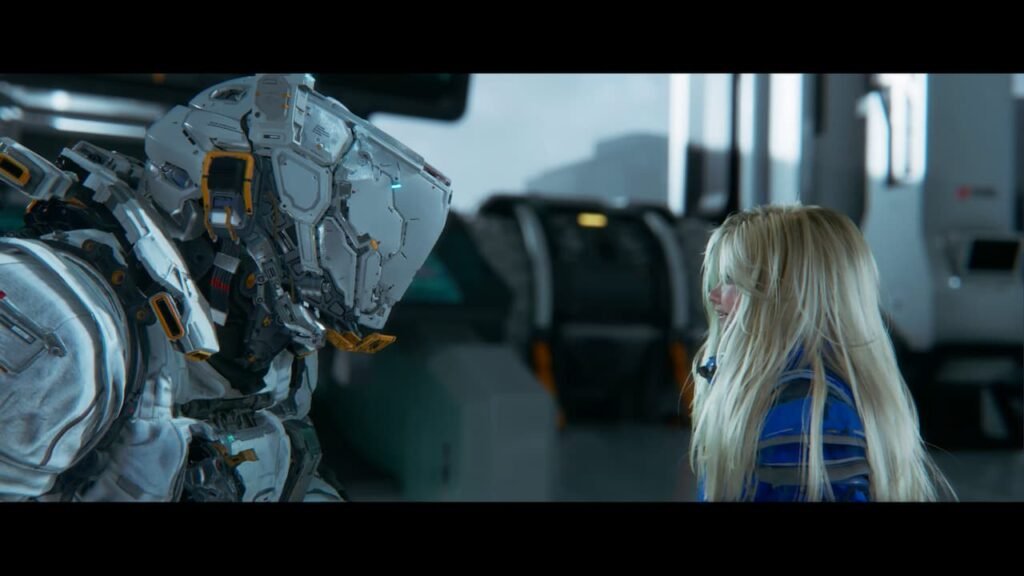
You can have excellent gameplay and visuals, but without a proper campaign or likeable characters, things fall apart quickly. Thankfully, this is one of the stronger points of Pragmata, even if the start has a few jarring transitions.
The story begins with our protagonist, Hugh, being marooned from his team on the moon, after the central artificial intelligence, IDUS, goes rogue and starts slaughtering everyone in the facility.
Hugh wakes up to be patched by a small, young, affectionate and curious little android that resembles a child. The two decide to get along together, and figure out a way to get back to Earth, all while avoiding killer robots sent by IDUS, in an attempt to figure out what is really going on.
Hugh names the android Diana, and forms something akin to a father-daughter relationship with her over the course of the game. It’s really endearing, and Diana’s little interactions are well worth looking at.
Another thing I found refreshing was in Hugh and Diana’s relationship. The two characters are very grounded, and Hugh feels like a refreshing take on the guardian role.
He’s not omnipresent, and lacks much of the gruff you’d see in other similarly placed protagonists, although he ultimately comes to care for Diana – despite her being an Android.
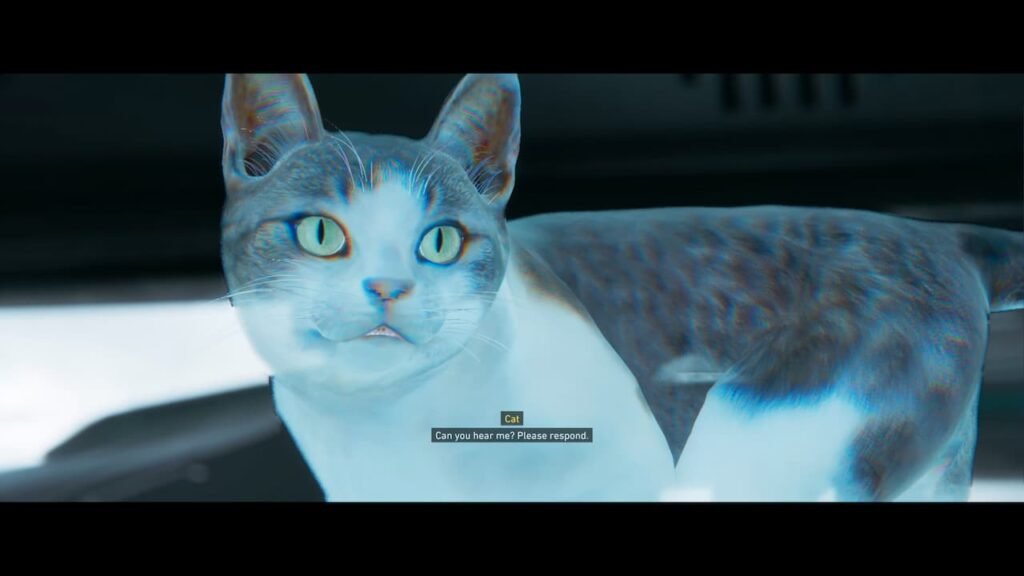
That being said, the transition is kind of off-putting. Hugh essentially loses his entire team, a group of folks whom he was very close to, and this plot point becomes secondary as soon as he meets Diana. All of this takes place in the first 15 minutes of the game.
Yes, Hugh often muses on his former teammates, but that’s all it is – a musing with no real implication. This is just a minor blemish in what is a perfectly serviceable story.
Diana, on the other hand, is a curious young girl with an endearing personality. You’ll almost immediately be drawn to protecting her, and many of the interactions you’ll see with her off-campaign (most notably, in the shelter) are just heartwarming to witness.
There are a few more minor characters, but make no mistake. Hugh and Diana are the stars of the show. This often works to the detriment of the game as well. Other characters, including the grand antagonist feel secondary, which is really disappointing.
Ultimately though, this is Diana’s and Hugh’s journey, and everyone else is just along for the ride.
The premise itself is zany, and there are a lot of outlandish elements. If you stick to exploring the side content, that is. Unfortunately, most of Pragmata’s lore is entirely restricted to a lot of journals and text logs, which is a real shame.
All things considered, it’s a decent campaign that sticks to its guns.
A throwback to the weird and wacky days of the Xbox 360
Pragmata feels like a throwback. In a world of underwhelming live service releases, this stands out as a shining exception. It really does take you back, back to when teams weren’t afraid to try and experiment with unlikely concepts and ideas.
Coincidentally, this reminds me a lot of the Xbox 360 era. Video games were starting to blow up once again, and developers had free rein to experiment. We had a lot of innovative series launched during that time, many of which grew to become franchises that are beloved to this very day.
It should come as no surprise then that Pragmata feels very ‘old school’ in its approach. This is a purely single player game, compromised of zero microtransactions, and what you see is what you get.
The game has challenges to unlock in-game rewards, and each challenge is well crafted to feel different enough to warrant a full playthrough. It’s not without merit though, as completing the challenges lets you purchase certain upgrades quicker, making for a more effective build and arsenal. None of which requires an ungodly grind.
Pragmata is just a really darn good game
On the surface, Pragmata seems to resemble a bunch of hastily stapled down ideas that have no business working together. And yet, everything just clicks in place together, making for a really good experience like no other.
There are moments that will bring a smile to your face, or even tears from your eyes. It’s something of an emotional rollercoaster, and despite its really short runtime, is a great game through and through.
Is it a perfect game? Most definitely not. My major complaints have to do with the game’s abrupt pacing, and the fact that it might be a bit too easy. Capcom does provide a harder difficulty option once you clear the campaign, so there’s that for replayability at least.
Which is fine. I’d much rather have a tightly-knit, short campaign over a bloated, mostly filler infused mess.
I’d wager that this game is one that will stand the test of time as one of Capcom’s greatest hits. I really can’t recommend this enough, even if the campaign is admittedly a bit on the shorter side.
Hopefully Capcom decides to visit the game further down the line again with some DLC.