
The video gaming industry of America is facing a severe and unexpected threat. It is due to some of the highest-level government actions. President Donald Trump recently made a pledge to permanently pause migration from what he termed “Third World Countries,” sending chills through the sector that is built on global talent.
While it has been framed as a national security measure, the proposed immigration freeze directly threatens to sever the vital lifeline of the global talent of the industry, quite potentially stalling innovation in the multi-billion-dollar global market. This shift in policy risks a critical pipeline of programmers, designers and artists, quite potentially stalling the creation of the games which dominate the global market.
President Donald Trump’s new policy puts gaming innovation at a high-risk stake
“Third World” is an outdated and quite often criticized term. While President Trump’s proposed halt on immigration doesn’t provide a definite list, in modern interpretation, it encompasses the developing nations, including Asia, Latin America and Africa. For the United States video game industry, all these regions aren’t just points on the map, but they are specialized talent’s vital reservoirs.
From India’s highly skilled programmers to Southeast Asia’s visionary artists and all those ambitious developers across the Latin American countries, all these individuals have been fundamental to the success of the countless American gaming studios. They fill up important roles. Their positions spread from coding to design and animation, which domestic talents alone cannot satisfy.
It is by shutting this door that the policy doesn’t just bring a pause to immigration. It is also actively dismantling a key component of the workforce of the gaming industry. The results of it can lead to scaled-back ambitions, delays in projects and erosion of creative diversity, which makes American-made games resonate well on the worldwide stage.
The proposed halt is more than just some political statement. It is a direct assault on the talent acquisition strategy that has fueled the industry for many decades. From small indie teams to major studios alike, they all rely on a global hunt for the best minds. As the pool is restricted to a handful of preferred nations, it will inevitably limit the quality as well as the scope of what could be built.
The very games which Americans love to play, quite often, are products of international collaboration. It’s like a synergy of ideas that this proposed policy threatens to extinguish. The development cost, which is astronomical, is poised to skyrocket as competition for a suddenly small pool of qualified domestic workers will intensify.
Political opinions are impacting the gaming industry
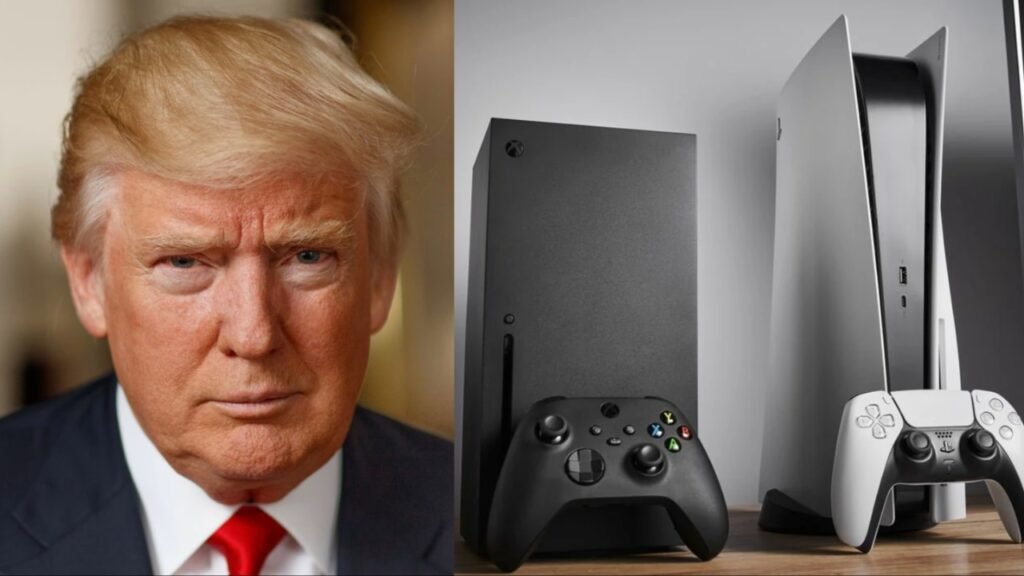
It is not the first time that the actions of the current administration have sent uncertainty ripples through the gaming portal. The previous designation of ANTIFA as a terrorist organization created a similar type of firestorm. It engulfed the gaming developers. It showed that when individuals who are associated with some major projects voice their personal political alignments, their games start to become targets for intense public scrutiny and boycotts.
This kind of environment forces studios to take a defensive posture. They worry more about the personal statements of employees than the quality of products. It creates a precarious situation wherein single tweets jeopardize multi-million dollar projects, creating a climate of uncertainty and fear.
Beyond the immigration pause, some other administrative changes are also squeezing the gaming industry. Donald Trump’s proposal for limiting the duration of the student visas and also imposing $100,000 high fees for H-1B visas create tangible and additional barriers. Additionally, the move of the President Donald Trump administration to re-examine issued green cards from nearly 20 countries of concern increases instability in current employees’ lives. It makes the United States a less attractive destination for talent.
These kinds of visas have long been a primary channel for the tech companies, including the game studios, to bring in some specialized international talent. To make the process costly and uncertain impacts the studio’s ability to plan long-term. It also impacts their ability to secure expertise that is needed for multi-year and complex developmental cycles. The combined impact of it is a regulatory environment that feels quite hostile to game creation’s global nature.
The United States is seeing a withdrawal of confidence and capital
The repercussions of all political decisions are materializing in the form of financial retreat. There are some major Asian investors and publishers who once poured capital into the Western Studios. However, they are now strategically making a pull back. This doesn’t seem to be a coincidence.
The Asian firms are now trying to redirect their funds to domestic talent. They see there, more value, faster development, and a greater focus on polished experiences. The success of titles like Black Myth: Wukong proved that quality, and ambitious games can be built outside Western production houses. Additionally, they could be built for a fraction of the cost. It shows that perception is now shifting. The West is no longer the unrivalled pinnacle of gaming development.
The loss of confidence is a huge blow. As Asian giants like NetEase are reassessing partnerships, it is leaving Western studios in an unwanted, precarious financial position. There are rumors that now suggest that even Sony and other platform holders are taking note. It potentially pivots their strategies for prioritizing Eastern developers for any future global hits.
The investment flow is now reversing. The gaming industry in the United States is now on the verge of being an expensive, risky and politically volatile bet. This capital flight can cripple all upcoming projects. It can lead to a huge loss of market share in the long run, especially the mid-sized ones that are reliant upon external funding and more. It would mean for them, few resources for their ambitious new projects and quite potentially studio closures too.
Gaming industry of the United States stands at the crossroads
Faced with potential brain drain and international investment withdrawal, the United States video gaming industry is at the crossroads. The proposed immigration pause by President Donald Trump, is like a capstone of the series of policies. These policies give priority to political rhetoric over economic reality. The solution would need studios for fundamentally rethinking their strategies. The industry might see a greater push towards remote work hubs in other countries. It will leads to a costly and desperate bidding war for limited domestic talent, which results in a higher reliance on outsourcing of core developmental tasks. It’s a practice that comes with a set of its own logistical and creative challenges.
The ultimate cost, though, would be borne by the players. The less innovative, less diverse and financially strained industry will be producing few titles that emerge to be groundbreaking. World-leading and vibrant ecosystem, which gave players decades of entertainment, is now getting systematically undermined. With policies getting enacted, the message to the world would be clear—the American video gaming industry is now closed for business. The pause button on immigration can be the fast-forward button for the decline of the industry.

