
When Michael Carrick was confirmed as Manchester United’s interim head coach for the remainder of the 2025–26 season, the club was enduring its worst Premier League win rate under a permanent manager in modern history. Ruben Amorim’s tenure had been marked by a rigid system and boardroom tensions that ultimately fractured morale and on-field coherence.
Carrick’s appointment signaled a return to established club principles, that is, simplified tactics, clearer roles, and stronger psychological buy-in from the squad. In a short period, he’s already reshaped United’s style, stability, and strategic identity.
How Michael Carrick has transformed Manchester United
The following five pillars explain how Carrick has changed the team’s trajectory.
1. Simplifying the approach: Proven systems over experimentation
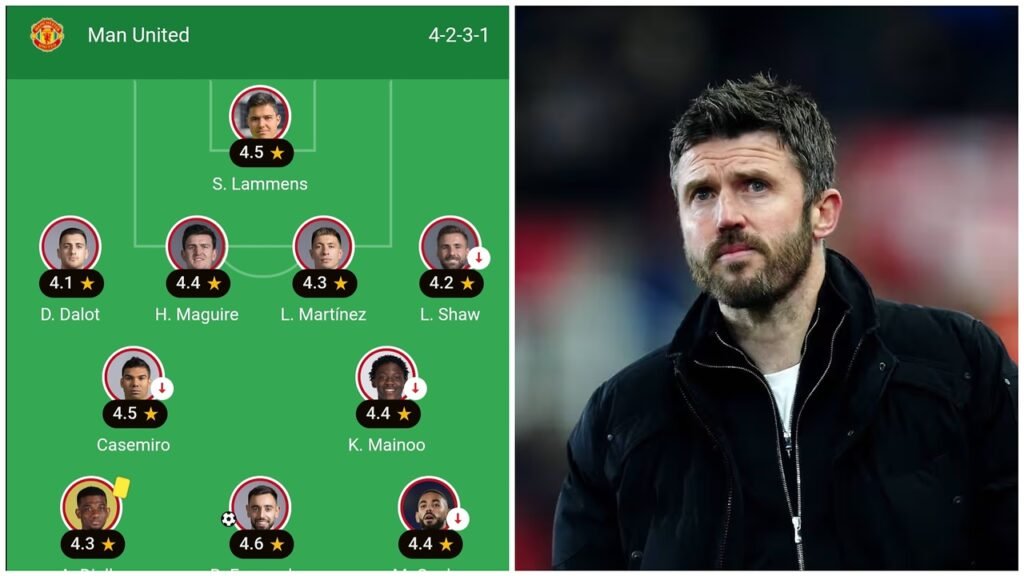
One of Michael Carrick’s first tactical decisions was to abandon Amorim’s three-man defence and return to a conventional 4-2-3-1 that fits the players’ strengths. This isn’t just a cosmetic change, it’s grounded in evidence from Carrick’s time at Middlesbrough and the idea that players perform better when the system matches their roles.
At Middlesbrough, Carrick used a 4-2-3-1 in over 100 games, making it his default structure. United now plays with two midfield pivots, an advanced attacking midfielder (Bruno Fernandes), and clear winger roles, creating balance and natural tactical responsibilities.
Key numbers of Manchester United so far under Carrick (after 4 games):
- Average possession is 45.8%, which is 10% lower than under Amorim, showing his focus on impact and productivity.
- Goals per game are 2.5 on average.
- Expected Goals (xG) per 90 minutes is 1.92 indicates quality over quantity in chance creation.
This simplification emphasizes clarity over complexity. It means, if something isn’t broken, keep it simple; if it doesn’t work, return to proven solutions – echoing old successful Man United philosophies.
2. Re-Defining the midfield: Mainoo and Casemiro
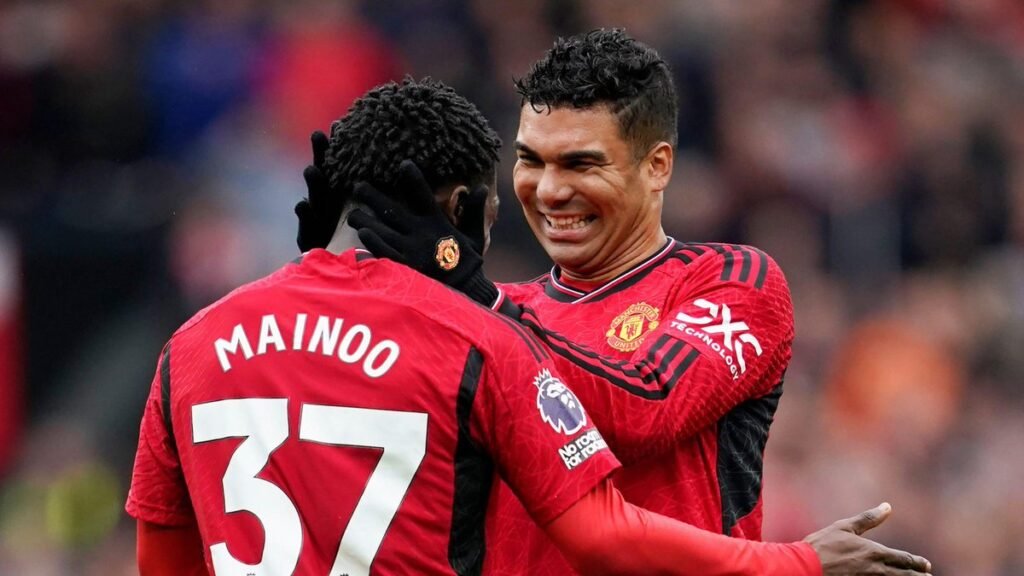
Under Amorim, Kobbie Mainoo was inconsistently used, often sacrificed for tactical rigidity. Carrick not only restored him to the starting XI but also paired him consistently with Casemiro in a double pivot, giving Casemiro defensive cover and tactical freedom.
Casemiro is now both more involved defensively and still able to join forward transitions. While Mainoo’s game intelligence aids transitions, ball retention, and forward driving plays.
This shift anchors United’s build-up, improves ball circulation, and gives Bruno Fernandes more fluidity ahead of them, resulting in a midfield that balances protection with creative firing power.
3. Positioning Bruno Fernandes: Realizing Creative Potential
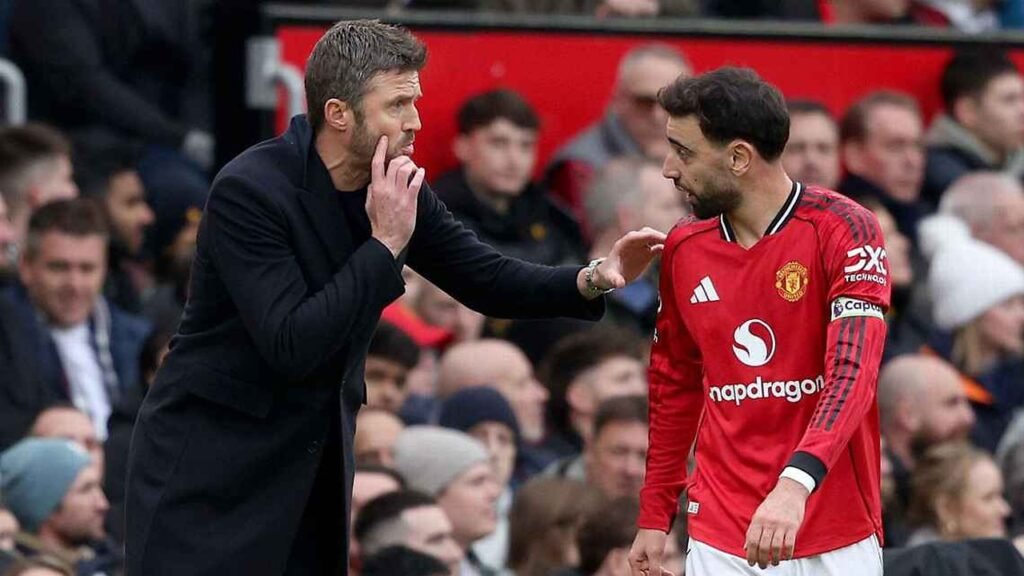
One of Carrick’s most impactful tactical shifts has been deploying Bruno Fernandes in a true attacking midfielder role (No. 10) rather than deeper in midfield. Under previous regimes, he was sometimes displaced into a holding role or crowded out of his most threatening position.
With Carrick,
- Bruno operates closer to the goal and is central to chance creation.
- United unleash more decisive passing, crosses, and incisive attacking sequences with the Portuguese midfielder at the centre.
This shift transforms United’s offensive identity no longer tentative or overcautious, but proactive and dynamic.
4. Establishing a trusted attacking core: Dynamic, different, impactful
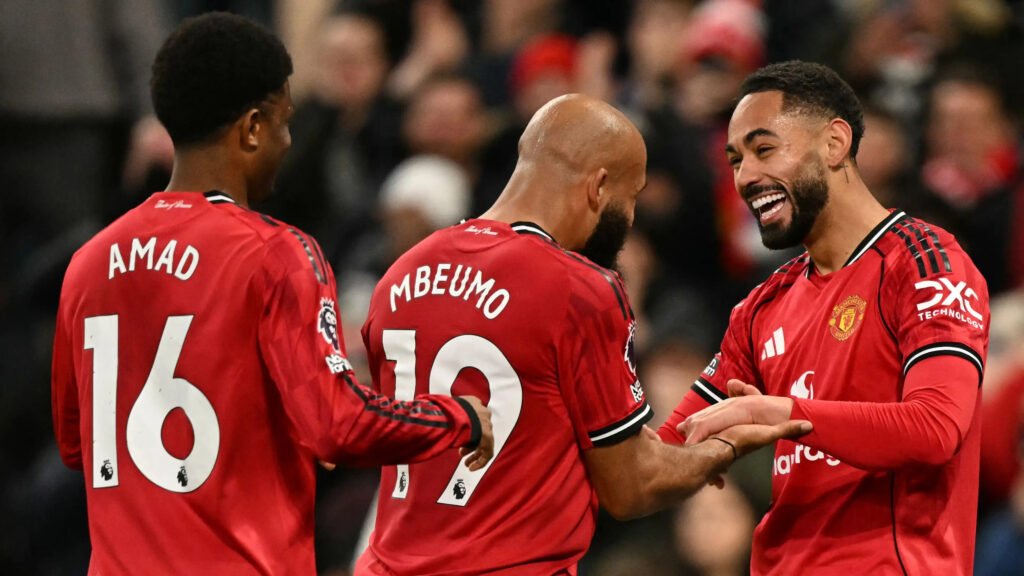
Carrick has committed to a clear front-three structure, building continuity and match rhythm rather than chopping and changing roles mid-week.
The characteristics of this attacking core:
- Amad Diallo plays as a traditional winger, stretching play, making penetrating flank runs, and delivering crosses.
- Bryan Mbuemo operates as an inverted forward, moving centrally from wide positions, creating unpredictable angles and shot opportunities.
- Matheus Cunha functions as an inside striker, linking play centrally and occupying defenders.
Later in games, Benjamin Sesko’s aerial presence changes United’s attacking dynamic, offering a direct threat in the box and altering defensive matchups.
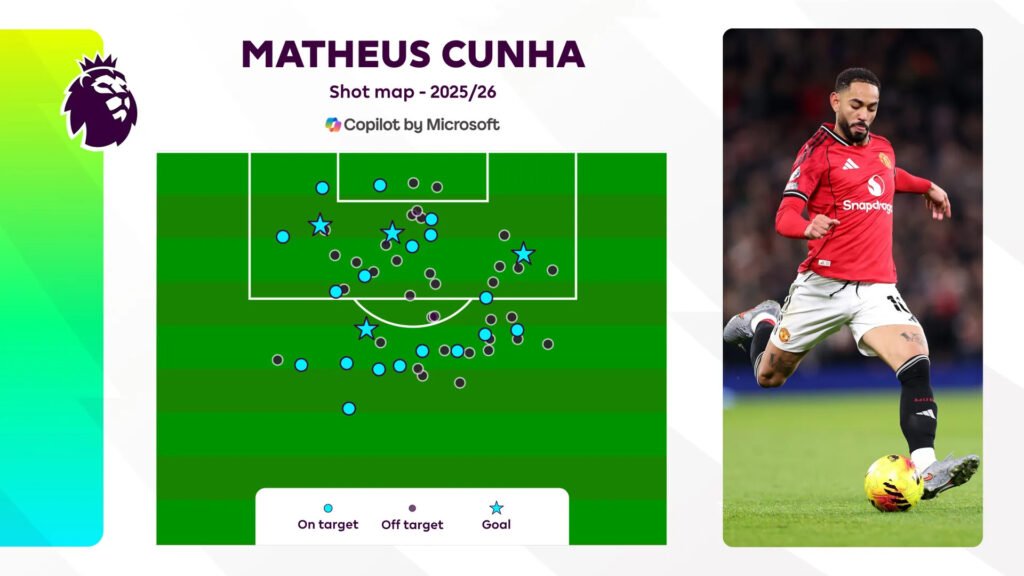
This coherent attacking structure fosters continuity and identity, which was previously missing under Amorim’s experimental rotations.
5. The Ferguson – Mourinho tactical synthesis
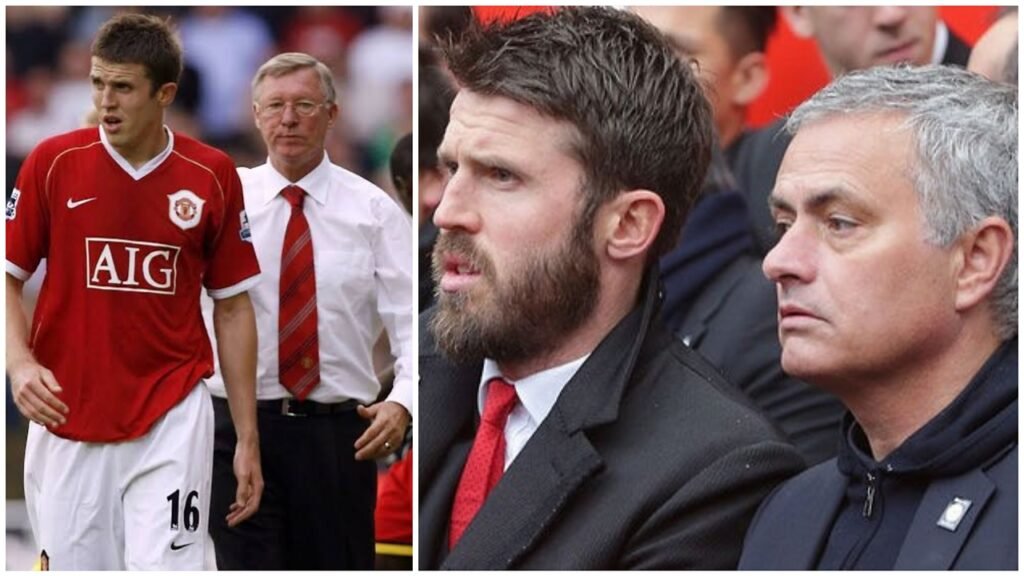
For over a decade after Sir Alex Ferguson retired in 2013, Manchester United remained structurally and emotionally tethered to his blueprint. The club repeatedly sought managers who either replicated his attacking ethos or operated within a similar traditional framework.
The identity was clear — wide play, vertical transitions, authority-driven leadership. However, it also created over-dependence on a fixed process rooted in the past.
When Ruben Amorim arrived, he attempted a systemic shift, notably with back-three structures and positional rotations. While tactically modern, the abrupt change disrupted squad familiarity and required profiles United did not fully possess. The idea wasn’t inherently flawed, but the transition clashed with inherited squad construction and club culture.
This is where Michael Carrick represents something different. Carrick is uniquely positioned between eras:
- He played under Ferguson, absorbing principles of tempo control, psychological dominance, and attacking width.
- He later worked within the structure of José Mourinho, first as a player during Mourinho’s United tenure and later observing Mourinho’s game-management approach up close.
- During the latter phase of his playing career and transition into coaching, he was exposed to Mourinho’s methods of defensive compactness, match-state control, and pragmatic big-game planning.
What Carrick is currently implementing is not a nostalgic return to 2008-era football, nor a full Mourinho low-block model. Instead, it’s a hybrid philosophy.
He combined Ferguson’s cultural DNA with Mourinho’s pragmatism. Michael Carrick not only believes in trusting youth, attacking width, dressing-room unity, and emotional clarity. He also focuses on the team’s structural discipline, controlled possession without obsession, and comfort in winning without dominating the ball.
The result is a team that looks emotionally “United” again, but tactically more measured and modern in game-state management.
Mourinho said in his last United coaching season, where he used Carrick both as a player and a member of the coaching staff:
“Michael Carrick as a person is more important than Michael as a player. We gave him the time to relax, to recover, to feel confident to make the decision, wants to play, wants to stop. He knows that my coaching staff has a chair for him, if he wants, when he wants.“
Michael Carrick: A short-term booster or a long-term architect for Manchester United?
Carrick’s interim tenure has already delivered a tactical reset, clearer roles, and improved performances. However, this is currently amplified by a reduced fixture load – just one match per week, meaning players have more rest and sharper training focus.
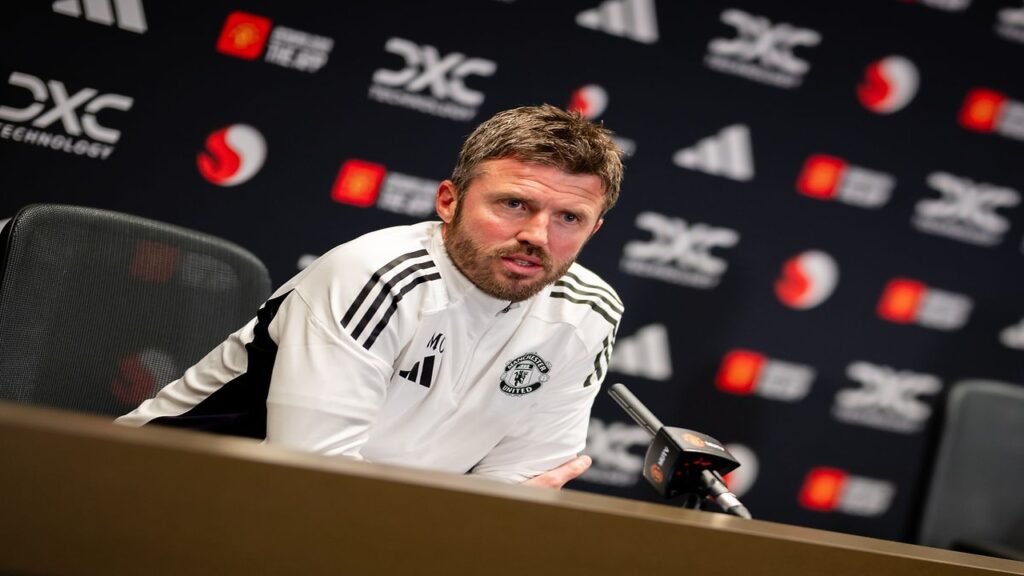
If Manchester United secure a Champions League spot and enter a congested schedule next season, their fitness, adaptability, and tactical depth will be tested. Maintaining this momentum will require Carrick, or the next manager, to build on this foundation with strategic depth and flexibility, not just short-term fixes.
Thus, Carrick’s approach so far has been rooted in simplification, role clarity, confidence building, and restoring club identity. These are all vital for short-term revival. However, it also doesn’t waive off the strong potential of long-term stability if developed further with well-thought-out strategic approaches.

