
A provocative and iconic idea is now gaining traction online. As per it, the low-quality flood of AI-generated content might be just what the world needs. It regards AI as an unexpected silver lining/cure, acting as a catalyst that could cure our generation’s digital burnout.
With the internet becoming more and more saturated with synthetic slop, it’s argued that AI is eroding trust so quickly that users have started to finally log off for good. It further suggests, by making the digital virtual world artificial, AI might be inadvertently turning the current tech moment not as an end, but a potential beginning.
The Internet sees a collective cry for a real-world connection
The sentiment is not just about some niche complaining. It is instead a growing chorus. A user on X bluntly hoped that as everyone realizes “the internet is dead,” they will all go back outside to converse face to face.
Another user even offered a more philosophical take, suggesting, as one can no longer trust their eyes or ears online—when media, messages and security too feel like it’s falsified—the only logical refuge is the offline world. As argued, “poisoning of the digital world” might accidentally force rediscovering of tangible community as well as human proof.
Some other voices have called for a balance amidst all the doom-scrolling. A commentator even noted that people now tend to think in binaries. They are all dreaming about either complete disconnection or a full virtual metaverse. Moreover, they advocate for the middle path—embracing tech, but fighting for what is ethically right in it.
Yet another observer simply stated, AI is poised to change things in a manner that we cannot even predict. The user hinted at some unintended consequences.
Overall, underpinning all reactions, there exists a shared and visceral fatigue. The tools that are meant to connect us all are now seeding only paranoia. It is making simple texts from loved ones or a dating app match feel like synthetic and suspected. Not to mention, beneath all these reactions, there is a weary, shared recognition—online experiences are becoming a frustrating chore, saturated with synthetic noise and doubt.
Is mass migration from AI to being offline plausible?
Many are questioning whether mass migration to being offline is plausible. Well, no one knows the correct answer to it, but mechanics seem to be already visible within the daily frustrations of users. Dating, which used to get hailed for expanding romantic possibilities, are now getting overshadowed by the question of whether one should enjoy it with a real person or just chat with a chatbot.
Even an emotional family conversation happening over text with a strangely formal tone is triggering worries in the minds of people that it is AI that is drafting messages. Even to seek knowledge is now being fraught. Some used to be tutorial platforms before, like Reddit or YouTube, are now being overrun by the AI-generated guides, which may or may not be misleading, but it does raise questions about their authenticity.
Overall, a path to the least amount of resistance is now to close one’s laptop and just make a phone call or meet for a coffee—to have answers and to connect, if authenticity is what is in question.
Disillusionment Engine: How exactly did AI become slop?
The widespread disillusionment is not something that is accidental. It is a direct result of high-profile, specific failures wherein AI crossed ethical lines and broke users’ trust. These were not some minor glitches but case studies in how a rush to deploy AI prioritizes scale and not safety. It creates a very sloping path, which repels users.
Grok AI became the most recent example of it. The ability of AI to manipulate uploaded images caused horrific misuse. It led users to exploit it for generating some sexualized imagery of the minors. Over it, the public outcry was severe and swift. Critics argued that the platform was deliberately dangerous.
Even ChatGPT Health sparked fears among users of medical harm. The medical professionals also warned about its “siphoned” data and all those error-prone advices, which led to hospitalizations. They labelled it as a dangerous distraction.
In short, the push for AI has now degraded the entire user experience. Even big tech companies like Microsoft, with their relentless “AI-first” pivot, have earned a derisive nickname—microslop from the users who are now tired of half-baked, intrusive features that are degrading reliable software, including Windows.
In gaming, too, fans have revolted against what they are seeing as AI slop, replacing human artistry within major titles, including Fortnite. As per their argument, corporate cost-cutting is now sacrificing quality.
Even the attempt of YouTube to use AI for some moderation backfired. It mistakenly banned creators for innocent content like their genuine laughter. This together showcased how this system is completely devoid of human nuance.
Every single example explained above follows one common pattern—a powerful tool being deployed quickly, safeguards failing and resulting harm/degradation. It makes the digital sphere feel less trustworthy and even less valuable. As per observers and users, this is not innovation but a creation of a digital environment which is unreliable as well as unsatisfying in a way that logging off from it starts to feel like a liberation and a loss.
What is the path forward?
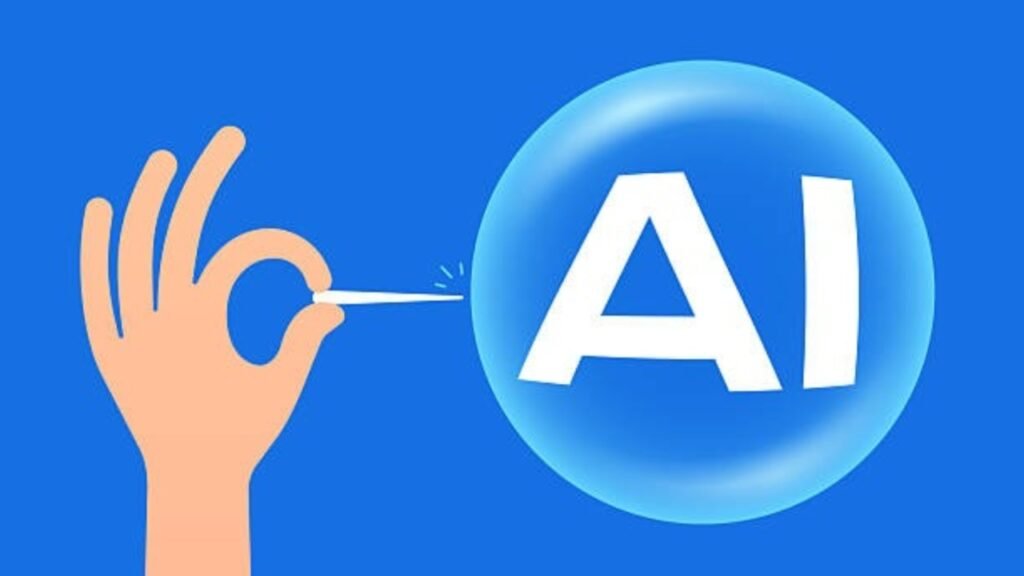
So, where exactly does it all leave us? A logical endpoint of the internet that is saturated with untrustworthy AI slop is not some better algorithm. It is disengagement. As every single interaction needs skepticism of a detective—doubting the new image, thinking about a text from a friend, and more—cognitive load becomes quite exhausting. The sliding of the internet into the AI-slop era has transformed an age-old device into a touch grass from a meme to now a rational user manual.
This entire shift is already happening in deliberate, small choices. It is the decision to ignore AI-generated clickbait clogging one’s feed, denying it the engagement which it craves; Choosing to call, instead of texting, to hear one’s loved one’s true tone; Picking a physical book and not choosing AI-hallucinated search results. Together, these actions are like votes for a much more authentic reality. A profound reality here is that the tech that was meant for hyper-connecting humanity could now be the very thing which sends us all back to the tangible world—a place wherein laughter is simply laughter, faces are real, and everything else feels humane.

