
Often credited as the most influential game for the FPS genre, DOOM was created as the new chapter in id Software’s lineup, taking over the helm of the massively popular Wolfenstein 3D back in 1992.
It took about a year to make, and ever since its release in 1993, DOOM exploded in popularity, and still remains so to this very day – with a passionate group of fans taking it upon themselves to mod and enhance on the original source code to present what is essentially, a timeless classic.
And over the years there’s one thing id Software has always remained consistently good at, DOOM or no DOOM – which would be in its ability to innovate. When DOOM (2016) was released it ushered in a new era for iD, reinvigorating the then otherwise mostly lifeless boomer shooter genre.
It also culminated in the release of the modern DOOM trilogy, which is now marked complete with the release of the excellent Revelations DLC for The Dark Ages.
So with 10 years since the release of the soft reboot, I thought now would be a good time as any to revisit the IP, starting with the 2016 soft-reboot, which forever changed things for the franchise.
DOOM (2016)
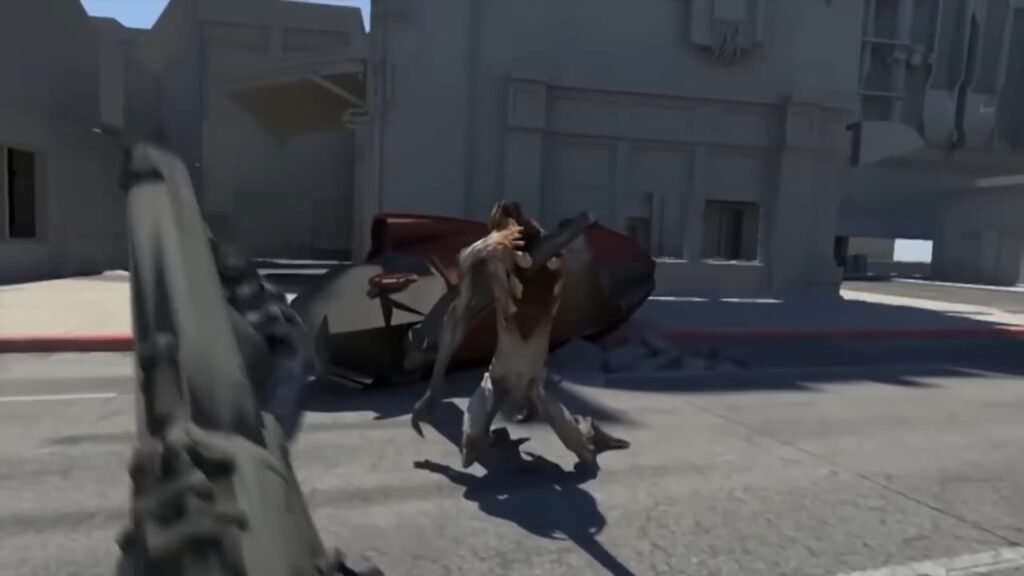
Doom (2016) was originally envisioned as Doom 4, and the game that we now all know and love quickly outgrew its initial ambitions of a gritty, military-styled first person shooter that took place with the POV of a solider at the frontlines of Hell’s invasion.
And this was probably for the best. Doom 4 had a lot the Call of Duty DNA in it, and the change in direction is something I feel was necessary, and ultimately worth it in the long run.
I still remember the initial teaser back during E3 2014, which feels like eons ago at this point. QuakeCon followed, and we had our first real look at some gameplay footage, which was deliciously gory and fast paced – setting the tone for the rest of the game.
DOOM released on May 13, 2016 to rave reviews from critics and fans alike, and it was a return to form for the series. It genuinely felt like a breath of fresh air in a vacuum of military slop that left little room for experimentation.
DOOM was fast, and it was brutal, but most importantly, it was a throwback to the days of old. It brought back a ton of the ‘boomer shooter’ design elements that we’ve come to conveniently ignore in the name of realism, like having no reloading or a fixed health bar instead of an invisible, regenerating one.
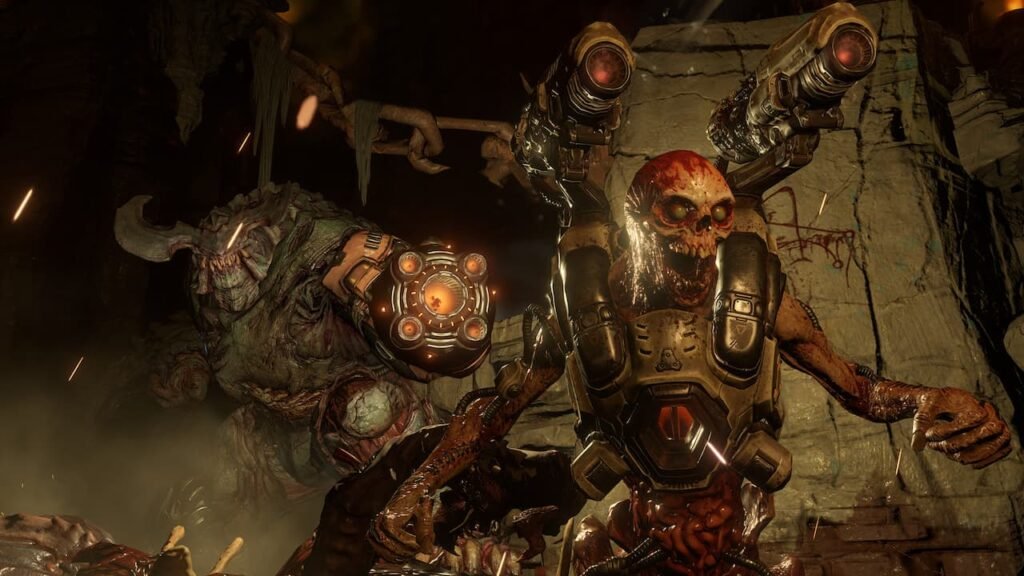
And while the game might be old-school, it does have a few new tricks up its sleeve. It introduced the Glory Kill mechanic, which encourages one-hit executions that serve as your primary way of getting health drops throughout the game.
Blood is quite literally fuel, and you’ll be constantly shuffling around from one enemy to the other like a drugged up spider monkey. And here is where you learn of the one singular rule of DOOM – Never, ever, stop moving.
Standing still is death, and you’ll be cycling through your weapons and unloading bullets deep into the skulls of each demon who dares cross your path in a beautiful symphony of gore and electro-metal riffs. You don’t run for cover here, because you are the danger – and it’s your duty to hunt down and exterminate every demon that looks at you funny.
It wouldn’t be a DOOM game without killer music, and Mick Gordon’s rendition is truly flawless. Every track slaps, and there’s just something poetic about firing up the Super Shotgun while BFG Division plays in the background.
Now when it comes to the story, there really isn’t much to talk about. And that’s by design. DOOM 2016’s story is abstract on purpose, and was the last thing on anyone’s mind, I reckon. Still, just because the story isn’t quite in your face, doesn’t mean it’s not there – or is bad by any stretch of the term.
I quite like DOOM 2016’s story, and even if it is told in a sort of disjointed manner (or relegated to being just there for the sake of being there), it is actually quite well written and presented. There are a lot of tiny tidbits you can find out in the form of logs and such, and paints an overarching universe that is fascinating and surprisingly enough, optional.
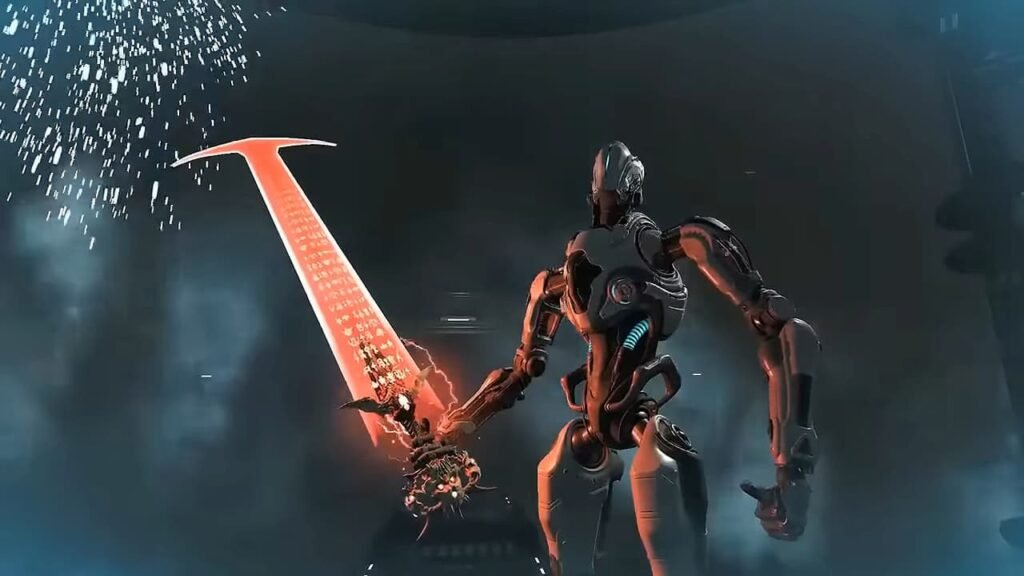
The meat of DOOM has always been in its gameplay, and it’s here where 2016 differs a lot from its successors. The story was never a focus in this particular game, and it’s an approach I prefer.
Don’t get me wrong – the additional cutscenes and lore drops are really, really cool but they feel forced. I’m the DoomGuy. I need a Shotgun and demons to kill – well this story has always existed, but it has never felt like the entire identity of DOOM. I simply liked how DOOM 2016 handled the story, keeping it grounded and not in your face.
And there’s the often under looked multiplayer mode which was a ton of fun and got cut out too quick, but that was never really the main focus of a DOOM game anyway.
iD clearly had captured real lightning in a bottle, and the question remained whether they could do it again.
DOOM Eternal
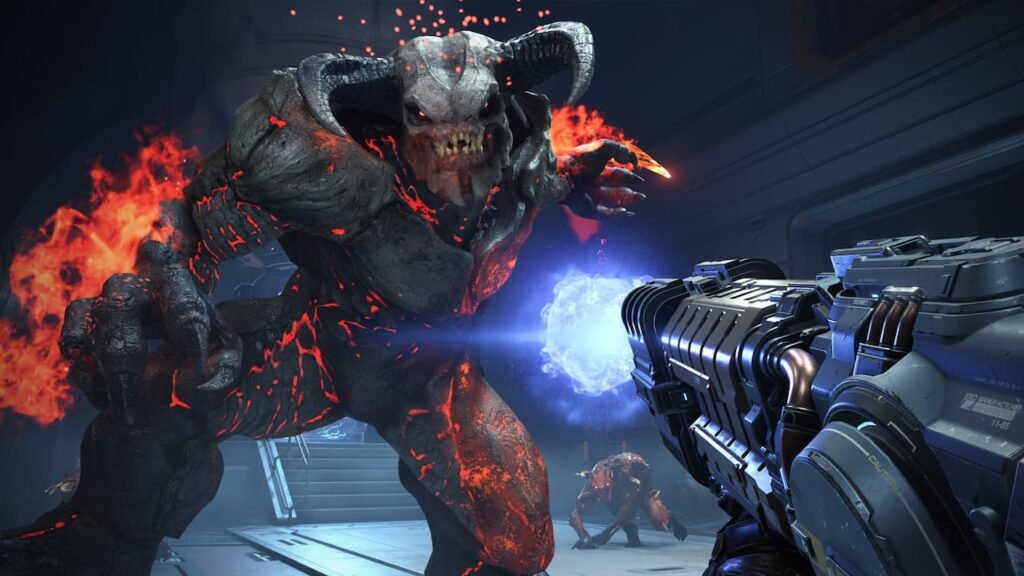
Doom Eternal was released four years after the first reboot entry, but takes place 14 years after it. You return as the one and only DoomGuy, now on a mission to stop Hell from taking over ‘this’ Earth. All of this takes place while flashbacks of the now Doom Slayer’s past deeds surrounding the Argent D’ Nur, Night Sentinels and the Khan Maykr is not so subtly explained out to you.
If it sounds like a lot to take in, it’s because it is. Doom Eternal expands on the lore of the DOOM franchise by quite a bit, and all of a sudden the story takes center stage. I’d argue that this is to its detriment, and to my dismay is something that has been continued on in The Dark Ages as well.
Now don’t get me wrong, there’s nothing inherently bad about Doom having a story – after all, the original DOOM always had something of a backstory, as did the sequels. Its just that it’s never been a point of focus before, and the transition can be a bit jarring. And it’s not all perfect either. Eternal’s lore is simply a mess, and there’s far too much going on to keep track of.
The one thing that remains consistently high is DoomGuy’s testosterone levels, which somehow manifests itself in some ridiculous moments, like the classic ‘shooting a hole into Mars’.
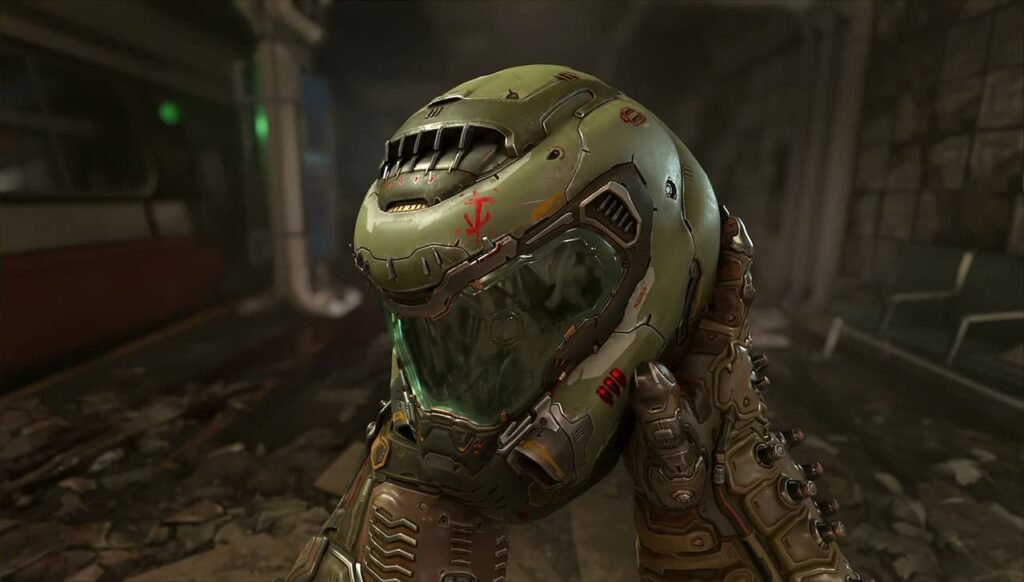
Still, Doom Eternal’s approach to the story is a lot less ‘cinematic’, choosing to intentionally push the action first, which works well in its favor. Eternal took the gameplay of Doom 2016, and improved upon it, adding in an extra ten shots of adrenaline and a bucketful of cold water for good measure.
The basics of DOOM 2016 are still there – you move around shooting demons, and Glory Kills are your primary way of dealing with health drops throughout the game. What Eternal does is pump up the action to 11. Glory Kills are suddenly a lot quicker, with more aggressive enemies this time around.
There’s traversal, but its proper platforming with actual sections dedicated to the same, and the combat is quite literally perfect. Eternal’s combat is somehow even faster and more brutal than 2016, and it can be a real challenge on higher difficulties. They changed a lot from the first game, and there’s too many weapon mods to list out right now, but my favorite has to be the MeatHook, which lets you swing across the map and onto an enemy using the trusty old Super Shotgun. I particularly dismayed its removal in The Dark Ages, but the Revelations DLC brought it back.
Now before I get too ahead of myself though, there’s just one (well, more technically two) issues that I have with Eternal – which would be in its DLC mission packs. The DLCs are nothing short of a masochistic run through to the finish line. It’s hard, and an even crazier version of the base game.
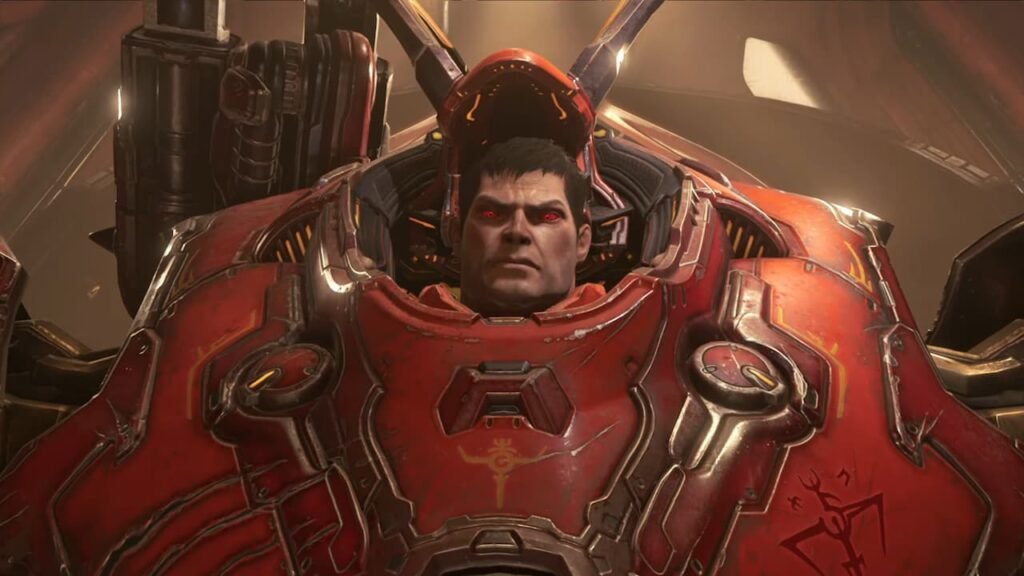
Too bad I can’t say the same about the story though. It’s a complete, slobbering mess where the Doom Guy takes on the King of Hell (who is, surprise, surprise, YOU) culminating into a rather disappointing finale.
That being said, Eternal is probably my favorite entry in the modern trilogy, as it just slaps. Almost everything is baked to perfection, including Mick Gordon’s awesome riffs and the more arcade-y addictive combat loop that just makes Eternal so damn good.
Doom: The Dark Ages
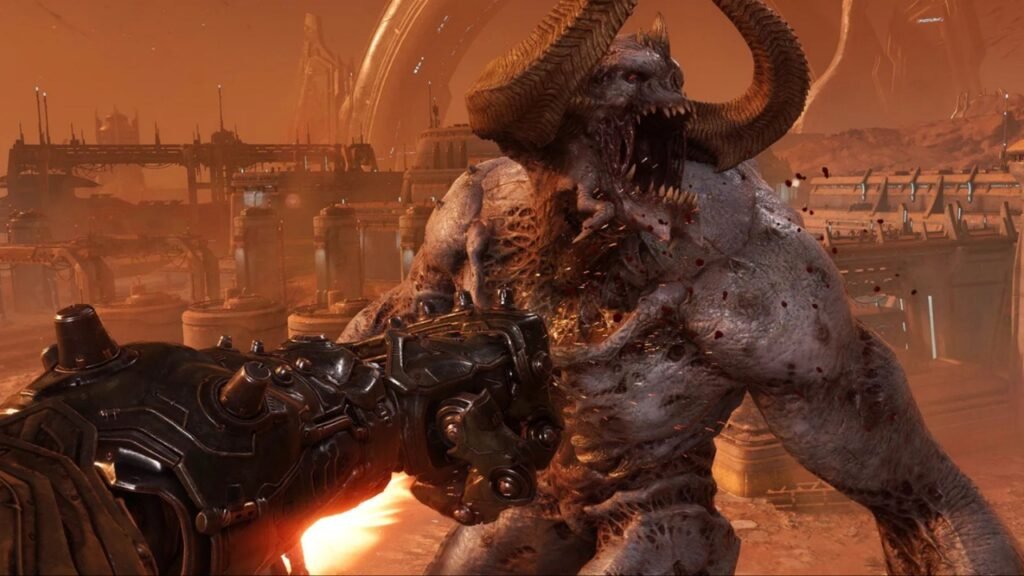
Enter the third and current final entry in the ‘modern’ DOOM trilogy – The Dark Ages. I remember being distinctly hyped up for the game (part of it had to do with the fact that it was a day one Game Pass release – a foreshadowing for later), and it followed the Doom Guy’s exploits in Argent D’ Nur, as a prequel to the events of DOOM 2016.
More importantly, they gave Doom Guy a badass fur cape, and a shield that double duties as a chainsaw replacement, with its rotating blades. It looked like a perfect third entry that would address the questions left unanswered from Eternal, and id seemed to be on a generational run.
While the reviews were mostly positive, and I did enjoy my time with The Dark Ages, it never truly felt like a DOOM game to me. Fundamentally, The Dark Ages is a much more slower paced game. This is purposefully done so, and I feel it is in a way to shoehorn in the parry system to the game.
And yes, DOOM now has a functional parry system, which works alright I guess. You raise your shield to parry at the last moment of an attack, countering the enemy and stunning them for a precious half of a second, letting you pump in some bullets.
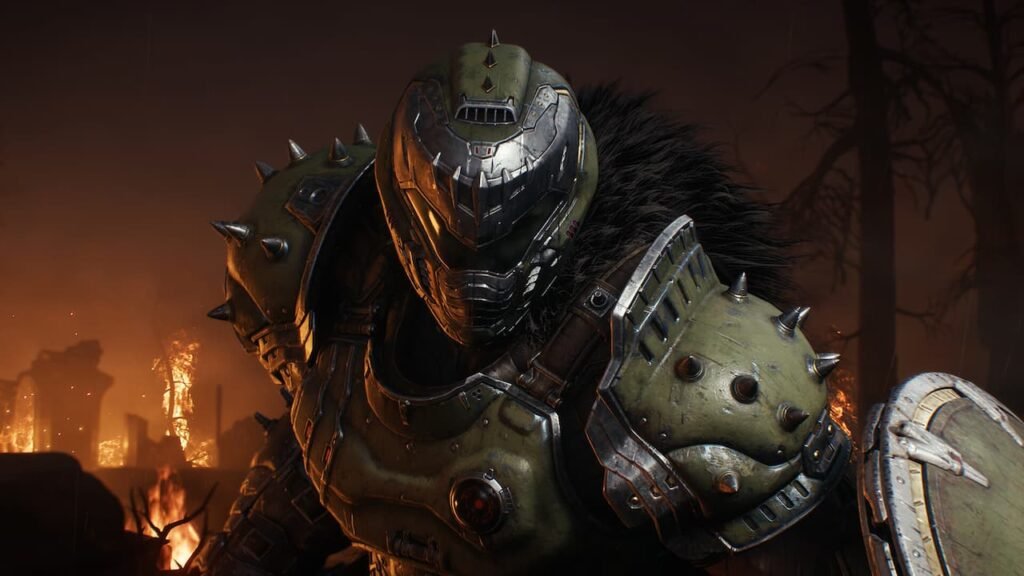
Unfortunately, The Dark Ages incorporated parry into EVERYTHING. Parrying is the way to play the game, and if you ignore it you won’t be making much progress. It’s just how the game is meant to be played.
The combat feels…weightier, and you are pretty much forced to stand your ground and fight. I think it’s done rather well, but it’s just not the kind of speed I’d associate with a DOOM game.
The rest of gameplay goes the same way, and is a lot less fast-paced. You can’t dash, for starters, which severely restricts your movement capabilities. As for the story, it’s a lot more cutscene heavy, but has enough exposition and dialogue to support it this time around.
Playing through Eternal (and its many, many logs) helped me gain a lot more context, and while the storytelling might not be perfect, it’s at the very least entertaining and often, engaging.
Now you’ll have noticed I haven’t mentioned the music. This is intentional, and it’s because it’s painfully average. There are some good tracks here, no doubt, but the vast majority of The Dark Ages’ music is bland and just feels like metal ‘noise’. It just doesn’t stand out in the way Mick Gordon’s compositions did.
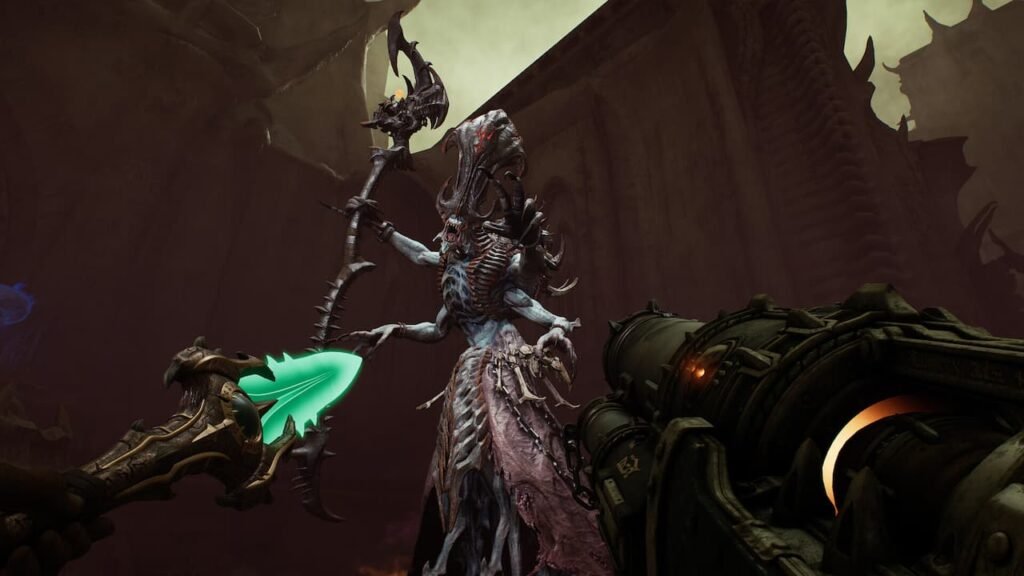
Of course, there’s still the DLC for The Dark Ages we have to talk about. Titled Revelations, it’s a very different DLC from the ones we saw with Eternal. In a way it is the final chapter of the modern DOOM trilogy, and is a fitting farewell.
Revelations picks off from the end of the campaign of the base game, and has the Doom Slayer pit against his own demons in the ice cold depths of Purgatory. You’ll have to claw your way out of Hell, and Revelations in many ways is a step back into Eternal’s combat loop.
For starters, it’s a lot more difficult and fast paced, bringing back the double jump and double dash abilities. This instantly makes the game feel a lot faster, and id continues to impress with the introduction of the Chain Spear, a new offensive based melee weapon.
Unlike the shield, the spear has zero defensive capabilities, forcing you to actively dodge and parry projectiles in a bid to survive. Mastering the spear is key to winning Revelations’ most brutal fights, and though you do get back the shield later on, it just doesn’t feel the same without the spear.
The spear is also essentially the Meathook, just with the added bonus of being attached to your active weapon (instead of beign restricted to the Super Shotgun). As is obviously visible by now, Revelations is basically a step back into the gameplay of Doom Eternal, and this works wonderfully well for The Dark Ages.
I’v always felt that The Dark Ages was quite lacking, and Revelations more than makes up for it. In a way, it’s also one of the best parts of the trilogy as well, but I’m quite partial to Eternal for bringing the experience to me first.
DOOM has been monumental in shaping up the FPS genre since its inception
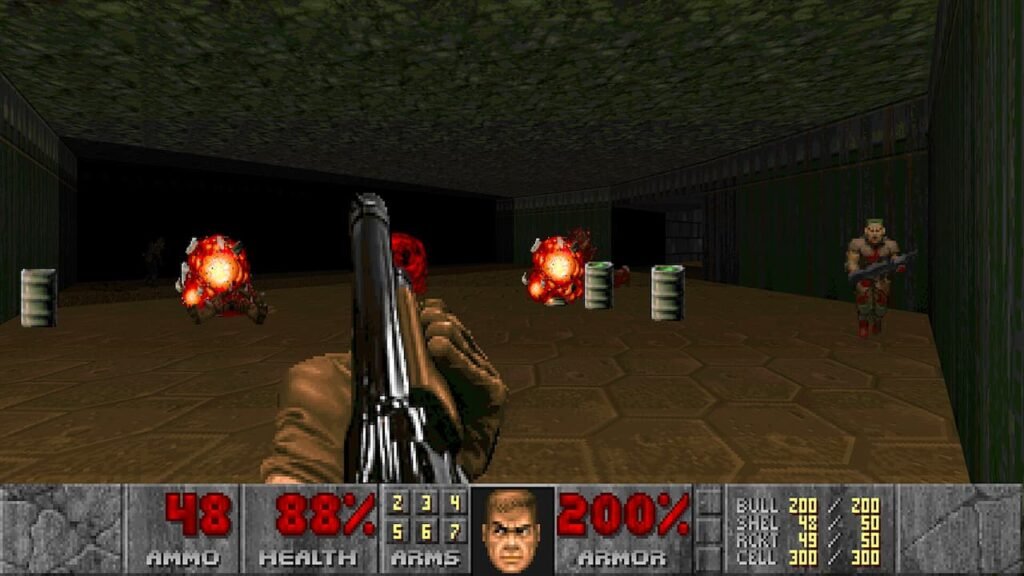
While Wolfenstein 3D might have kickstarted DOOM, there is little doubt on DOOM’s legacy in pioneering the first-person shooter genre. The massive success of DOOM brought with it a whole new genre, and FPS games have and are still booming.
That being said, there’s still nothing quite like classic DOOM. Mowing down hordes of angry demons using nothing but your rage and a metric ton of weaponry is always a blast to play through. It’s in the simple things, or so they say.
DOOM has never been about theatrics or cinematics. You just pick up a gun and shoot, while being mesmerized by the ambience of the map. There’s just something about exploring the maps of DOOM games. Each one feels like its own tightly knit combat arena, complete with bonuses and secrets to find for the OCD-addled completionist.
There’s also the music, which has been a big part of the series since its inception. Rest in peace Bobby Prince, your beats will remain forever timeless.
DOOM 2016 also changed the FPS genre much like its initial 1993 release. It paved the way forward for modern boomer shooters, and has somehow still not aged a day – despite being a decade old. It’s one of my favorite first person shooters, and there’s still quite nothing like it, even in the current DOOM trilogy.
id’s future remains uncertain, and it’s such a shame
Now, unfortunately, id Software was one of the companies gutted by Microsoft during it’s massive ‘reset’ wave, which is a really poor way of dismissing what was essentially a bloodbath.
Microsoft mowed down thousands of jobs in the gaming industry, and id Software was hit pretty hard. Multiple employees were removed, including core members of the game engine team of id Tech.
Director Hugo Martin had since assured fans, but not everyone shared the same sentiment, and perhaps rightfully so. The truth remains that a large part of the core Doom team was cut off, and recuperating from such a massive setback is never an easy task.
Sure, the team might be back to the size it was for the 2016 version of the game, but it’s still scattered all over the place. Expectations and development costs have been at an all-time high, and no amount of AI-assisted mediocrity can make up for it.
In other words, crafting a new DOOM entry is going to be an uphill battle. One could argue that going back to the drawing board is in fact, a good thing for the series. True that as it may be, it still does not offset the loss of so many talented careers who could have worked together to make an even better game.
Hopefully all isn’t lost, and the team (what’s left of it anyway) can deliver justice to a brand new DOOM game. Either that or we get our hands on an Unreal Engine 5 DOOM, which sounds horrifying.

