
Released back in April 1997, DOOM 64 was a Nintendo 64 exclusive game for years before being ported over to PC and modern consoles in the present day.
Now, nearly a whole three decades years since its initial release, I had the chance to play it in all its modern glory, and to answer the ultimate question – is it really that good?
And the answer to that would be a resounding yes. At least for me. There is no doubt that DOOM 64 is a bit of an oddity in the franchise, with many mixed reactions and ‘changes’ that make it quite unlike any other DOOM game out there.
It’s an off-feeling DOOM game, and one that, despite all that, is still at its core, DOOM.
A bit of history
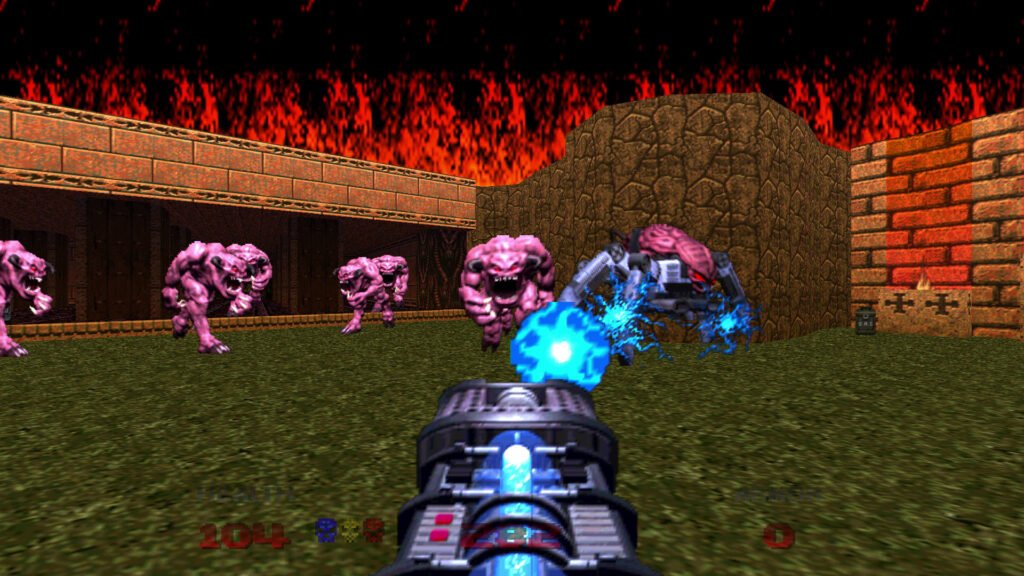
DOOM 64 is a bit of an interesting title, and used to be relatively unknown back in the day. Initially released in 1997 for the Nintendo 64, DOOM 64 was a complete reimagining of the beloved id Software classic, complete with new levels, a very different-sounding OST, and campaign.
The game takes place after the events of Doom II: Hell on Earth (and Final Doom), after the Doomguy successfully stops Hell from invading Earth further.
However, your mission is far from complete, as you’re sent back to Mars’ UAC base one more time to thwart the new threat of the Mother Demon.
The Mother Demon has the power to revive dead tissue, and you’re ultimately ambushed in what was meant to be an abandoned facility. Nevertheless, the Doomguy (as always) manages to exterminate every demon on sight, which culminates in a massive final boss battle against the Mother Demon.
This all culminates with the Doomguy deciding to stay in Hell, hunting down demons for all eternity in order to prevent the disaster from ever happening again. This directly ties in to DOOM (2016) and is considered to be a prequel of sorts for the very convoluted DOOM timeline.
The game also received a remaster from Nightdive Studios, rebuilt for the modern era with a new game engine and some extra content. This extra content is in the form of the Lost Levels, which bridges the gap before the events of 2016’s DOOM. The plot for the Lost Levels follows the Doomguy on his way to exterminate the (surprise, surprise) Mother Demon’s sister, who also happens to have the same regenerative powers.
Completing the new set of levels provides some much-needed context and is generally well designed, and perfect for a few after hours of Doom 64 beyond just the main campaign.
For a long time, Doom 64 flew under the radar for most people. With the actual game cartridge also being hard to find as well.
The thing is, most games on the Nintendo 64 used to be just ports of existing games, and having the 64 branding slapped on it made everyone assume it was just a regular port of the 1993 classic – and not a completely new DOOM game, which would have garnered it a lot more attention.
(Not to mention the fact that not a lot of folks were keen on purchasing a brand new console for just one DOOM game.)
This couldn’t be further from the truth, though, and Doom 64 features completely different levels and gameplay designs. This made it a bit of a hidden gem in the community, and you’d have to rely on unofficial ports to play it on PC, back in the day.
Until Nightdive Studios made a remaster of the N64 release, that is. Taking and improving on Midway’s work, Nightdive has truly managed to create an amazing port that stays very true to its source material.
Sure, the original Doom 64 was a LOT darker and moodier, but I’d consider this a general win. And herein we enter presentation.
Doom 64 is a very moody game. The game features looping corridors with muted lighting which makes for a rather uneasy feeling. It’s also here where you’ll find some the clever ways the developers tried to leverage the N64’s power.
Stare out the window of Level 2’s hatch and you’ll even see the terrain being transformed in real-time, breaking down the environment to reveal a new location.
Accomplishing this on the original DOOM engine would have been impossible, and it’s one of the few nice touches you’d appreciate a game for going through, even if it is just a flex in the end.
Going back to the game’s atmosphere, a lot of it can be credited to the game’s composer, Aubrey Hodges. Aubrey had already worked on the PlayStation port of DOOM, replacing it with a dark ambient, atmospheric OST instead of the pumped-up heavy metal riffs included with the PC version.
His return to Doom 64 was glorious, and it really sets the tone of a desolate, apocalyptic zone where you’re the sole being standing between Hell and Earth. The soundtrack is very industrial-like, complete with odd noises and clanking of machinery to settle you in that uneasy vibe.
But what about its gameplay? Like I said before, Doom 64 at its core, is still DOOM. While the project was handled by Midway Games, id Software still had the final call.
Id Software initially had a few reservations on the game’s design, as they didn’t want the game to ‘not feel like DOOM’. There were a few changes (and delays), but ultimately id Software seemed to like what they saw, giving Midway the green light to continue the game in their vision.
And the resulting gameplay is quite literally perfect. If you’ve played Doom 64, you’ll know what I’m talking about. Doomguy can zip across the place, unloading bullets and murdering demons, all while solving a metric ton of puzzles.
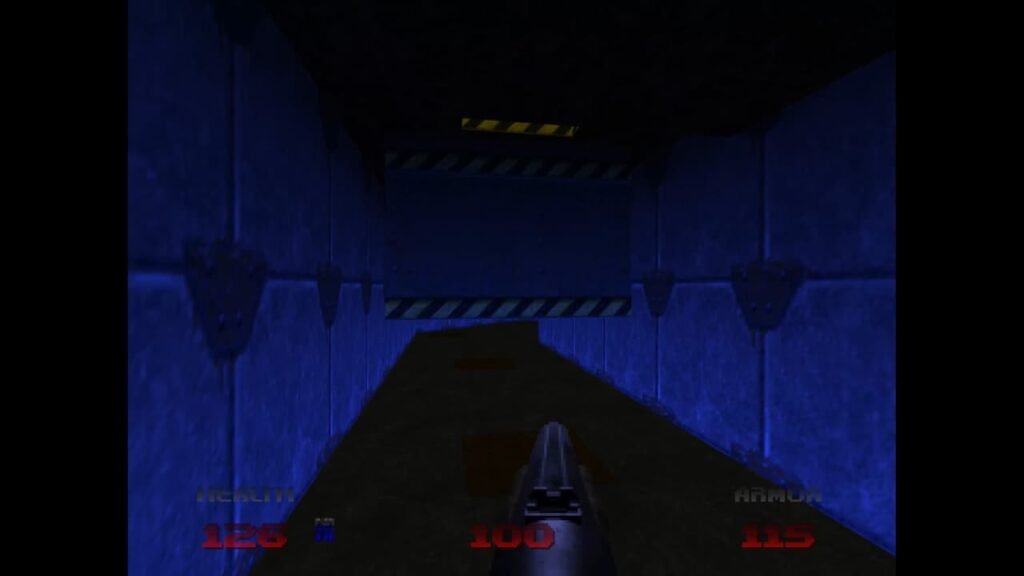
This is also how Doom 64 differs, in that it has way too many puzzles – and traps. Some of these traps are deadly and can easily kill you if you’re not too careful. In fact, I’d argue that the traps are a worse threat than the average demon.
Most of it has to do with the fact that Doom 64 isn’t a particularly difficult game. Yes, you will still die if you manage to get cornered by multiple demons, but the majority of them can be dealt with rather easily.
Since this is built on top of the original DOOM game engine, some oddities… remain. A lot of DOOM’s hit detection is tied to the frame output, and that carries over to the N64 version as well, where you can carefully time your shots to the animations to ensure you don’t get hit. It’s a bit of a song and dance, but if you’re familiar with DOOM, you’ll get it.
You can also sprint by holding a button, which is a bit strange to see in a DOOM game. Nevertheless, it’s there – as are the guns, which are wholly present. Doom 64 also goes the extra mile and adds in a new weapon in the form of the Unmaker, which can be best described as a BFG-9000 on steroids.
The weapon starts out mediocre at first, but can be upgraded using three ancient artifacts strewn throughout the duration of the campaign. A fully maxed-out Unmaker is capable of soloing mobs and bosses, cutting through them like a hot knife through butter.
This might seem like a cheese strat at first, but it’s always nice to have a super weapon for kicks and giggles every now and then. And it’s not like the weapon is easy to get either – you’ll have to work for your reward, which is appreciated – making the weapon feel like a prize.
The rest of the arsenal remains relatively untouched, although the Super Shotgun receives a severe cut in the animation department. The N64 couldn’t handle a dynamic reloading animation, and so the animation for it was pretty much neutered to its present state. Still hits like a truck, though.
Unfortunately, in order to fit the entire game onto that 64 Megabyte cartridge, some sacrifices had to be made. A few demons were entirely removed from the game, with Arch-Vile (who will not be missed) and Spider Mastermind coming to mind.
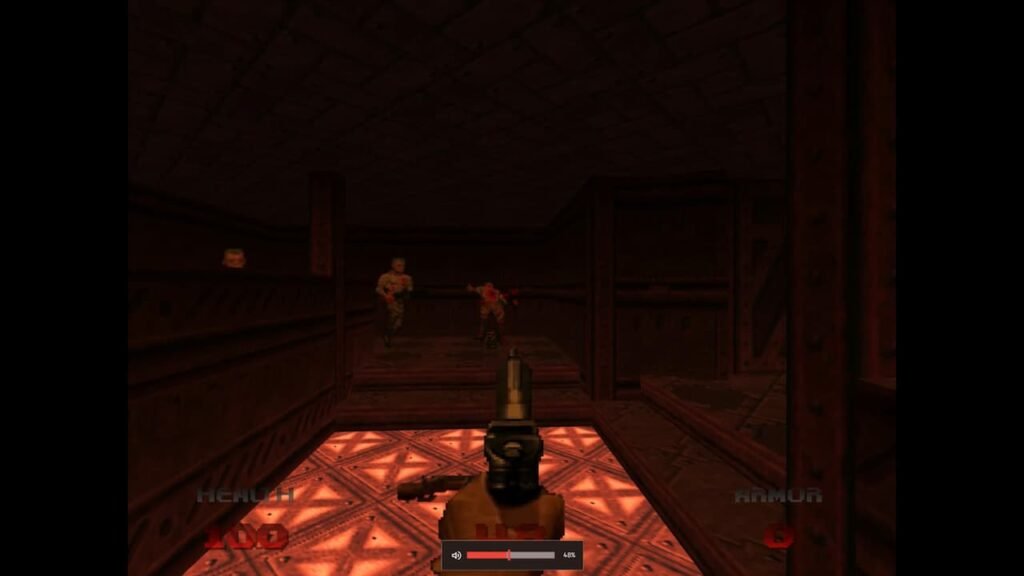
The game sprites were also entirely redesigned, having a more ‘3D’ look to them, which is pretty much what you’d expect from a N64 game. It’s still running on the DOOM engine, though, even if it is highly modified code.
It’s hard to describe it, but Doom 64 – even with its strangely different level design, presentation, and music somehow feels and plays just like a DOOM game. Midway clearly managed to create an absolute gem and real lightning in a bottle.
A lot of Doom 64 involves experimentation and blindly stumbling around your way to the exit, and I’d recommend playing it this way. Give it a blind run, and take your time with it.
I certainly wasn’t a fan at first, but three levels in and I was addicted. There’s just something about that smooth combat loop and hauntingly beautiful soundtrack that keeps you going back for more.
The better DOOM 3
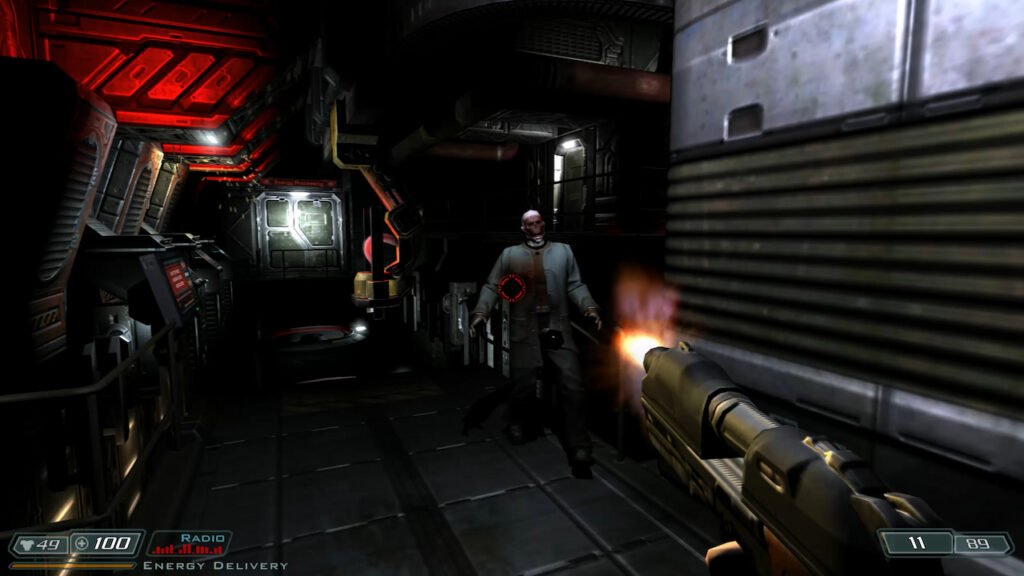
Of course, Doom 64 is far from the only oddity around here – there’s also Doom 3, a rather ambitious DOOM title that leaned in a bit too much on the horror aspect. Released back in August 2004, Doom 3 was shaping up to be the next blockbuster first-person shooter, complete for the (then) modern era.
And in many ways, it was so. Doom 3 featured visuals far ahead of its time, and could bring the most powerful of PCs to a crawl. It also featured a big-budget AAA look to Doom, complete with a campaign, voice acting, and secondary characters.
Like Doom 64, Doom 3 challenged the definition of what a DOOM game could be and in many ways was also ‘controversial’.
The game’s shift toward a more horror-focused outlook was a definite detriment. I’d even say that Doom 3 took things too far, to the point where it wasn’t really DOOM anymore.
Sure, the re-released BFG Edition did fix a lot of these issues, but the vanilla Doom 3 was another story.
It’s here that Doom 64 differs, and also comes close to Doom 3. Like Doom 3, the N64 version of the game featured a more ambient level design – but unlike the former, it never strayed from the core gameplay loop of the 1993 classic.
Encounters played out largely the same – as in, you’d enter passageways and interact with panels to reveal weapons, secrets, and more often than not – a surprise ambush of demons to slaughter through.
There were no extra frills or cinematic set pieces, and I’d even argue that Doom 64 did a better job here.
A testament to what Midway achieved
While it’s certainly not the best iteration of DOOM, Doom 64 is still forever a classic, and one that showed what could be done if the team were willing to take a few calculated risks in game design.
It’s even more impressive when you consider the fact that this game was crafted by the developers of Mortal Kombat – and not a team that had any previous experience making FPS games. Id Software was involved as a supervisor of sorts in the process, but the entire effort goes to Midway alone.
And it’s a divisive title, and not everyone has to like it. Which is fine, but for me, Doom 64 will always remain an enigma and a curious little piece of Doom history

