
The landscape of the gaming industry is rapidly altering, and to help assist the change, new tech such as mindGAME is jumping into the fray. Aiming to curb the decrements that come along with managing this industry worth billions of dollars, with powerful insights.
But how exactly does this whole thing work, and what are the reparations? If there are any. We sat down with the Commercial Lead for mindGAME, Colan Nesse, to get answers to some of those questions and more.
mindGAME Interview on How the Gaming Industry Is Changing
In layman’s terms, could you explain what mindGAME is about to the people reading this?
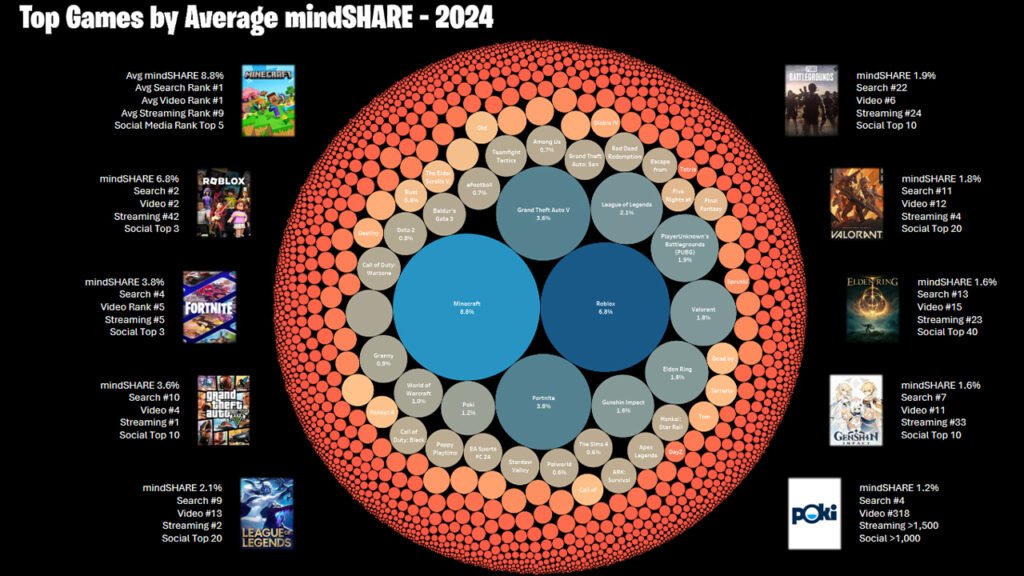
Colan: mindGAME is a simple way to measure attention in gaming, everywhere people play and engage, console, PC, mobile, browser, Roblox, and more. We pull signals from where players watch, talk, and play, Google, YouTube, TikTok, Twitch, Reddit, Steam, then turn that into a single, comparable score we call mindSHARE.
That lets teams see which titles are breaking through, compare games apples to apples across platforms, and spot momentum early. In short, we quantify the attention economy for games.
Measuring a game’s particular market popularity enforces metonymy on the game’s development side of things. What is your take on this?
Colan: Our score is not a design brief; it is a map of attention. mindGAME measures how much attention your game is earning across where players watch, talk, and play, Google, YouTube, TikTok, Twitch, Reddit, and Steam. A game can be brilliant and still miss if it cannot capture attention, so we help teams see the audience reality early and make smarter go-to-market choices.
When we talk about the oligopoly of attention, we are describing how markets tend to calcify into power laws. Gaming does this at the genre level, too. If a mature subgenre already has three dominant players, breaking in will be very hard unless you change the rules, the format, the social fabric, or the timing.
Switching is constrained by three sunk costs that new launches often underestimate: time, which compounds into skill; money, from cosmetics, battle passes, and DLC; and friends, the stickiest cost in multiplayer, because you are trying to move a whole group at once.
Popularity metrics do not reduce a game to a number; they surface the competitive physics you have to overcome. Use the metric to understand category shape and audience momentum, then build the experience you believe in, with a go-to-market that earns the right to be tried.
Do you not think that this also undermines the potential for unique games from big-budget developers?
Colan: No. A single composite score does not undermine originality; it helps it. Budgets are less decisive than an attention strategy. The market is increasingly a barbell, a handful of very expensive AAA franchises on one end, and an infinite field of smaller teams on the other.
We often see breakthrough indies early because attention signals show up in the data long before sales are visible. We flagged Clair Obscur: Expedition 33 well before release because the audience’s attention was clearly building.
Big publishers can absolutely ship unique games, and indies can absolutely scale; the common thread is an attention plan, access, letting people play, smart timing, and a creative approach that travels. The metric is not the judge; it is the early warning system that tells you whether your creative is finding its audience.
Comparing the present trends to a decade prior, what are some of the changes in the global gaming market that you would say were major and impactful?
Colan: Ten years ago, a thousand games meant something very different than a thousand games today. Supply has exploded, choice is effectively infinite, and the biggest structural change is discovery, not demand.
The stores that should be discovery engines are also storefronts with incentives to surface their own hits. On Steam, charts are often led by Counter-Strike and Dota 2, on Switch, first-party tends to rule, and so on. That is rational for platform owners, but it leaves a discovery gap for everyone else.
TikTok has stepped into that gap because it is algorithmic, and it now drives a surprising amount of game discovery, but relying on a social feed as the industry’s discovery backbone is not a comfortable equilibrium. This decade’s challenge is scaling discovery in a world of abundance.
AI is a very controversial topic from both the development as well as the creative side of gaming. What is your take on AI in gaming, and what are the prospects around this technology for the future of video game market trends?
Colan: AI is over-focused on in headlines and under-understood in practice. Near term, many “AI” layoff narratives are a cover for cost moves and offshoring rather than true automation. The more consequential effect may be capital allocation at the companies that own gaming platforms.
If your core business now requires massive data center and power capex, the gravity of that spend will pull focus. Over the next five to ten years, some AI-heavy parent companies may treat gaming as non-core when it does not move the stock, which will change priorities more than any single AI tool will.
None of that precludes smart, ethical AI tooling inside development, from testing and asset workflows to live ops. But AI is not a magic wand, and it should not be a scapegoat.
Most of your market research focuses on global social media platforms. How does your method account for regional differences or translate to more isolated platforms such as Bilibili and Douyin?
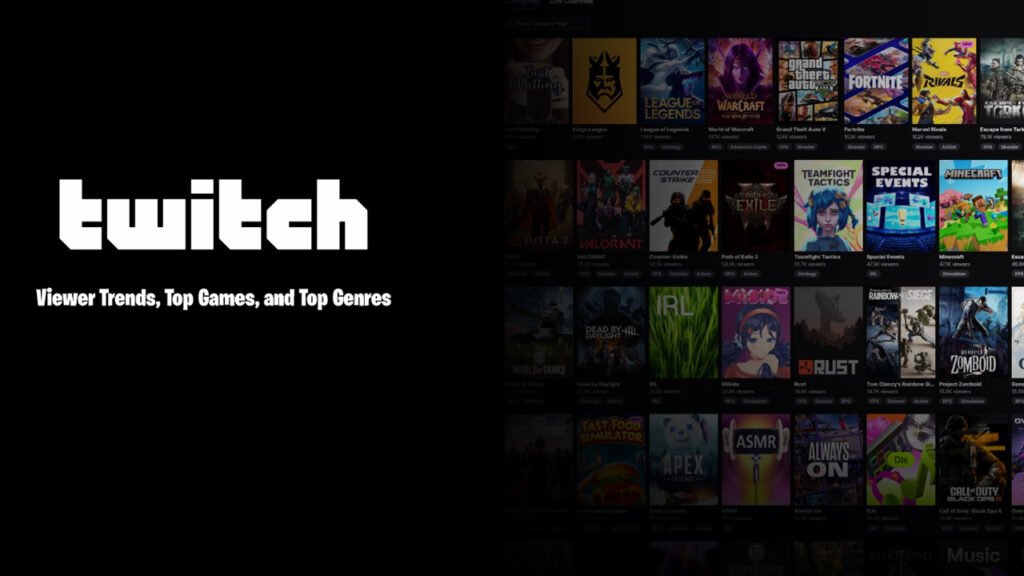
Colan: We prioritize globally scaled signals, and we are realistic about regional walls. The Great Firewall makes direct, reliable collection from Bilibili and Douyin hard for anyone outside China.
Even so, we get a meaningful China read via PC play and search, Steam’s unique accessibility in China surfaces large volumes of behavior, and we also see China-based queries via VPN routed Google search, often in the tens of millions in a typical week.
To fill regional gaps, we triangulate. Twitch is Western-heavy, so we weigh YouTube where it dominates, particularly for mobile titles and in Southeast Asia and LATAM. Gaming is global at launch, most releases are effectively available everywhere at once, so our baseline is global platforms.
We absolutely consider regional sources when they add a new signal, but in pilots like our deep dive on Korea, the top lists mirrored what our global stack already surfaced. If a source does not add new information, we do not add it just to check a box.
Recently, layoffs have become a rising issue in big and established game studios. Will mindGAME help predict or solve issues like that, and if so, how will it do that?
Colan: mindGAME will not eliminate layoffs, but it can reduce the conditions that lead to painful resets. We provide an unvarnished, early read on whether attention is building, which helps teams set expectations, size production, and adjust go-to-market before spend is locked.
Two practical levers matter a lot, timing and distribution. Timing, stop trying to ship five months a year. There are quiet calendar windows in every month, and we can point to titles that found tens of millions of players outside the fall.
Distribution measures the whole competitive field as one; consoles, PC, mobile, and Roblox compete for the same hours. Our single metric, mindSHARE, puts all of that on one comparable scale across Google, YouTube, TikTok, Twitch, Reddit, Steam, and more.
With that visibility, teams make saner decisions, choose better dates, and build plans that fit the real audience, which is how you prevent overbuild, overhire, and the corrections that follow.
What you have created is amazing news for the big game developers, but how would it fare with small-budget indie games that are built on breaking trends with completely new types of games?
Colan: Partly true, our earliest customers were the big publishers, but we built mindGAME to democratize market tracking. Before this, smaller teams had two options: pray to the wishlist gods, where typical conversion sits somewhere around 1% to 4%, or commission six-figure brand‑tracking surveys. Neither is realistic as a sole decision input for an indie or AA studio.
mindGAME replaces that guesswork with behavior at scale, search, watch, talk, and play signals stitched into one comparable score. That lets smaller teams validate momentum, pressure test positioning, and time beats without spending enterprise money.
We designed pricing and workflow with AA and ambitious indies in mind so the field, not just the few, can see the market as it really is.
Social media opinions come from a place of bias; for example, many fans prefer established franchises with long histories. How do you manually account for such biases, and is the correct standard of measuring a game’s future success?
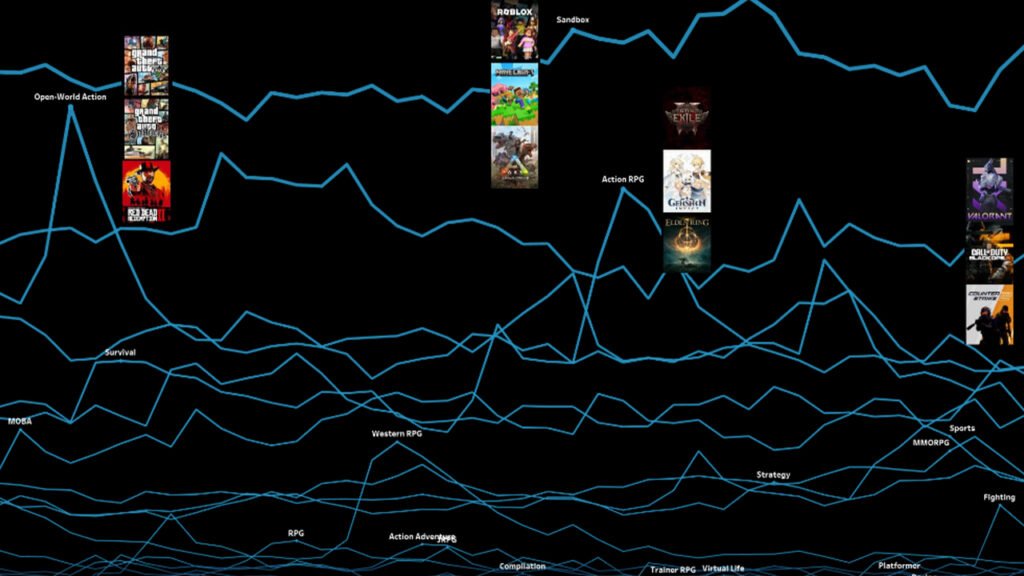
Colan: We do not score opinions. We measure behavior, how many people search, watch, stream, post, and play. That reduces a lot of stated‑opinion bias. We also normalize across platforms and regions, watch for inorganic spikes, and compare titles to their genre cohorts so long‑running franchises do not automatically drown out new IP.
On sentiment, the hierarchy is simple; no attention is the worst outcome. Negative attention is usually a spectacle spike that fades; the internet rubbernecks a car crash, then moves on. Positive attention compounds, strong reception after launch lifts week two and beyond.
We saw that pattern with Arc Raiders, and earlier with Clair Obscur: Expedition 33. Attention is not a guarantee of long‑term retention, but it is the prerequisite for building an audience.
Top-selling video games today are usually based on established IPs, sequels, or multiplayer formats. How much do you weigh the brand and platform environment vs the content on the games for its popularity in today’s gaming market?
Colan: We weigh outcomes by attention first, then ask why the brand, platform, or content is driving it. I do not buy that top sellers must be sequels or old IP. 2025 was a reminder that new IP can punch through. R.E.P.O. was a top title in February, Schedule 1 surged in March, Krafton’s inZOI found a lane globally, and Hazelight’s Split Fiction delivered another original hit.
The standout example, Clair Obscur: Expedition 33, a new IP that built momentum and then delivered. IP still matters, but returns vary. Some sequels underperformed their predecessors; Death Stranding 2 did not match Death Stranding’s audience, while smaller, community-driven releases overperformed. Deltarune’s full price entry blew the doors off.
EA SPORTS FC has seen audience drift since the FIFA license change, even if revenue workstreams have held up. The notable exception is Nintendo, consistent, disciplined IP management. Mario Kart World’s attachment with Switch 2 is extraordinary, Pokémon Legends: Z-A met the bar set by the prior Legends entry, and Donkey Kong Bonanza is a credible push to elevate a B-tier franchise.
So we do not pre-assign credit to a brand or platform. We observe attention, then attribute, is this brand equity, is this platform placement, or is the content resonating? In today’s market, the field is infinite, and new IP breaks through every month. Attention is the common currency.
We recently saw the transition of video game price tags from $59.99 to $69.99 as the new standard. How do you think about pricing changes from the vantage point of someone who has to keep track of video game successes?

Colan: $69.99 is the common sticker for premium releases, but it is not the consumer standard for spending. What we see is a barbell in behavior: most players buy one premium game a month to anchor their play, then fill the rest of their time with a stack of sub‑$50 titles, indies, AA, early access, expansions, and sales. That creates a deflationary effect on the average price paid.
This year showed it clearly, lower price points lowered trial friction and won share. Hollow Knight: Silksong at $19.99 is a good example of how a sharp value can blow the doors off. At the same time, publishers are softening sticker shock with bundles and ladders, deluxe and ultimate tiers for those who want more, and hardware or ecosystem bundles that mask price.
Even Nintendo’s $80 conversation around Mario Kart World was effectively offset by the Switch 2 bundle framing, paying $50 more for the console, and it feels like a deal.
From a measurement lens, price is a conversion lever. Attention is the story. In this economy, most players buy one premium game a month and fill the rest of their time with sub-$50 picks. When pricing meets attention peaks and quiet calendar windows, conversion improves.
The takeaway: treat $69.99 as one rung on a flexible ladder, pair it with clear value and easy entry so players can say yes now and spend up over time. If you want the simple version, line up the 4 Ps: product, price, place, promotion.
Ship a product people want, set a price that fits the moment, pick a place and timing with low competition and the right storefronts, and promote during attention spikes.

