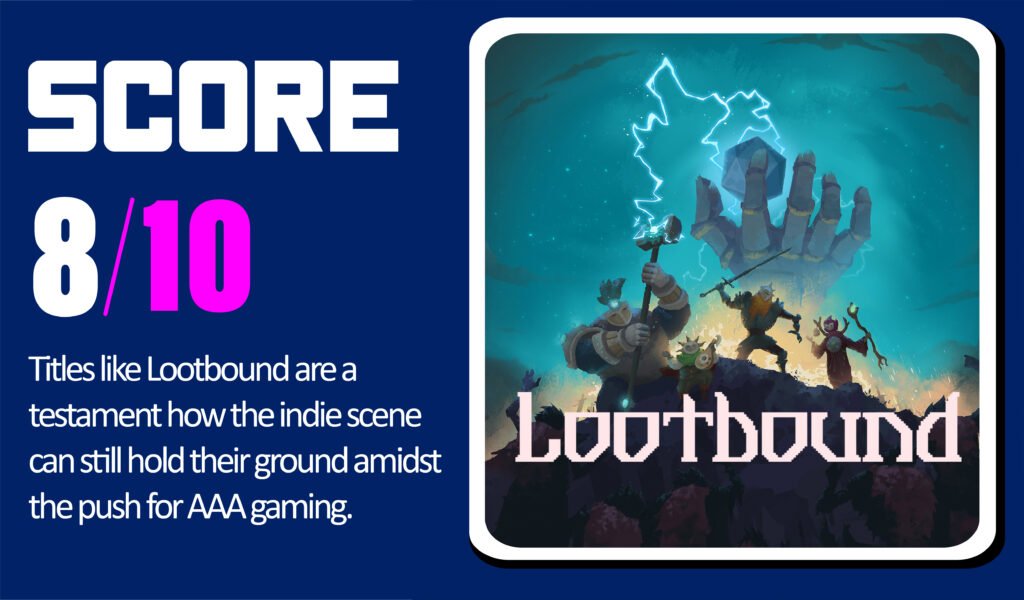
It is quite interesting to be living in times when so many developers are able to realize their own ideas for video games. However, the majority of consensus within gaming fandom surrounds titles with AAA budgets. There still exists a significant segment of the player base who are willing to support games that don’t strive for high visual fidelity but rather a beautiful art style. We were lucky enough to receive a review key for one such title, named Lootbound, which utilizes beautiful sprite work.
The title is an upcoming dark fantasy game from the developers at ArtDock, and is built around being a Roguelite with turn-based combat. These are genre conventions not at all alien to someone who has been playing games for a long period, and especially role-playing ones.
So what makes Lootbound so special and why should you give it a try? Because the market is definitely ripe with a plethora of other independently developed roguelites and turn-based games which are very popular. Well, that’s exactly what I am going to answer in this review.
Roguelite gameplay loop
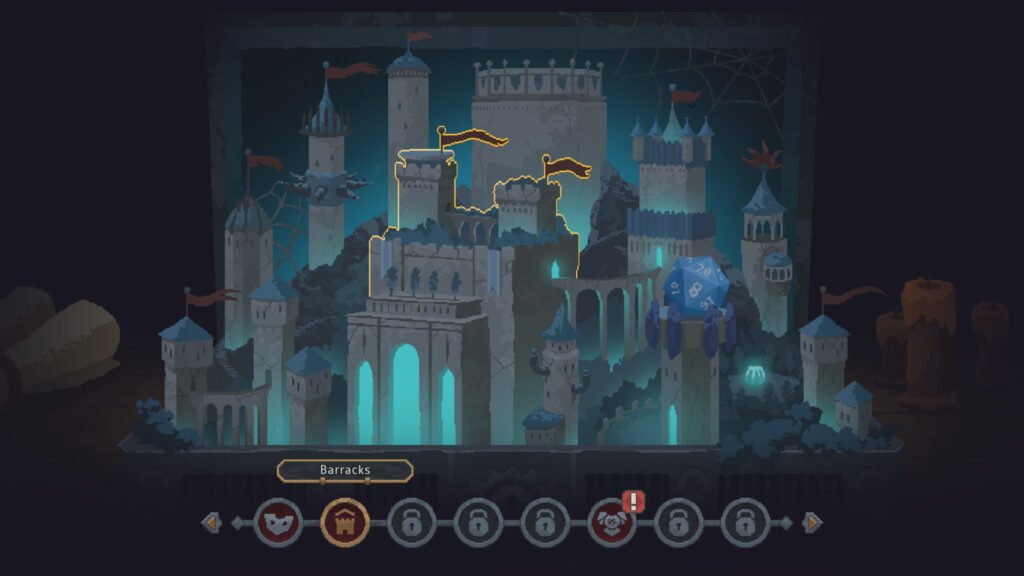
As soon as I booted up the game, it dropped me at the front gates of what seems like the outer walls of a citadel. This visual cue immediately establishes the overall setting of the game, which is medieval fantasy.
As the player, the objective is to push through the several layers of these grey walls in a choice-based progression system. Essentially, dungeon crawling as far as possible in a single run.
As it happens with every Roguelite game, players will have to rinse and repeat their progression through levels after failed runs. But what makes the repetitive design of these kinds of games fun is the unpredictability in encountering something new in every run.
Lootbound is no different; during my first playthrough, I reached the layer of an elite enemy at the gates, which was a bit too much for me to handle. I eventually lost that run, but then in my second attempt I came across an NPC ally who tagged along.
This new recruit made a significant difference in my new run of the same dungeon, which was enough to make it feel like I was experiencing a fresh new area. And that is exactly how the game’s loop gets you.
The story takes a backseat
Although if you are an enthusiast of games like these for their stories, I should go ahead and mention that it takes a back seat. Unlike other games with a similar setting, Lootbound allows players to learn about the game’s world through various in-game descriptions.
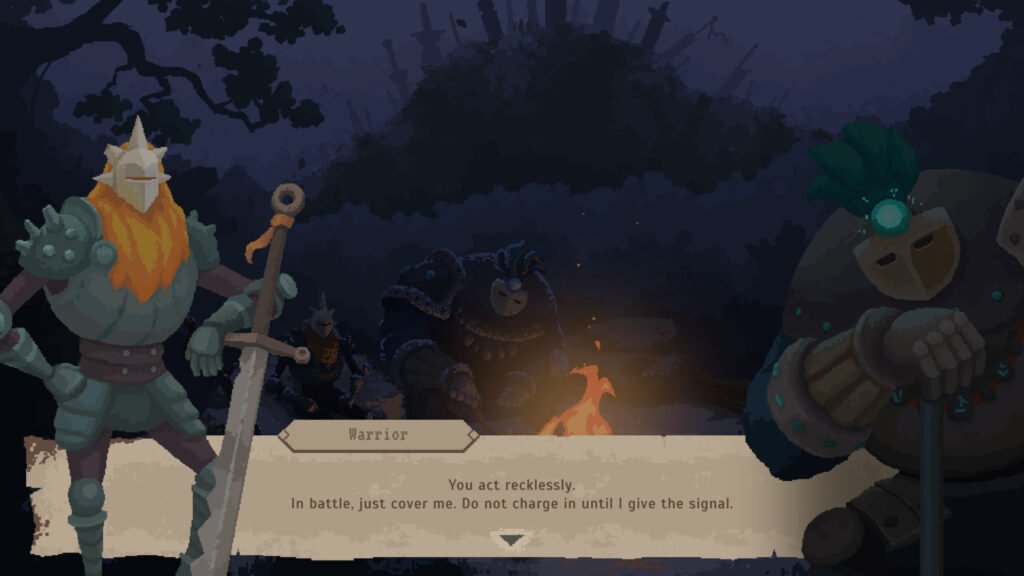
Especially during the campfire segments where you get to learn about the characters and their motivations, in bits and pieces. This may be a dealbreaker for some, but we have seen major video game franchises utilize a similar approach to a successful degree.
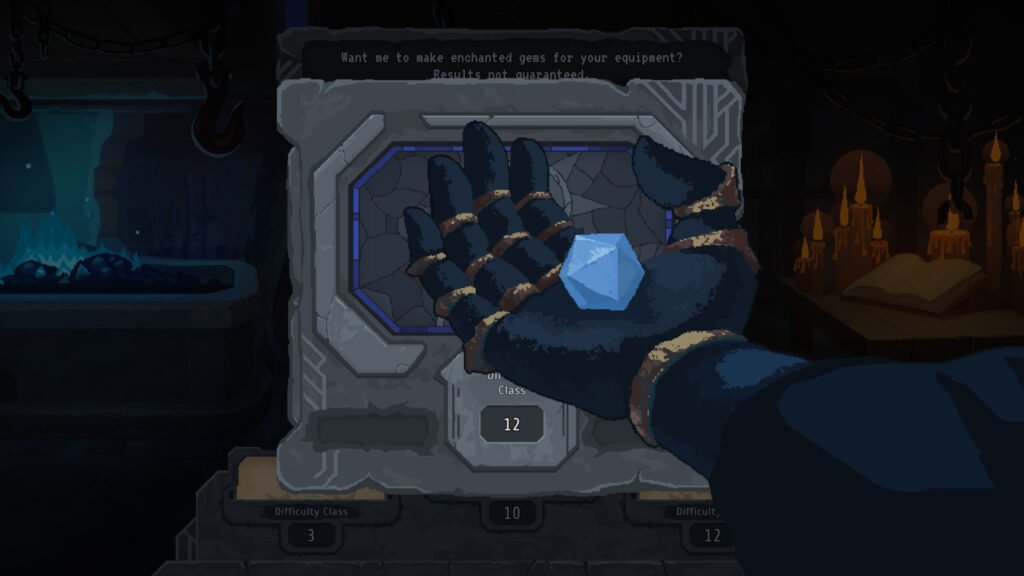
Lootbound’s main point of attraction is clearly in its build variety, combat, and various other mechanics, including having to roll a dice in proper tabletop RPG fashion. All of which make up for a compelling roguelite gameplay loop.
Players are pushed to make quick bursts of small decisions, which either culminate in forward progression or a quick party wipe, only to restart the run in a matter of minutes.
Turn-based combat with a compelling loop
You are not limited to a single character class in the game, but you do get forced to choose just one for yourself at the beginning of the game, and that is the warrior. A standard character class with one base attack and a few that consume mana.
The way combat works in Lootbound is well thought out, which makes it an important backbone for the whole roguelite gameplay loop. Thanks to the popularity of JRPGs, turn-based combat has still not gone out of fashion, but a lot of games do make mistakes in getting it right.
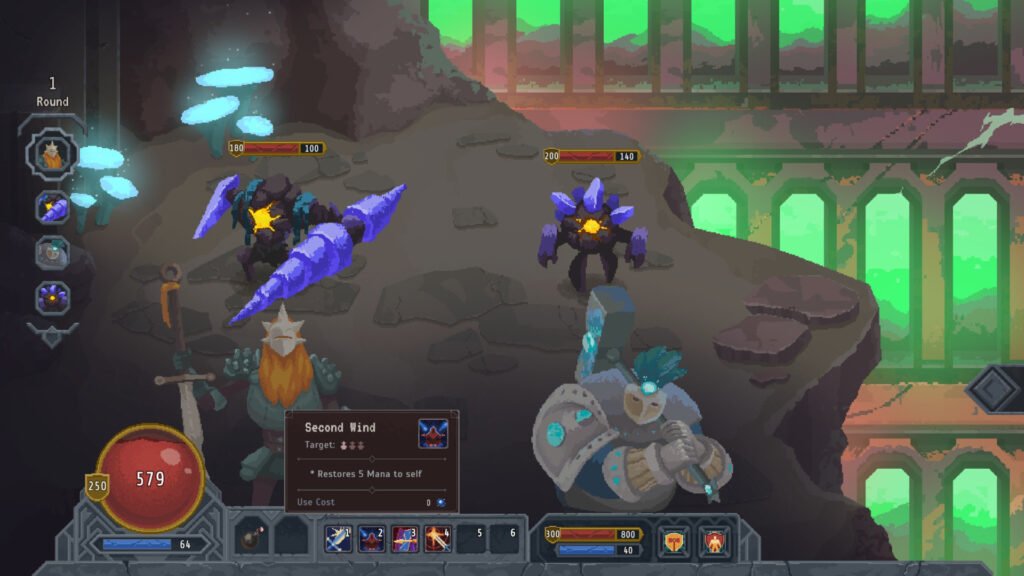
There should be an incentive to patiently wait for your turn to use the chosen ability rather than simply watching a few numbers go up and down. Lootbound does this justice with the mana and armor management system.
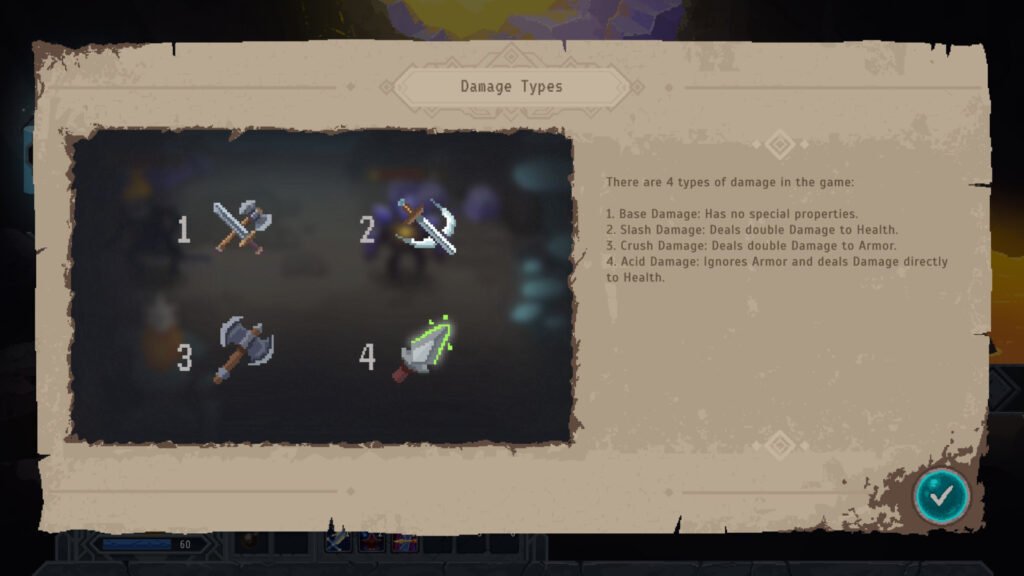
Every encounter starts with a base armor count, which the players and the enemy in front are assigned to. Your objective is to deplete the opponent’s armor and cleave through their health before they do the same to you.
Incentive to manage armor and mana points
If your party gets their armor destroyed and health depleted during an encounter, then you better pray that you come across a healing potion or a campfire, which will allow you to heal. Although the interesting part is that players’ armor will always regenerate during the encounter.
Then there is also the threat of running out of mana, which will lock you out of certain skills in the middle of an encounter. Items such as mana potions and certain regenerative skills are boons that provide respite from this kind of situation.
Thus creating a compelling combat loop where the whole game is not just about seeing certain numbers go up and down. But players will actually have to incentivize if they want to protect their armor points or regenerate mana, all while having to deplete the enemy’s health.
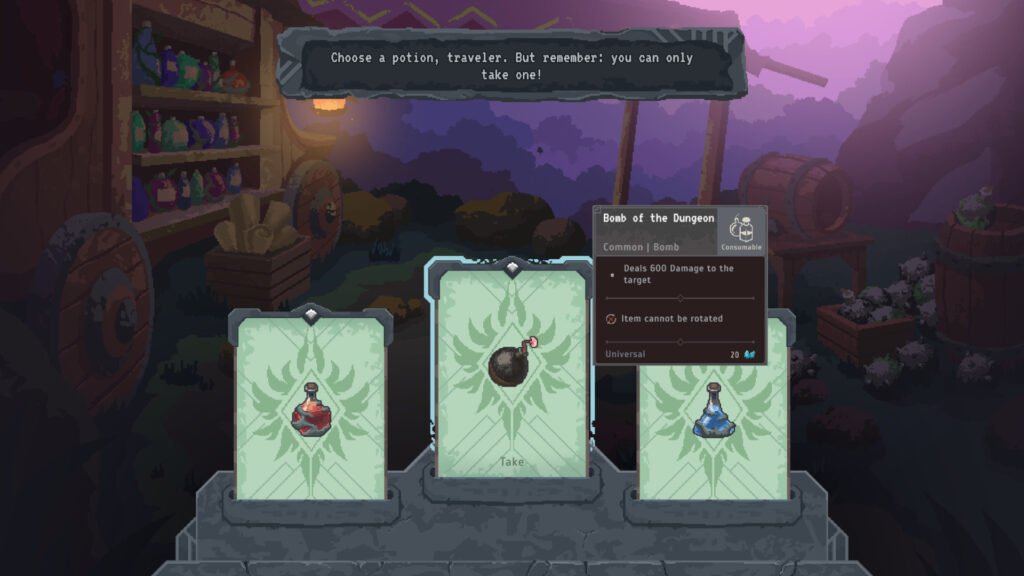
A general currency has been provided in the game that allows players to invest points into particular stats after every run. Additionally, items and loot can be found throughout the run, which allow for particular build progression.
Sometimes I found more luck building my character for slashing damage, thus prioritizing aggression over defense. Other times, I geared all my resources to fortifying health and armor points so that I could tank through certain situations.
Robust inventory management system
Aside from perishable item drops, players will often come across loot that can be equipped. There are a variety of armor and weapon drops to discover throughout the game, and I could tell that the developers paid extra attention to make the loot unique.
That is because the game hosts a complete bestiary for cataloging the various kinds of weapons, items and armors, which keeps getting filled up with successive runs of the game.
The game’s inventory system utilizes the old, tried-and-true puzzle grids which we often find in popular survival horror titles. Every piece of equipment and armor that is collected throughout a run consumes an amount of grid space in the inventory, which the players will have to manage almost like a game of Tetris.
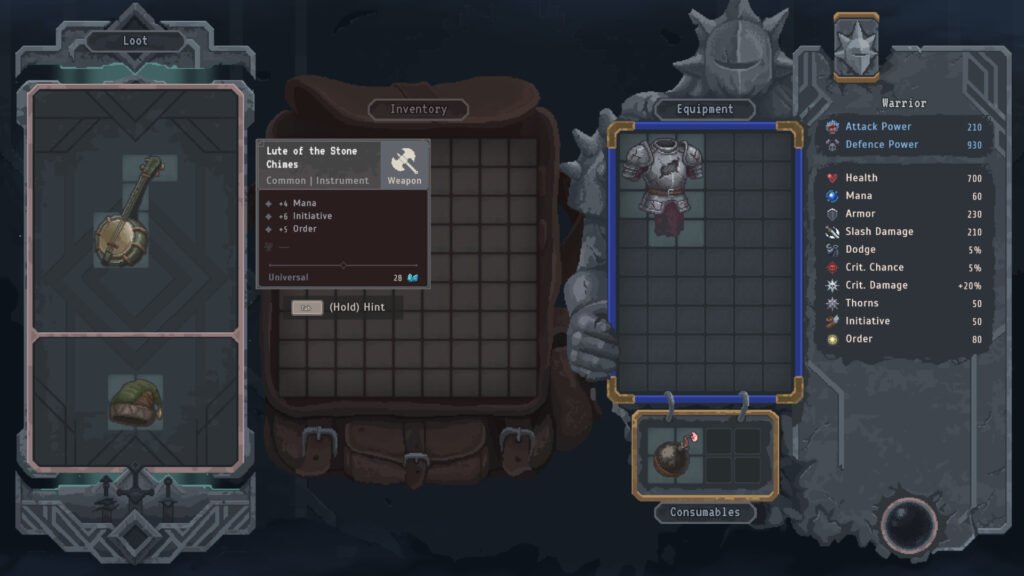
There is, of course, an extra storage space as well as the inventory spaces of ally characters. But nothing will prepare you for the amount of unique loot drops that you will have to deal with.
NPC companions are like an anchor
Eventually it turns into a minigame of having to assign the right type of armor and equipment to the right party member. You will want to assign the heavy-hitting weapons to a Paladin’s inventory while the Bard takes the armor that raises his fortitude and mana.
Now that I am already talking about the other party characters, it’s better to talk about them extensively because these characters are going to be a major anchor throughout every new run.
When you lose a run, your party is reset, and you are left alone once again. This might be a bittersweet outcome if you grow attached to your ally character, but it also creates fresh party scenarios with every run.
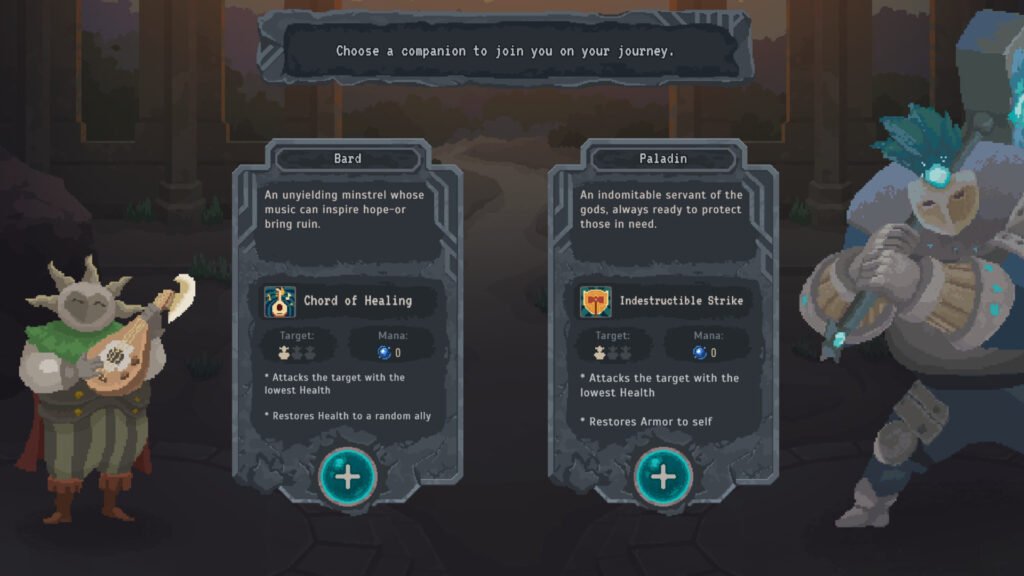
In certain intersections while traversing through the dungeon, you will come across scenarios where you will have to choose a companion to tag along with you. Your approach to combat will be shaped around the ally.
If you pick the Bard, then you will be building your gameplay around a healer companion. The Paladin is a tank with an impressive number of armor points. And the witch is the most powerful mage companion you can recruit.
Few criticisms and conclusion
So far, I am very pleased with what ArtDock has built. A lot of players craving more roguelites in their life will absolutely find themselves sinking hours into this cozy dungeon-crawling experience.
Unfortunately, just like with everything, there are a few blaring inconveniences that stood out to me. Some of these can essentially be boiled down to just nitpicks, but I would be doing a disservice to this review if I kept them bottled up.
Firstly, the companion NPCs are completely AI-controlled during combat; I wish there was a way to change that. Having full player control of the kits that come with some of these unique companions could have made some of my runs play out differently.
I understand that the combat controls were designed to be restricted to just the player character for a better balance. But oftentimes I felt like my AI companion did not make the right choice of actions, which made me lose progress.
The other minor criticism I have is purely visual. It is completely understandable that 2D sprite-based cutscenes are not easy to make, and the ones that are in the game do an incredible job.
But I wish there was more to it, especially during the dungeon-crawling sequences. Instead of having me click on a particular symbol to signify progression to the next sequence, it would have been more fun if the game adopted a first-person dungeon-crawling experience. Once again, None of these are dealbreakers, but very minor nitpicks to what is already a really cozy experience.
Lootbound might not become the next big thing in gaming, but if you are someone who is looking for respite from the overtly ambitious games that the industry seems to be pushing, then I can’t recommend it enough.