
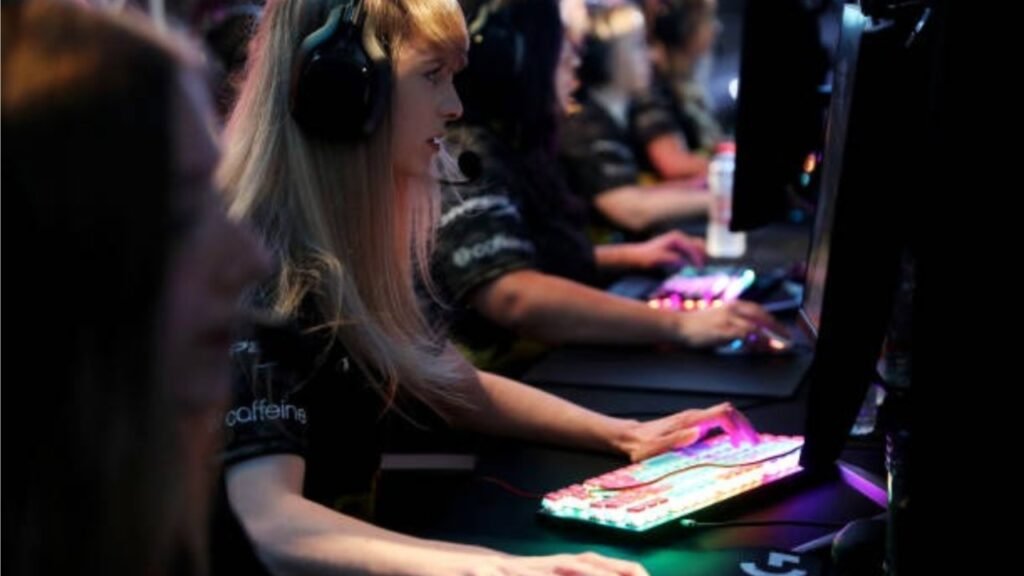
A fresh report urging game developers to keep focus on female players sparked immediate backlash from the industry veterans, who, as per them, have seen this movie before. The research, which was released by the Ampere Analysis, suggests that companies have been missing out, not accommodating women gamers.
However, as critics warn, this exact advice previously led many studios down the dangerous path. With high-profile flops, memories, and widespread layoffs still fresh, there are many who are questioning if the industry is about to repeat the costly mistakes from half a decade ago. As per them, it damaged gaming the most.
Critics suggest that targeting female video gamers ruined studios before
The entire controversy erupted after the Ampere Analysis findings were out. On X, a comment on this post suggested, “The analysts are pushing this again like its 2019. This ruined many studios.” This one comment, which was shared, resonated with many developers who remember the fallout from similar recommendations 5 years ago.
Ampere’s research, which is based on 46,000 global respondents, argues that women represent a “missed opportunity” for growth. It’s been pointed out by the firm that female players prefer narrative-driven experiences like those offered in The Sims 4, with approx. 18% of women who were surveyed played it just recently. They even note that women gravitate towards casual devices, with just 13 mobile games attracting more female than male players, as compared to PC and 3 console titles, achieving the same.
The reports further highlighted the barriers that women face, including the gaming culture in itself. As per it, women who were surveyed cited, “I don’t like the culture or community” as the reason for not playing more. Also, toxicity in voice chat creates a false impression that women are not participating in the online games at all. As per suggestions coming through Ampere, developers study themes like drama, romance and lifestyle content, which resonate with female audiences in film and TV.
However, critics are unconvinced. As per them, history is repeating itself, and now, the stakes are way too high.
What happened in 2019, leading to the disaster in question?
As per the analysis of Grok and the available data online, around 2018 to 2019, some research firms pushed similar types of arguments. According to them, female gamers, who at that time represented 45 to 48% of the players, were an untapped goldmine. The companies, on the basis of this, responded by giving priority to inclusive changes—historical tweaks, diverse casts and softer designs. Critics argue that this resulted in catastrophic effects and that women ruined video games.
Battlefield V, as per reports, became a flashpoint when marketing featuring women in the World War II settings triggered massive backlash. This game underperformed commercially. It joined a list of disappointments, including BioWare’s 2019 live-service failure, Anthem. Industry-wide layoffs also followed at some major publishers like Activision and EA, with some directly linking this downturn to misguided attempts to chase newer dynamics at gaming’s core audience expense.
As of now, the fear is identical. With the studios pivoting towards demographics trends and not fundamental fun, they are risking alienating their traditional player base, without any guaranteed replacement revenue. Arguments of critics suggest that forcing inclusive elements into franchises that are built around historical accuracy or some power fantasy will create cultural clashes that satisfy no one.
What makes the current situation quite particularly concerning is timing. The gaming industry is fragile, after many years of contraction, while the studios are not at a capacity to absorb financial missteps too high. So, repeating errors of 2019 could prove fatal for the companies that are already operating on thin margins.
Data revelation about female gamers
The numbers behind debates tell a much more complex story than just some simple gender parity. 2017’s research analyzing more than 270,000 gamers, via Gamer Motivation Profile, found enormous variation across genres—ranging from 2% of the female participation within sports games to approx 70% within match-3 titles.
Some high fantasy MMOs like World of Warcraft attracted 23% of women. Sci-fi MMOs, too, drew in 16% women. 48% female players was achieved by Dragon Age: Inquisition, and this number was double its genre average. It proves execution is more important than categories. Also, the data suggested that women were not rejecting the mechanics. They were instead rejecting specific combinations of marketing, community dynamics and presentation.
2019 segmentations across 30 markets by Newzoo revealed that 36% of the female enthusiasts were “Time Fillers” who played mobile games, as compared to 19% men. Moreover, 15% of men even qualified as the “Ultimate Gamers” vs 9% of women. But, perhaps the most telling fact is that young women showed different patterns, with the female Ultimate Gamers are reportedly peaking between ages 26 and 30 at 19%.
The Google-commissioned Asia study found female gaming populations to be growing 19% annually, with 45% reaching in China. However, it even documented harassment issues, with professional players like Reia Ayunan noting she was “a victim of sexual harassment online” after gaining her visibility.
Overall, the data doesn’t support simplistic conclusions. Despite it, the analysts keep offering them, and also studios are the ones who are paying the price.

