
One of the more complicated aspects of Final Fantasy XIV is how the narrative deals with its timelines. Like, I remember when I was still a humble Sprout, making my way through the Heavensward expansion, and absolutely confused as to what Astral and Umbral Eras even meant.
One of the great things about the MMO is how it lets you piece some of the lore together. While there are detailed expositions as you make your way through the multiple expansions, it still took me a while to have a firmer understanding of the timeline.
This is because much of what happened in the past is often found in the multiple side quests that you come across. And this is especially true for some of the job quests that have their origins all the way back to the Fifth and even the Third Astral Era
So it’s not exactly surprising that some of my friends who are in Endwalker now are still a bit shaky on their understanding of Eorzea’s past and how it affects the Warrior of Light in the present.
So I want to take the time today to talk about how the timeline works in Final Fantasy XIV. What constitutes an Umbral and Astral Era, as well as mention some of the key details from each stage in history.
However, fair warning: the video will contain spoilers, and we recommend that you skip this if you haven’t completed the story up to Shadowbringers.
Understanding Eorzea’s history in Final Fantasy XIV
Now, the history of Eorzea is divided into alternating cycles of Astral and Umbral Eras. These periods vary in length and are defined by multiple key moments that start and end them.
An Astral Era is basically a period of harmony and progression in the world. There aren’t many major problems at this time to speak of, but this can culminate in conflict, and depending on the size of the conflict, it might usher in an Umbral Era, which will be triggered by a cataclysmic disaster often tied to a specific elemental imbalance in the world.
So the most recent calamity in the timeline took place in the Seventh Umbral Era, where Bahamut laid waste to the entirety of the Carteneau Flats after breaking out of Dalamud.
The era lasted 5 years, and the Warrior of Light’s journey starts in year 5, which is at the very tail end of the Umbral Era, and it’s your victory over Gaius van Baelsar during Operation Archon that finally kicks off the Seventh Astral Era.
And as the story progresses, we also get to know that the Umbral Eras are usually caused by Ascians who are trying to keep the world in a perpetual state of chaos. They want to keep it in an Umbral Era forever, so that it does not slide into Astral again, and as a result, they will be successful in killing Hydaelyn.
The Ascians need to do this Umbral slide several times, and according to their prophecies, this will ultimately bring about the “Rejoining,” where Zodiark will finally supplant Hydaelyn and break the Mothercrystal in the process.
So this is the overarching story of Final Fantasy XIV, and it’s up to the Warrior of Light to stop the Ascians from bringing about the Eighth Umbral Calamity.
The Prehistory
Now before we get into the specific eras themselves, let’s take a look at the prehistory, before the creation of the Source and its thirteen reflections. At the very beginning, there was only one world, inhabited by a race of beings who could freely manipulate their aether into different forms of creation magic.
This allowed them to bring forth new life forms which ultimately benefitted their star. This world was called Etheirys, and it was the original home of the Ascians.
However, Etheirys was threatened with a calamity which sought to completely wipe out their star. Much of the initial information about the world comes from Emet-Selch and Elidibus once you reach Amaurot in Shadowbringers.
According to the Paragons, the ancients had created a Convocation in order to avoid the catastrophe. They had combined their powers and sacrificed half of their population as well as the Convocation member bearing the title of Elidibus, to bring forth the primal Zodiark.
However, before the summoning, the member bearing the title of Azem dissented, as they were against sacrificing their own. Moreover, it was also revealed that Zodiark only hindered the Final Days, and the calamity would come once again.
The Convocation then desired to nurture the new life on Etheirys and eventually look to sacrifice more of their world to revive the ones offered in Zodiark’s creation.
However, one of the ancients known as Venat and her followers opposed the Convocation’s plans, and forced Elidibus to separate himself from Zodiark and become a Primal and try to restore order to the world.
Venat eventually used the sacrifices of her followers to become Hydaelyn and become a force that opposes Zodiark. She wanted to find a different and more permanent solution to avert the Final Days.
The ensuing fight between Hydaelyn and Zodiark will shatter Etheirys and the splinters will then go on to create the Source and its Thirteen reflections. Even the ancients were not immune to this sundering, and their souls were fragmented, creating new mortal races with no memory of their original state of being.
However, some of the Convocation members were able to escape this sundering, and this included the likes of Emet-Selch, Elidibus, and Lahabrea. These Convocation members, who are now called the unsundered Ascians, would start to plan a way to restore Etheirys and Zodiark by shattering the barriers that separate each shard from the Source.
However, their first attempt with the Thirteenth Shard failed, as it became the World of Darkness, losing the ability to join back with the Source. This is when the Ascians realized that for the Rejoining process to happen, there needs to be a series of constant Umbral Calamities. Completely destroying the shards will not work, as it needs to reflect the Source, and through the Calamities the rejoining will gradually take place.
The First Umbral Calamity
The First Umbral Calamity is said to have brought about the end of the age of gods. There is not much known about the era apart from the little information that we get from Good King Moogle Mog XII.
This calamity is said to be associated with the element of Wind, and the Fifth Reflection is said to have rejoined with the Source during this time.
Modern history for the world begins from here, and much of the documentation starts with Midgardsormr arriving at the Source, having escaped the destruction of his home planet at the hands of Omega.
He had seven eggs with him, which are known as the First Brood of the great Wyrms. These eggs will then hatch and establish the dragon race. Midgardsormr will also enter a state of deep rest in a place which will later be called Silvertear Falls.
The First Astral Era
The First Astral Era is known as the age of man. Civilizations start to develop tools for hunting and gathering. Towns and villages are slowly developed, and they soon evolved into kingdoms.
Simple metallurgy was soon discovered, but the basic sciences abandoned the development of beneficial tools for civilization and were instead used to forge weapons.
The era soon descended into madness, and there were conflicts all over the world.
The Second Umbral Era
The Twelfth Reflection was rejoined during the Second Umbral Calamity, which is known as the Aspect of Lightning.
But this era’s calamity did not happen because there was bloodstained madness all over the world. Irrespective of the series of conflicts. Mankind was said to have thrived, multiplying in numbers, setting up new villages and kingdoms.
However, their pursuit of civilization led to the felling of forests and mountains being destroyed. As a result, the scales of balance tipped, leading to a volcanic eruption. The resulting smoke cast the world in darkness, followed by a massive thunderstorm which completely razed the land.
Mankind was forced to take shelter in caves where they eventually had to deal with pestilence and plague. Their numbers eventually dwindled, and many took up prayers as a form of respite. And may believe that the first forms of magic were born from these human prayers.
The Second Astral Era
This era saw the rise of worship. Faith was put in a higher being, and Theocracies soon started replacing kingdoms. Guild arts of goldsmithing and painting were perfected, with stonemasonry also seeing massive advancements and steel finally emerging as a key resource.
The Third Umbral Era
During the calamity aspected to fire, the Second Reflection was rejoined to the Source. This era saw a sort of crusades where religions fought one another, witch hunts were planned, and holy wars took place all over the world.
The sun was said to have grown larger; it parched the earth and destroyed most plant life. Fields and forests were reduced to ashen wastelands, and mankind had to deal with famine everywhere they went.
The Third Astral Era
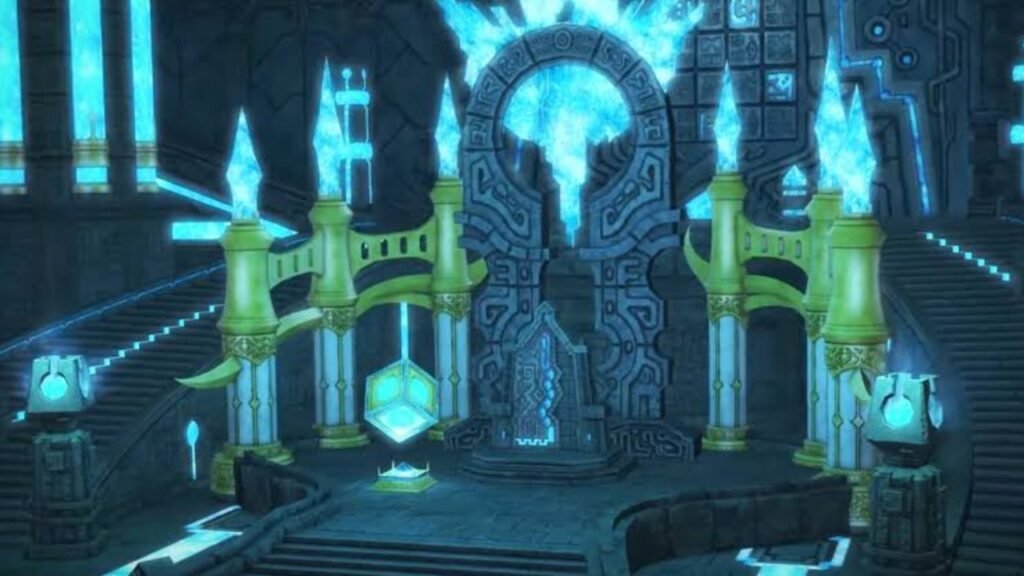
Now we come to the Third Astral Era, which is a very important point in Eorea’s history. Emert-Selch comes in contact with a man named Xande to help establish the Allagan Empire.
Xande is able to conquer most of the known world; however, he does not invade Meracydia, where the great wyrm Tiamat and her brood had settled.
The Syrcus Tower was built during this time. It drew power from the sun and was considered a symbol of prosperity in Allag.
Sometime later, the Allagans discovered Omega, and they soon reached new heights in Magitek. They went as far as to develop the Ultima Weapon and even discovered spaceflight.
After the death of Xande and over the course of a thousand years, the Allagan civilization sees a steep decline. Because of the ensuing stagnation of their race, Xande was brought back to life. And while he is able to restore the empire to its former glory, his ambition remains limitless.
So this time he decides to invade Meracydia. He consorts with the Ascians and takes the help of the voidsent, which are summoned from the Thirteenth Shard or the World of Darkness.
Xande and his forces are able to slay Bahamut in the battle. The Ascians then tempt Tiamat by giving her the means of bringing her beloved back.
The heartbroken wyrm attempts the ritual just to find out that her kin were only able to resurrect a vengeful shade in the image of Bahamut. During this time, others in Meracydia were desperate to protect their home, and called forth the Warring Triads, which included Sephirot, the Fiend, Sophia, the Goddess, and Zurvan, the Demon.
The Ascians then go over to Xande and reveal to him the means to bind the primals. So the Warring Triad were the first to be bound and sealed away in Azys Lla. Their energies were then put to work in powering the Centrifugal Crystal Engine.
Xande then uses Omega to defeat the primal Bahamut and incarcerates him in the lesser moon, Dalamud. This artificial satellite will then orbit the Source, collecting solar energy.
Many of the dragons, who were tempered by Bahamut, would remain in a perpetual state of agony, and Tiamat would finally be placed in stasis in Azys Lla.
After the Meracydian war, Xande starts remembering his previous death and starts taking a very nihilistic approach to life. He finds no meaning in his achievements, as he realizes, just like the last time, his glory would once again fade away to the annals of history.
So he now seeks to destroy the entire Source this time around. He sees no meaning in life, and to unmake the world, he calls upon the aid of the Cloud of Darkness, which is an extremely powerful voidsent.
However, an uprising takes place against his rule. This forces Xande to extract additional energy from Dalamud in order to open the gates for the voidsent. However, Syrcus Tower fails to hold the surge, and the excess energy is released into the ground, giving rise to massive earthquakes and marking the start of the Fourth Umbral Era.
On a side note, the process of binding primals and harnessing their power gave rise to a subsection of mages known as Summoners. These individuals were able to harness the essence of the Primals and create aetherial allies called the “egi”.
The Fourth Umbral Era
The Third Reflection was rejoined during the Fourth Umbral Calamity. This disaster was inflicted upon Earth and was a direct result of the earthquakes caused by the energy surge from Syrcus Tower.
The ground-based areas of the Allagan Empire were completely destroyed, and civilization was sent all the way back to the Stone Age. Much of their knowledge was scattered or lost, and Azys Lla, being skybound, was the only legacy that they could leave behind.
Dalamud is also said to have gone dormant during this time. And it remained in orbit till the Seventh Umbral Calamity came knocking.
The Fourth Astral Era
The Fourth Astral Era was all about rebuilding. Following the earthquake, the Source world reverted back to pre-Allagan technology. And civilization needs to start redeveloping once again.
Fifth Umbral Era
The Sixth reflection was rejoined during the Fifth Umbral Calamity. The age corresponds with the aspect of Ice, in which the period sees severe glaciation known as the Age of Endless Frost.
During this time, the ancestors of the modern Miqo’te, who were descendants of Allagan slaves, crossed the frozen seas and arrived in Eorzea.
The Sanctum of the Twelve was also constructed during this time. Entire colonies of Lalafells disappeared without a trace from Aloalo Island, and only a great wooden statue of their leader was left behind.
Fifth Astral Era
The Fifth Astral Era saw a good deal of investment in the discovery and development of magic. It was at this time that a Thaumaturge who went by the name Shatotto used the magic of Meteor on a whim to call down a star that contained dark matter. She then started crafting Stardust Rods from it, and as a result, the founding principles of Black Magic were laid down.
The once humble village of Mhach rapidly grew till it became one of the most powerful nations in Yafaem. One of their crowning achievements was the creation of voidmages who were able to harness the power of the voidset.
Now, to counter the Black Mages of Mhach, the Black Shroud kingdom of Amdapor developed their own White Magic, which emphasized restoration and purification.
In the middle of this, the city-state of Nym was one of the most prosperous regions in Vylbrand. While they were small in size compared to Mhach and Amdapor, they reinforced their ranks with Scholars. This class of mages summoned arcanima fairies, which enabled them to defend their land against the greatest of threats.
Sixth Umbral Era
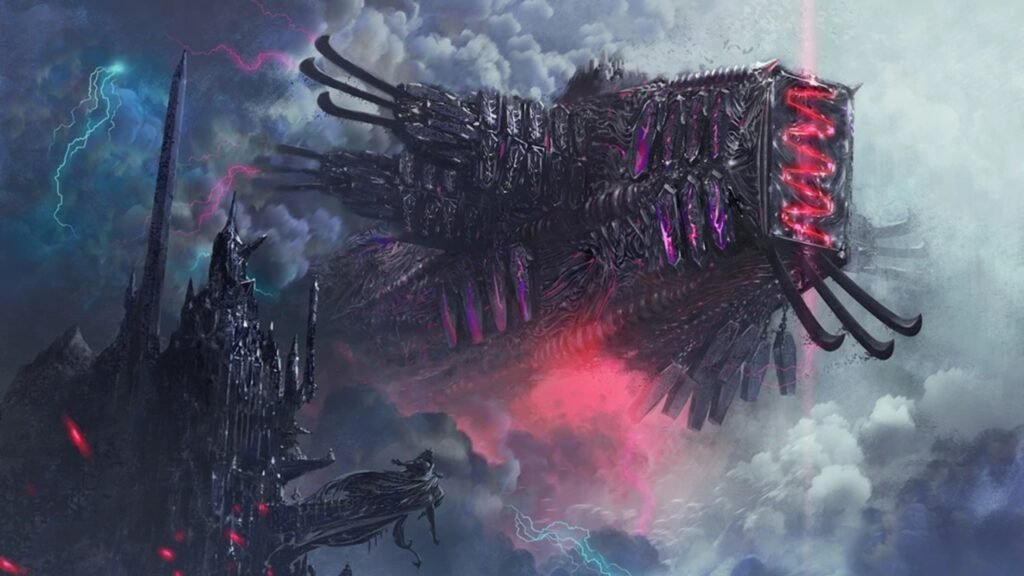
The Sixth Umbral Calamity is associated with the element of Water, and the Tenth reflection was joined with the source. This era starts off with the War of the Magi, where Mhach declared war on both Nym and Amdapor.
To win the war, the voidmages had decided to summon Diabolos, a great voidsent who would teach the Mhachi the means to summon and imprison numerous voidsent, which would also include their leader, Scathach, the Shadow Queen.
Cessair, the High Voidmage at the time, would oppose the summoning of Diabolos and would be imprisoned when she tried to stop the other voidmages.
Diabolos was then sent to destroy Amdapor, but instead gets sealed by the White Mages in the city ruins.
Another great voidsent, named Bitoso, was sent to Nym instead. Here, the entity will create a plague that would transform all the Nyms into Tonberries. This is something that you would discover if you have played through the Scholar questline. The Tonberry, Surito Carito, goes over a lot of detail on what happened to Nym and petitions for your help along with Alka Zolka’s.
Now, because of the war, there was an excessive misuse of both Black and White Magic. This then resulted in a Great Flood caused by the Elementals, which completely wiped Eorzea clean.
But a Roegadynn scholar named Nyunkrepf Nyunkrepfsyn foresaw the Great Flood and made a giant magical Ark, which allowed him to save as many people as he could. He and the survivors then landed on one of the islands of the Old World to establish the nation of Sharlayan.
However, Nyunkrepf was not the only one who anticipated the calamity. The Mhachi voidmages predicted it too, and they created a Void Ark instead. The ship was powered by a thousand voidsent, including Scathach. But it was soon found out that the sealing spell that Diabolos gave the mages was flawed, so Scathach broke free and broke the seal on the other voidsent as well.
To protect her people, Cessair and 53 other voidmages sacrifice themselves to rebind the voidsent. And for centuries the Ark sailed in the Sea of Clouds. The vessel was guarded by Cait Sith, Cessair’s familiar.
As a result of the flood, both Black and White magic were considered forbidden arts and sealed away. However, not long after, one named Quruka Ququruka broke the seals of the ancient tomes and took the teachings of the black magic in his heart, donning the robes of a long-forgotten era.
As for White Magic, after a few centuries the elementals eventually permitted a select group to inherit the knowledge and responsibility of the art. The Padjal, the long-lived magical leaders of Gridania, became the principal stewards of this ancient art. They were entrusted with ensuring that white magic would never be abused again or used to upset the balance of nature.
Additionally, another group of flood survivors followed the light of a meteor to the highlands of Gyr Abania. Believing that Rhalgr, the Destroyer, had saved them, they began to worship him and founded a religious group called the Fist of Rhalgr.
They went on to erect a temple in his name and train their bodies to the point where they could harness the chakras within them. This led to the rise of the Monk class that you see today in Eorzea.
Sixth Astral Era
The Sixth Astral Era sees the creation of the modern city-states that we see once the narrative kicks off in Final Fantasy XIV.
There is a lot that happens here, and I don’t want to go over all of them. If you have been paying attention in the Main Story Quests, you will already be up to date on everything that happened before the Seventh Umbral Calamity.
The recorded history of the era starts during the year 300 when the Elezen settle in Coerthas, and war breaks out between them and the dragons. The war ends when Shiva allows herself to be devoured by Hraesvelgr.
Peace lasts for 200 years before Thordan I kills Ratatoskr for her eyes, thereby building the city-state of Ishgard. Nidhogg calls forth the Dragonsong War, followed by the creation of the Dragoon class, along with establishing the mantle of the Azure Dragoon.
A few centuries later, the Republic of Garlemald was established, followed by the states of Limsa Lominsa, Gridania, as well as Ul’dah.
Garlemald then sees the rise of the Garlean Empire, established by Emet-Selch, who is posing as Solus zos Galvus. The empire then starts expanding its rule, and not long after, in the year 1572 of the Sixth Astral Era, they meet the Alliance Forces in the Carteneau Flats to kick off the Seventh Umbral Calamity.
Seventh Umbral Era
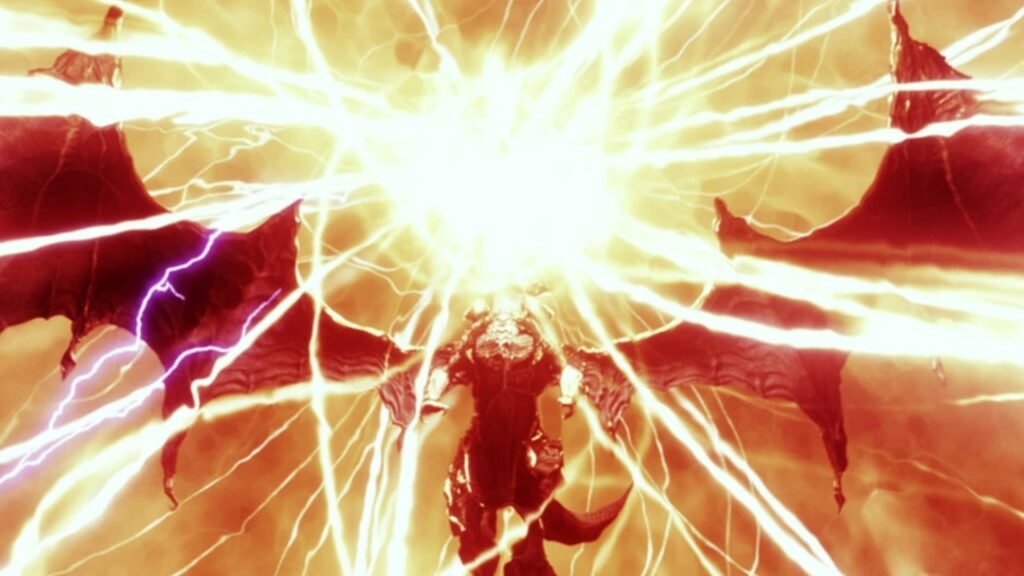
Now we all know what happens in the Seventh Umbral Calamity. As the Empire faces off against the Alliance forces, the lesser moon Dalamud breaks, with the Primal Bahamut bursting out, laying waste to the entirety of the Carteneau Flats.
Archon Louisoix Leveilleur had to invoke the twelve and sacrifice himself in the process to seal Bahamut away once more. The only thing he leaves behind is a broken Tupsimati, which is recovered by Kann-E-Senna, several days after the war ends.
This calamity was aspected to Darkness, and the Seventh Reflection was rejoined with the Source during it.
Now in the wake of Bahamut’s devastation, the next five years were all about rebuilding and recovering. Louisoix’s Circle of Knowing merges with the Path of the Twelve into a new organization called the Scions of the Seventh Dawn.
And your journey as Warrior of Light starts during the 5th year of this era. And it is we, the players, who usher in the Seventh Astral Era by defeating Gaius van Baelsar in A Realm Reborn.
Seventh Astral Era
The entirety of your adventure is taking place during this time as you strive to prevent the Eight Umbral Calamity. From post-AAR to Dawntrail, you beat back the ensuing darkness of the era and usher in a time of peace and prosperity.
Final Fantasy XIV has a very interesting way of documenting Eorzea’s history
FF14 has a very unique way of telling Eorzea’s stories, where it creates a sort of time loop where the Warrior of Light is often oscillating between the present and the past.
Its world-building and narrative style often reminds me of One Piece, and it’s filled with just as much progress as with setbacks. With every grand discovery leading to an equally dark reflection later down the line.
And honestly, I can’t wait for Evercold to finally drop and see what’s next in store for the heroes of Eorzea.

