
A recent declaration coming from President Donald Trump, where he demanded that AI companies ‘pay their own way’ for the massive energy they use, has ignited a fierce debate. While it is being framed as a move that would protect American households from soaring utility bills, his statement is being met with varied interpretations. Supporters and critics are now having a debate over whether it truly represents genuine policy reform or it is just something more transactional.
Community questions the move made by President Donald Trump
The reaction to the post made by President Trump on Truth Social was immediate. On platforms like X, a few users applauded his stance, calling it “extremely rare trump w.” They see his efforts to be a legitimate one, for shielding ordinary citizens from all infrastructure costs that are driven by corporate expansion. However, not all agree with this stance.
There are others on social media who are reading between the lines with their deep skepticism. A viral translation of this sentiment has been put ahead bluntly by a user who thinks, it clearly states, “ai companies must bribe me.” It encapsulates widespread distrust among critics who view every policy move made by Donald Trump through the lens of potential gain and personal motive.
The critics argue that his history clearly invites scrutiny. They are thereby questioning whether this call for the tech giants to shoulder the costs is a principled stand or just some opening gambit. Some comments like, “So do you have a plan or is it just to ask nicely?” clearly highlight the demands for a concrete policy that details much beyond the rhetoric.
The underlying fear of people is that “pay your own way” could actually morph into an opaque system. Here, favourable treatment gets negotiated behind closed doors, instead of a regulatory, transparent framework applied evenly to all. For the public segment, trust has been eroded. They are thereby seeing potential shakedown, wherein others see reform.
Crisis behind this politics
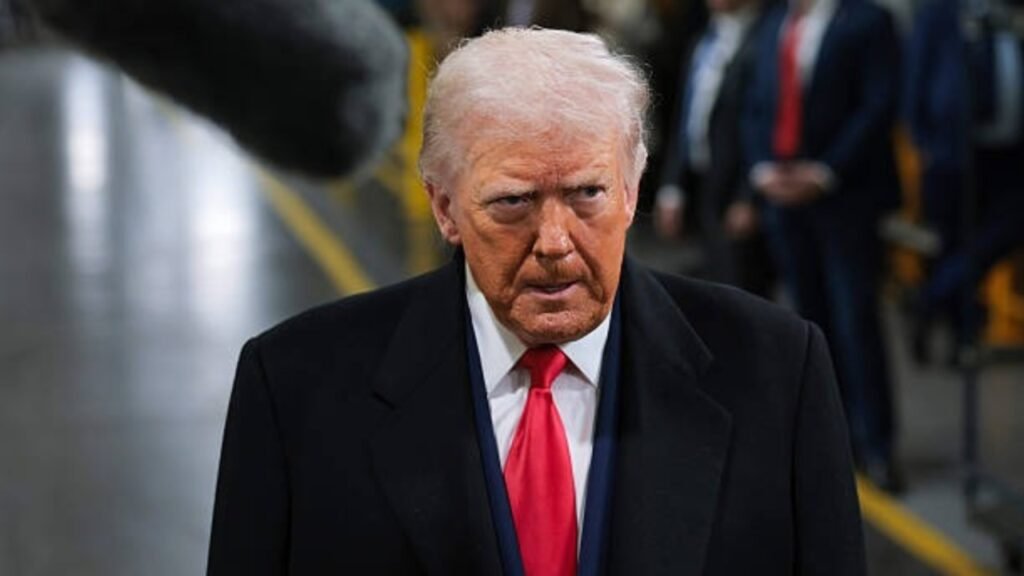
To set aside political noise, issues highlighted by Donald Trump are undeniably real as well as pressing. AI’s explosive growth is placing unprecedented strain upon the United States’ power grid. Building new data centers requires a huge amount of electricity. As a demand, it is outpacing the ability of the nation to generate as well as distribute power. The entire consequences are already seen. In some states, the prices of energy have spiked by over a third. It is hitting the residential users as well as small businesses the hardest.
Some industry leaders like Jensen Huang, Mark Zuckerberg, etc., have already identified the power scarcity as AI’s next bottleneck. Companies like xAI and OpenAI are now resorting to on-site, temporary generators for fuelling up their servers. However, these are just stopgap measures. Ultimately, they are to connect to the public grid, drawing power that communities also rely upon.
Now, this is not some hypothetical future concern. It is a present-day crisis wherein the fight for the watts could throttle innovation, while simultaneously inflating household bills. Therefore, the core question of who is paying for the needed grid upgrades is quite a legitimate ethical and economic dilemma. It extends beyond a single political figure.

