
A new political storm seems to be brewing. This time, it puts the threat to Boston’s 2026 FIFA World Cup matches status in question. The controversy started after President Donald Trump made some remarks, suggesting that games can be relocated. It has left officials and supporters scrambling for clarity. Moreover, this unexpected intervention has also sparked fierce public debate, mixing politics, sports and the passion of fans, in a way that only one can anticipate.
How did soccer fans react to President Donald Trump’s threat about the 2026 FIFA Boston games?
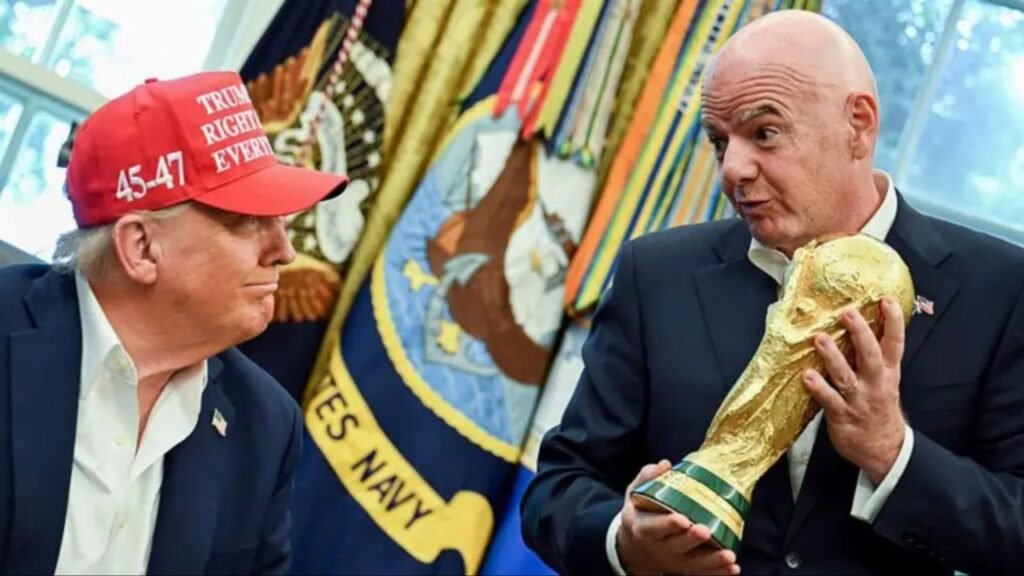
President Donald Trump’s threat to relocate games has ignited a firestorm of criticism coming from the soccer community. Many fans have taken to X, voicing their confusion and their anger as President Trump said, if he thinks there is unsafe conditions in Boston, he will call Gianni Infantino, the FIFA President and have games moved out of the Beantown, if he felt like it.
Reactions highlight a deep sense of fan frustration. The confusion’s
core got captured by a user who asked, “He’s charging tariffs on the World
Cup?”
Further speculation around the reasoning behind this threat emerged, too. A user even commented, questioning, “He wants to have FIFA games at The White House.”
“Why would he want that??,” said another, surprised by this news.
This proposal even had many express their bewilderment at the move of the President. A fan posted, “What’s wrong with this old man..?”
While another just sarcastically stated, “What, they won’t just hand him the trophy either?”
The entire backlash even extended beyond Boston. Some are even calling for a more drastic solution. An X user said, “The FIFA World Cup needs to be moved out of the U.S. entirely,” citing some safety concerns for the foreign athletes.
Another user further added a prediction for the reputation of America, by saying, “No event is ever going to want to come to the US again after this clown.”
Economic pressure pattern that led to criticism and more
For understanding immediate reference to tariffs made by fans, one will have to look at a broader economic landscape that has defined recent policies in America. The current administration ensured to make aggressive implementation of tariffs on a wide range of imported goods from different countries. As per their argument, the taxes protect American jobs and manufacturing.
All these tariffs act like taxes paid on the imported products, quite often leading to high costs which are passed down to businesses and consumers. Policy has already resulted in a complex web of new trade rates. Many nations, including Canada, China, India and the EU, are facing levies of 50% or more on goods. While it is intended for reshaping trade dynamics, all these measures have even fueled concerns about rising prices as well as global economic friction.
Such a strategy of using economic pressure as a negotiating tool has now become the approach’s hallmark. Such a context makes connections drawn by the fans between the World Cup and the trade policy threat less surprising. For the public that is already navigating the ripple effects of tariffs on global commerce, the idea of similar pressure being applied to international sports doesn’t seem to be far-fetched.

