
Pokémon Legends Z-A has chosen a confined and bold path, setting an entire adventure within Lumiose City’s digital recreation. While the focused urban setting sounds quite intriguing, some revelations suggest the approach might have backfired. The decision to construct the City’s entirety from a seamless digital mold has brought to gamers a monotonous RPG experience within the franchise. The decision has stripped Pokemon Legends Z-A gamers of the discovery that the series is popularly known for.
Lumiose City comes without secrets
The main core issue in Pokémon Legends Z-A lies within the fundamental design of the map. Instead of getting built from 100s of individual parts like parks, alleyways, buildings, etc., Lumiose City has reportedly been a gigantic, single model. Such a technical shortcut might streamline development, but it does critically undermine the sense of place in the game.
Without the presence of distinct and separately loaded zones, the entire city must be rendered at all times. Such a lack within culling quite often forces developers to simplify environments for maintaining performance.
Note: Culling is a process of only showing the players what is in front of them, immediately.
The result of the entire decision has brought ahead a play area that lacks some visual variety. Players are even reporting that the city, that is, the whole game world, could be traversed in just a a very short time. It exposes repetitive architecture landscape and the copy-pasted assets that developers were forced to simplify the cityscape landscape dramatically.
For a role-playing game (RPG) which traditionally thrives on leading its players from deserts to lush forests, snowy peaks, etc., to be trapped in a homogenous city visually, without environment changes could create a bland adventure. The wonder of discovering a uniquely themed and new town is completely absent from the game.
Pokemon Legends Z-A shatters the illusion of the living world
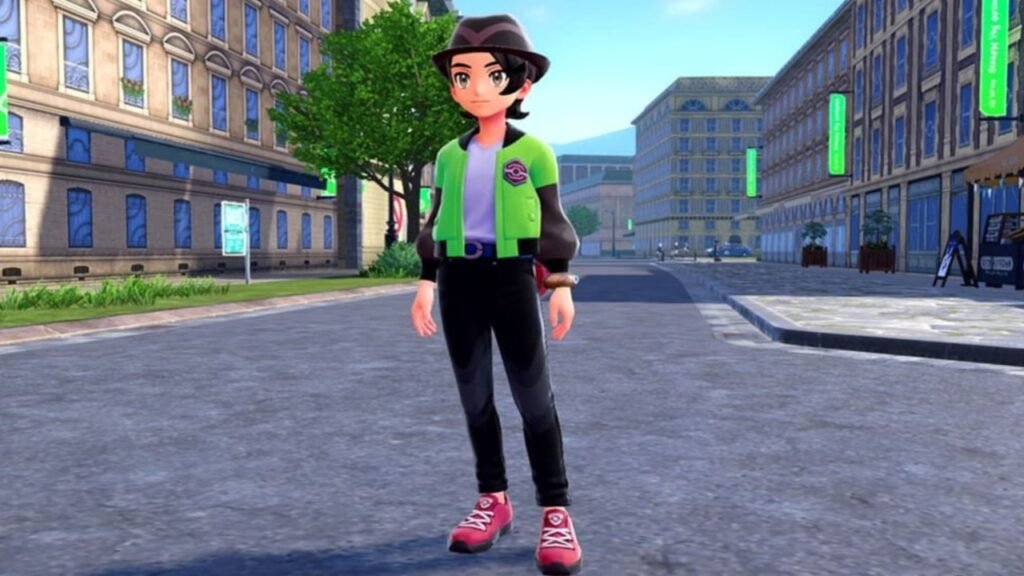
What connects the bland RPG experience and the technical flaw of Pokemon Legends Z-A is the death of immersion. Within classic Pokémon games, all the towns used to feel unique as it was distinct locations that players journeyed to. To arrive in a new settlement was a reward, a moment of respite with its character, music and secrets.
When a game is set entirely within a continuous model, the feeling of progression completely evaporates. The districts of the city blur together. The developers have failed to establish their identities; after all, they are all part of the same whole. For example, a player might be in a small café on North Boulevard. But the game will render some distant spires of the business district, putting constant and heavy strain on the capabilities of the console.
The design choice has shattered the living world’s illusion. Exploration to players, as per reports, now seems like a chore of navigating some similar-looking boulevards and not an adventure via diverse biomes. For many long-time fans, it’s a design choice that is a symptom of some larger issues. As per them, it is a lack of ambition that has led the game to this.
Pokémon Legends Z-A has all corners looking the same
The loop of RPG for seeing a new town on the horizon and striving to reach it is now replaced with a circular and simple tour of similar architecture. It further reduces the Pokémon journey’s grand aspect to walk through a digital aquarium, wherein all corners look the same.
It makes the world feel less likely like a place to be lost in and much more like an artificial and static level. Moreover, it has left players wondering if the journey’s magic, which is the heart of the franchise, has been lost in repetitive building and all technical compromises.

