
CES 2026 kicked off with showcases from major brands and players in the industry, and both Nvidia and AMD had quite a fair bit to share this time around. Unfortunately, the common theme happened to be AI, which was aggressively pushed forward over the likes of actual hardware releases.
Indeed, this year’s CES saw a rather remarkably sparse showing of actual consumer grade hardware, which should tell you all you need to know about the priorities of these companies at present.
Both Nvidia and AMD Barely Had Anything to Show for Consumer Grade Tech in CES 2026
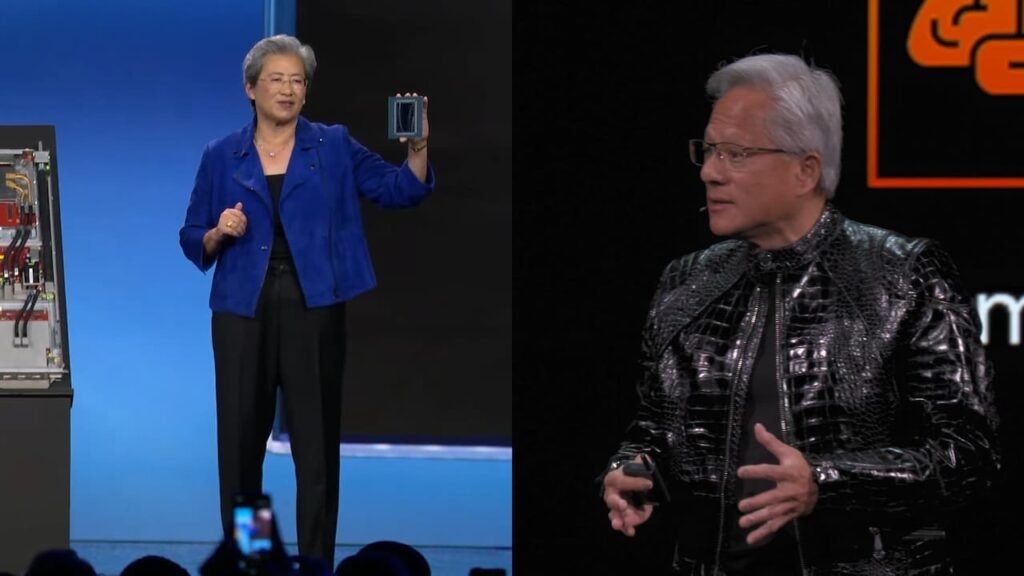
CES 2026 kicked off with Nvidia’s showcase, as CEO Jensen Huang walked up to the stage in his classic leather jacket, all to announce…a series of AI powered solutions for both hardware and software.
Some of this tech is really impressive though. We had our first look at the Vera Rubin chips, which offer a 5x jump in performance for AI related workloads, along with glimpses of autonomous driving solutions from Nvidia (in the near future) as well.
Going back to what was announced for gamers, we had the release of DLSS 4.5, a much appreciated model that aims to improve upon what was already a pretty solid implementation.
That’s about it. Nvidia had zero consumer grade hardware to show off this time around, effectively skipping the rumored RTX 5000 Super series entirely.
Not to be outdone, AMD also had a rather heavy focus on AI this CES, unveiling the MI455 and MI440X chips which are, once again, specialized for server grade AI workloads.
Thankfully, gamers were spared a bit of time with the announcement of a revamped AI 400 and AI Max series of CPUs for laptops and the like. We also had our first look at the Ryzen 7 9850X3D, which is currently the world’s most powerful ‘gaming’ CPU.
Which sounds fine and dandy, until you look at the fine print. These CPUs are essentially just rebadged versions of last year’s releases, with barely any improvements to speak of.
AMD seems to be taking a page out of Intel’s book here (who have, ironically enough, started to innovate with the Panther Lake series), and are delaying progress just because they no longer have any competition left in the CPU space for PCs.
CES has always been a consumer electronics focused show, and seeing companies pivot toward AI, while simultaneously dumping its gaming audience, is not short of unfortunate.

