
Buying a new laptop isn’t easy, especially for those who do not prefer Macs. Interestingly enough, modern Windows laptops simply offer a much larger set of features, and can often go toe to toe with MacBooks.
That being said, this was not always the case. In the early days of Apple Silicon, Windows laptops simply had no way to match the value, performance, and battery efficiency of Apple laptops.
Going back to more recent years, laptops are now far superior to those of before, boasting all-day battery life and unmatched performance across both x86 and ARM fronts.
However, there is the elephant in the room that we haven’t addressed yet – the one thing that ruins perfectly good laptops. The elephant in question is the slop-ridden mess that is Windows 11.
Microsoft’s flagship product and the most popular operating system on the planet, Windows 11, has quickly grown to become a major pain in the backside for all users, who simply want an operating system that doesn’t get in their way.
It’s gotten bad to the point that many former Windows users are now switching to Linux, or even macOS (that is, assuming you can stomach its many quirks and high pricing).
The reason is pretty simple. It is the relentless enshittification of Windows with Copilot-induced hallucinogenic bugs and unsavory product placements that has bitten Microsoft back hard.
It’s a sad fall from grace, but one that was not entirely unexpected.
Microsoft has been fighting this battle for quite some time now

This isn’t Microsoft’s first rodeo with attempting to unify Windows as a product. Some of you might remember the series of failed (but nevertheless incredibly innovative) products that were the Zune and the legendary Windows Phones. All met a similar fate – being reduced to e-waste as Microsoft continually kept fumbling the bag with their products.
The whole Windows phone ‘incident’ seems like such a missed opportunity now that you look back at it. Microsoft clearly had something very special going on, and a solution that could have been a major contender against Apple’s own walled garden.
Unfortunately, like most things with Microsoft, this never came to pass either.
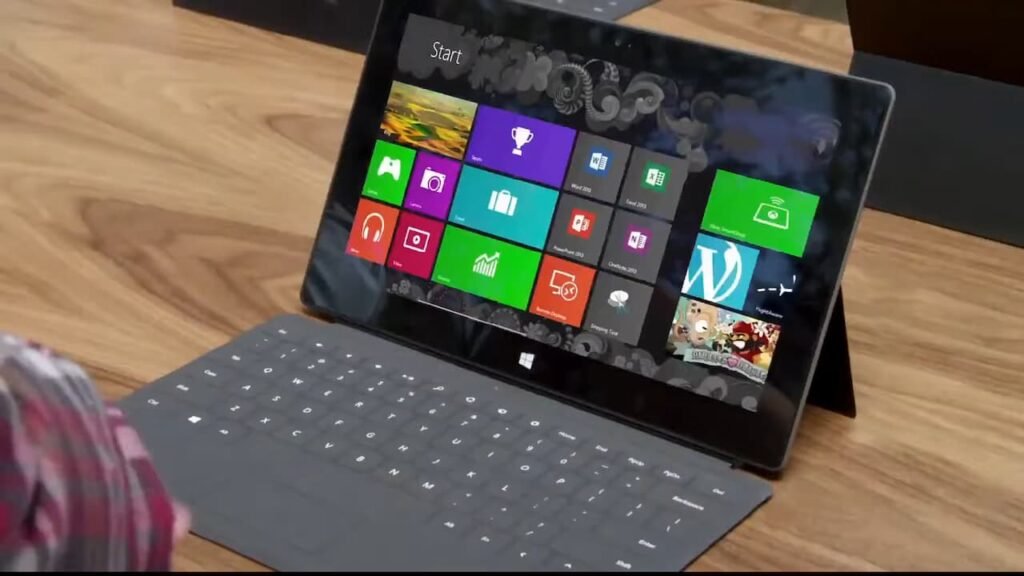
One of the more recent slip-ups would be in its whole transition to ARM. Qualcomm and Microsoft both promised the moon, but ultimately failed to deliver.
The previous-gen Windows on Arm laptops were, for the longest time, riddled with app compatibility issues (most of which have been fixed, except for gaming). While its present state is a hell of a lot better, it’s another case of too little, too late.
By this point, a lot of users will have already switched, and Microsoft’s stubbornness isn’t particularly helping in the matter either.
All of this brings us to the point, which is that Microsoft, as a corporation, has had a rather disappointing track record, and recent changes do not seem to be pointing toward a withdrawal of the AI-focused hubris being shoved down the user’s throats, so I’ll remain pessimistic.
Losing the plot and the trust of its user base

With Windows 11 bringing so many new bugs and breakages, a lot of folks have grown frustrated to the point of switching over to entirely different operating systems.
There have been many benefits too, which one would assume is natural when switching over to an operating system that does not actively fight against you, or throw down unwanted bloat and nagware on the end user. Take Apple, for example.
Yes, you don’t get an OLED panel on the MacBook Pro, but that mini-LED is perfectly fine, as are its speakers and performance for the price. More importantly, macOS feels like a breath of fresh air when you switch over from Windows.
The operating system doesn’t actively fight you, and has no annoying nagware built in. A lot can be said for the Mac experience, too, as a package. It offers fantastic battery life, sleep that actually works, and excellent performance even while unplugged.
Windows pales in comparison. Sleep doesn’t work reliably to this day, and each forced Windows Update interrupts your workflow, in addition to bringing in a bunch of bugs.
While most of these changes can be reverted using custom scripts and the like, it’s not exactly fair to expect your average Joe to know much about this, much less stand up and stomach it.
It’s not like modern laptop hardware is inherently terrible
It’s such a shame when you think about it, though. Yes, part of Apple’s success was in its revolutionary ‘Apple Silicon’, which continues to blow past the rest of the industry’s best efforts across both ARM and x86 fronts.
That being said, all three Windows contenders have made insanely powerful strides in the past few years, managing to pack in performance and efficiency both into the same package.
This is especially true for Qualcomm’s Snapdragon X series of laptops, which have now only grown better with the X2 Elite. Better app compatibility also helps.
Intel and AMD have also made incredible progress, and prove that x86 might still have fight left in it yet against ARM. Every competitor has decent enough hardware out there that it’s ridiculously enough, not the bottleneck it was before.

So, what gives? The answer is Windows 11. The operating system has grown to become notoriously obtrusive and unreliable in the past few years.
Which is not counting all the weird bugs and broken updates that seem to spectacularly explode a perfectly working install into a blue screen of death. Sleep, for example.
Sleep and hibernate functions are spectacularly broken on Windows 11, making for some really frustrating moments. No one likes opening their bag to find the laptop all hot and out of charge.
This kind of issue is really not something you’d find in a modern MacBook (and to a lesser extent, laptops running Linux), and is something that Microsoft should have solved a long time ago, especially given how sleep is one thing a laptop is supposed to be doing between hours of interrupted usage.
Combine that with forced updates that overwrite your more stable, existing OEM drivers, and the fact that none of this is easy to roll back, and you have a rather chaotic operating system that never seems to do what you want it to.
The role of an operating system in the modern age is quite minimal, to be honest, and most apps are essentially running in a browser window. Ideally, you’d want an OS that stays out of the way in the background and lets you work, uninterrupted.
This is not the case with Windows 11, and it feels like you’re fighting the operating system for control. It’s a really frustrating experience, and seeing Microsoft not back down doesn’t help either.
Apple stands out in stark contrast
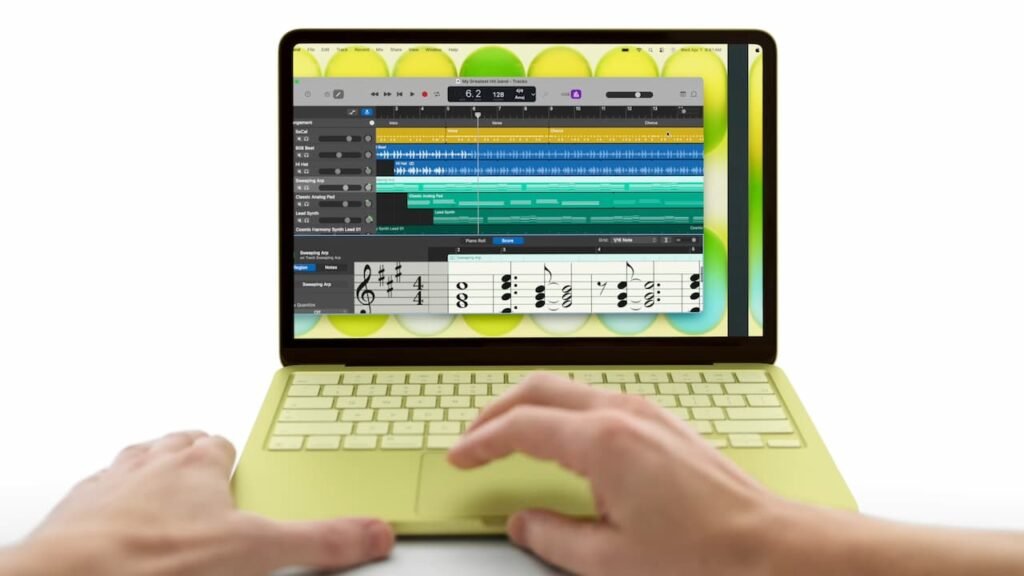
An interesting case could be studied in Apple’s approach toward the game. If you think about it, Apple has never really been first to the technological space. Sure, their products are incredibly well-made with (usually) polished software, but never really innovative, playing it mostly safe.
The MacBook Neo is a really good example here. The laptop isn’t the most powerful or capable one out there, but most certainly is ‘good enough’ for the price point, and it runs macOS, which happens to be objectively superior to Windows 11 at this point.
Despite many hurdles (and that measly 8 gigabytes of RAM), I’d say that Apple has done an excellent job here.
The MacBook Neo is zippy and punches way above its weight class. More importantly, it does so at a modest price, something which wasn’t previously Apple’s forte.
It’s also a fantastically well-built machine, offering great hardware that’s both repairable and reliable.
With Apple catering toward the ‘budget’ crowd a bit more than usual, Microsoft might be looking at other competitors eating into its pie, and that’s not taking into account FOSS solutions…
The Linux angle
The truth is, not everyone can afford a brand new Mac, or a new computer, for that matter. Let’s not kid ourselves, buying a new machine (and setting it up) is a chore for most folks.
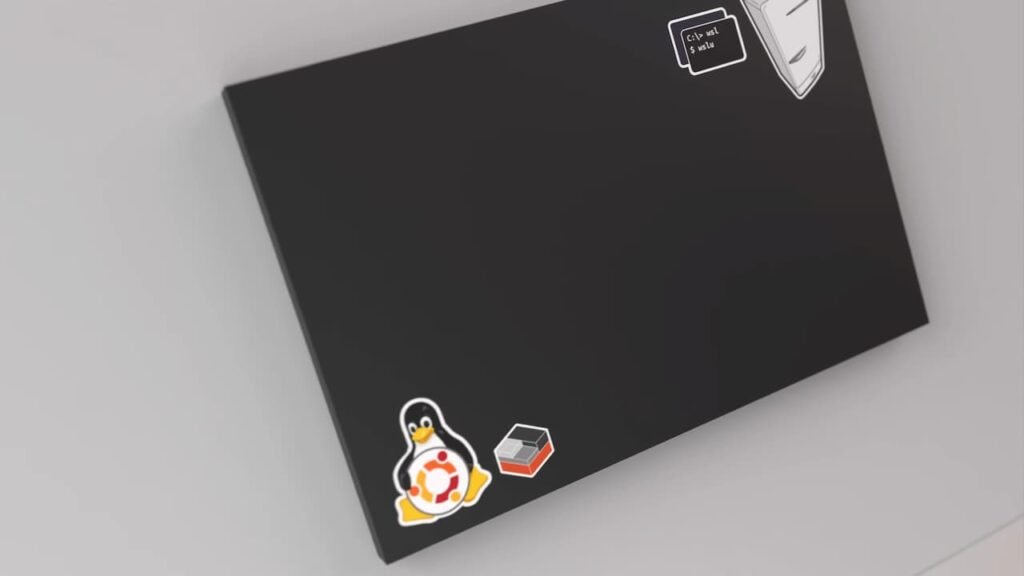
They would much rather reuse their existing machines, and that’s exactly where Linux comes into the equation. You probably know this already, but Linux is a (usually) free, open source operating system that can run on almost all manner of computing devices, and is kind of the backbone of modern computational and server-grade workflows.
While Linux has always been admittedly obtuse (and thereby, unapproachable) for the average Joe, modern installers and distros have mostly managed to bridge the gap, making Linux ideal for daily driving – even if you do not know how to use the Terminal.
Best of all, it’s free, making it a no-brainer to try and use. Breaking free of both Microsoft and Apple’s closed ecosystems is a move that should be encouraged, and now is a good time to switch as any.
Especially if you’re a gamer, since most titles without kernel-level anti-cheat work fine, even under translation layers such as WINE.
It’s no coincidence that Microsoft has started to bleed consumers over to the Penguin.
Windows on ARM is….
Interestingly enough, before Apple Silicon, we had Microsoft take a jab at making an ARM-powered laptop with the Windows RT devices, back in the heydays of Windows 8, which failed to take off.
Fast forward several years later, and Microsoft took a second swing at the platform with Qualcomm’s X series of laptop CPUs. These laptops were a direct response to Apple Silicon-powered MacBooks, which set a new standard for laptop efficiency and power, something that was simply not the case with Windows-based devices at the time.
Going back to Windows on ARM, Qualcomm’s launch went on with much fanfare until the cracks started to appear. While the platform in and of itself was fine, app compatibility most certainly wasn’t.
The X series suffered from poor x86 app support, and there weren’t many native ARM apps at the time. Going back to the present, a lot of things have changed for the better, unless you happen to want to run Linux on these machines. There are ways, but it’s not as simple, and not all devices seem to be supported.
Going back to Windows, a lot more apps work natively on ARM, and the few that don’t work well enough under the x86 translation layer. In fact, Windows on ARM is a heck of a lot more hiccup-free than x86.
That being said, it’s not all sunshine and rainbows. Windows is still a bloated mess on ARM – enforcing telemetry, adverts, and other features you cannot turn off. With proper Linux support on Qualcomm laptops being in a kind of awkward state, it seems like a poor choice.
It might be too late for Microsoft
Microsoft might just have grown a bit too complacent. For decades, Windows has reigned supreme as the most popular operating system of choice, largely thanks to it being preinstalled almost everywhere and the fact that most apps (and games) work on the platform.
Things are changing, though, and in a way, big now. With the release of Wine 11 and tools such as Crossover for Linux and macOS, respectively, Microsoft’s chokehold on the consumer market is gradually being lessened.
More and more apps are macOS (and often, Linux) compatible, and depending on your workflow, it might even be easier to switch on over to right now, without any appreciable loss in functionality.
With Windows in free fall, aided by the loss of consumer trust, Microsoft’s services look to be in a bleak state of affairs. If you think about it, it’s borderline asinine how bloated Windows has become in recent years.
Remember, for the average user, switching an OS is a massive pain to get working, and the overall general public consensus is that Microsoft is not taking the correct path here, so having users switch over to macOS or Linux is indeed a dire state of affairs.
Unless they can absolutely pull off a miracle, Windows as a traditional desktop operating system might be forever doomed. But hey, at least we still have alternatives.

