
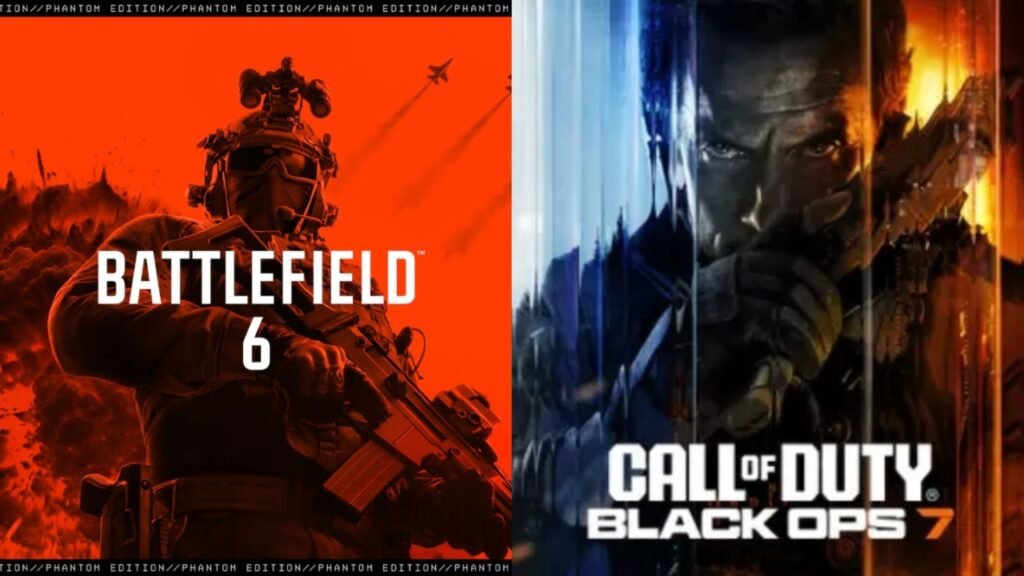
A new front has opened up with the decades-long war for gaining supremacy in first-person shooter gameplay between 2 FPS titans. Battlefield 6 and an upcoming title, Call of Duty: Black Ops 7, have ignited fierce battles for the players. While both these games were poised to become an annual skirmish, this time, this momentum has changed. Emerging data and dramatic shifts within player sentiment suggest that the triumphant return of DICE to form isn’t just winning battles, but it is convincing the most loyal soldiers of Black Ops 7 to defect.
The latest offering of DICE isn’t just some successful game but is a comeback story. It is now pulling dedicated players away from its competitors’ established fortress. It is specifically forcing a strategic reckoning for the Call of Duty franchise.
Did DICE really make Activision lose its core player base?
If numbers told a story, it would have been quite unthinkable a year back. On Steam, which is a key battleground for player engagement, Battlefield 6 has been consistently averaging approx. 300,000 concurrent players. It passed 700,000 concurrent players in under an hour of its Steam launch. Such an impressive figure is a representation of a focused game.
In stark contrast to the above number, the entire Call of Duty’s Steam ecosystem, which includes Black Ops 6, Warzone and also Modern Warfare titles, struggled. They maintained an average player base of just 40,000 at any time. Even with some generous estimates accounting for the players on some other PC launchers, the total PC presence of Call of Duty is getting overshadowed decisively by its rivals.
Altogether, the numbers represent DICE’s monumental victory, especially considering the position the developers stood in just some time back. Battlefield 2042, that couldn’t stand up to expectations and was riddled with poor gameplay, bugs and an identity crisis. It left the reputation of the studio in tatters.
While Activision was continuing the annualized cycle, despite increased player fatigue, DICE was taking a different path with Battlefield 6. They executed the back-to-basics approach and stripped away all gimmicks that had plagued 2042. It led them to return to core and large-scale warfare, which actually and originally built up their fanbase. Such a decisive return to form is where Activision failed to deliver, and their core player base is now voting with playtime.
Where did the disconnect between Battlefield 6 and Black Ops 7 kick in?
The entire exodus doesn’t seem to be happening in a vacuum. Activision made some strategic errors which Battlefield 6 deftly avoided. For many years, the gaming community criticized the company for removing its in-game player counts. It was a move perceived as an attempt to hide newer titles’ declining engagement. Also, the decision to lump Call of Duty games into a bloated and single application backfired. It created a convoluted experience for users, masking the individual weaknesses of all releases.
Also, DICE, as reported by a few experts on their channel, seems to be learning that one can’t please all. Battlefield 6 Season 1 launch introduced Redsec, the new Battle Royale mode. It was clearly an attempt by DICE to compete with the cash cow of Activision, i.e., Activision, directly.
The move, though, met with some significant backlash from Battlefield’s core community. All these players have the well-documented disdain for the Battle Royale format and anything that smells of imitating Call of Duty. Such a misstep shows that while DICE did win back its goodwill, it brought similar internal conflict (a dangerous gamble), but with some key differences.
The player’s rejection underscored a critical lesson—players who flocked to the large-scale and objective-based warfare of Battlefield had little interest in becoming just another competitor in the Battle Royale space. It stood in contrast to the strategy of Activision, which saw the core Call of Duty experience be saturated with some out-of-place cosmetic crossovers and also live-service elements, which, as per many, breaks the military shooter’s immersion.
The misstep of DICE with Redsec was identified by the community quickly. However, Activision has been quite slow to pivot away from a strategy that gives priority to a broad and Fortnite-like appeal, over satisfaction of its player base.
How has the road to redemption been shaped?
What actually connects all these developments is a fundamental clash within developmental philosophy. The success of Battlefield 6 is built upon the foundation of fan service and stability. After their disaster with 2042, DICE ensured to listen. They then delivered a functional and polished game at launch, which honored the roots of the franchise. It also focused on teamwork, dynamic destruction and massive maps. Such reliability resonated with players’ base who were tired of invasive microtransactions and broken launches.
On the other hand, Activision appears to be still struggling with its identity. The Call of Duty franchise is now a behemoth stretched across business models and too many modes. It has traditional multiplayer to live-service leviathan (Warzone). It thereby diluted the core experience that once made this franchise untouchable.
While Call of Duty: Black Ops 7 promises a pullback on controversial crossover cosmetics as well as skill-based matchmaking re-evaluation, all these feel like some reactive measures. They are just some attempts to win back disillusioned enthusiasts that Battlefield 6 captured, instead of a proactive vision for offering a great game.
Despite all FPS supremacy, the war between the two franchises is far from over. However, for the first time in almost a decade, Call of Duty is trying to play catch-up. Return of DICE, successfully to its roots, has proven that there is a massive hungry audience for classic, refined military shooters. As for Activision, it is no longer competing with its rival. It is simply fighting to win back the community’s heart, which it once took for granted.

