
For nearly a decade, one thing at Liverpool FC felt inevitable, that is, Mohamed Salah would score.
Since arriving in 2017, the Egyptian forward has been the club’s attacking heartbeat. He has won 4 Premier League Golden Boots, equaling the all-time record set by French legend Thierry Henry.
In the 2024/25 campaign, he achieved something unprecedented in English Premier League history by becoming the first player to win the Golden Boot, Playmaker of the Season, and Player of the Season awards in a single campaign, finishing with 29 goals and 18 assists.
That season cemented his legacy not just as a scorer, but as a complete attacking force. The Liverpool winger averaged around 23 league goals across eight straight seasons, and delivering relentless consistency in one of the world’s toughest leagues.
But now, something feels different. A 10-game Premier League goal drought — the longest of his career, has triggered a wave of questions. At 33, with only 4 league goals this season, critics are circling.
Pundits have been harsh. Rumours of tension under manager Arne Slot have surfaced. And talk of a possible 2026 exit refuses to fade.
So the real question is, what actually happened to Mohamed Salah? How did the “Untouchable Egyptian Pharaoh” suddenly turned into Liverpool’s biggest question mark?
We tried finding out the possible reasons based on Liverpool’s recent internal scenario.
From king to villain: Why Liverpool’s season is more than just Salah’s goal drought
Liverpool, the defending EPL champions, currently stands 5th in the table after 28 matches in the 25/26 season. Much of the focus for this decline has naturally fallen on Mohamed Salah’s uncharacteristic goal drought — now 10 Premier League games and counting.
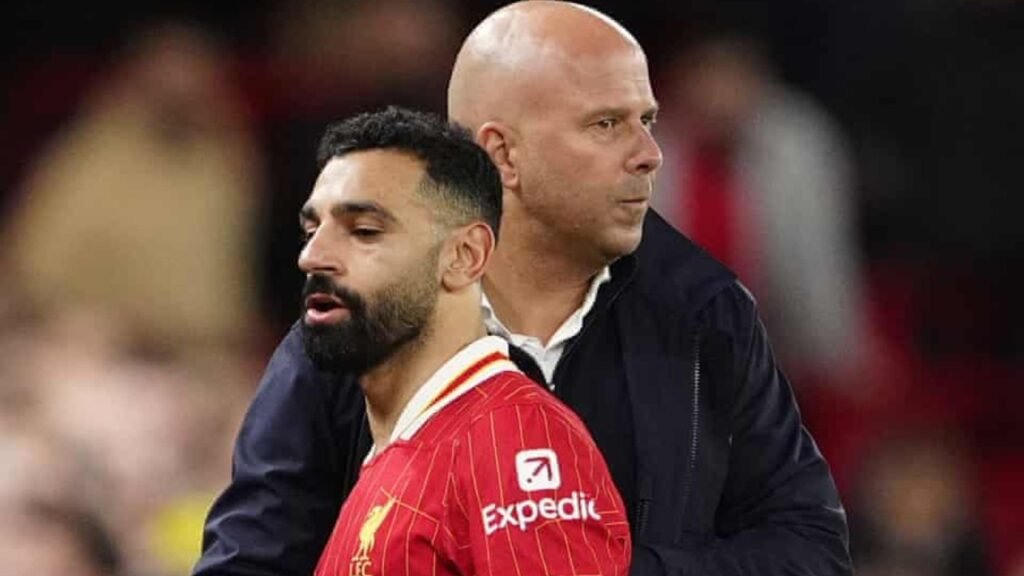
However, the story goes well beyond one star’s dip in form. Here are 5 possible reasons:
1. Age or just a bad patch?
Let’s start with reality. Salah is 33. For explosive wide forwards who rely heavily on acceleration, sharp movement, and quick transitions, this is typically when marginal physical decline begins. That doesn’t mean a player is finished, but it does mean adaptation becomes essential.
Across eight seasons, Mohamed Salah defied natural decline. This season, however, the drop-off feels more visible with fewer high-intensity runs, lower shot volume, reduced one-v-one dominance, and strikingly fewer touches in central scoring zones
But here’s the nuance: dips happen to every elite footballer. Even the greatest have off-seasons. One down year does not erase eight historic ones.
2. Tactical variations under Arne Slot
Last season, Liverpool lifted the Premier League title with a squad largely shaped in the previous era. The structure still carried heavy tactical fingerprints from Jürgen Klopp — aggressive pressing, high full-backs, rapid transitions, and Salah operating in his favourite inside-right channel.
This season looks different. Slot’s approach has demanded more positional discipline and shared attacking responsibility. The system no longer funnels chance creation almost exclusively through Salah. Instead, it distributes creative burden across the front line.
The result is obvious. Salah is touching the ball wider. Receiving it deeper. Isolated more often. And when a goal-scorer is moved a few meters away from danger zones, margins shrink dramatically.
This isn’t necessarily poor management, it’s tactical evolution, rather variation. But Salah is clearly still adjusting.
3. The full-back effect: An overlooked factor
One of the most underrated reasons behind Salah’s dominance during peak Liverpool years was overlapping full-back support.
When Trent Alexander-Arnold and Andrew Robertson were flying, Salah thrived. Overlaps pulled defenders away. Space opened inside. Defensive blocks stretched.
Now three primary factors impacted here:
- Alexander-Arnold’s departure to Real Madrid removed a primary creative partner.
- Robertson has struggled with form.
- Jeremie Frimpong’s long-term injury disrupted structural balance.
Without that consistent right-sided overload, Salah often faces double marking with limited support. The tactical ecosystem that amplified him has changed.
4. Transfers and Identity Crisis
Liverpool’s transfer strategy this season has drawn significant criticism.
Luis Díaz’s exit removed unpredictability on the left. Heavy investment in new attacking profiles like Florian Wirtz, Hugo Ekitike, and Alexander Isak hasn’t yet translated into cohesion. There are moments of brilliance, lashes, but no sustained rhythm.
This has forced Mohamed Salah to oscillate between being the main outlet and just another piece in a rotating front line.
For a player built on rhythm and repetition, instability hurts.
5. Mental weight and the “Scapegoat” narrative
Salah recently hinted that his relationship with Slot had strained at one stage, saying it felt like someone didn’t want him at the club.
Whether emotional or factual, that statement revealed something deeper, to be precise, frustration.
Being subbed after two or three quiet games. Hearing pundits label you “yesterday’s man.” Watching narratives shift from legend to liability within months.
Confidence is oxygen for forwards. When doubt creeps in, finishing tightens. Movements hesitate. Salah has carried Liverpool through elite seasons. Now, when the team struggles structurally, he becomes the easiest focal point for criticism.
So, is this the end of Liverpool’s “Pharaoh” Mohamed Salah?
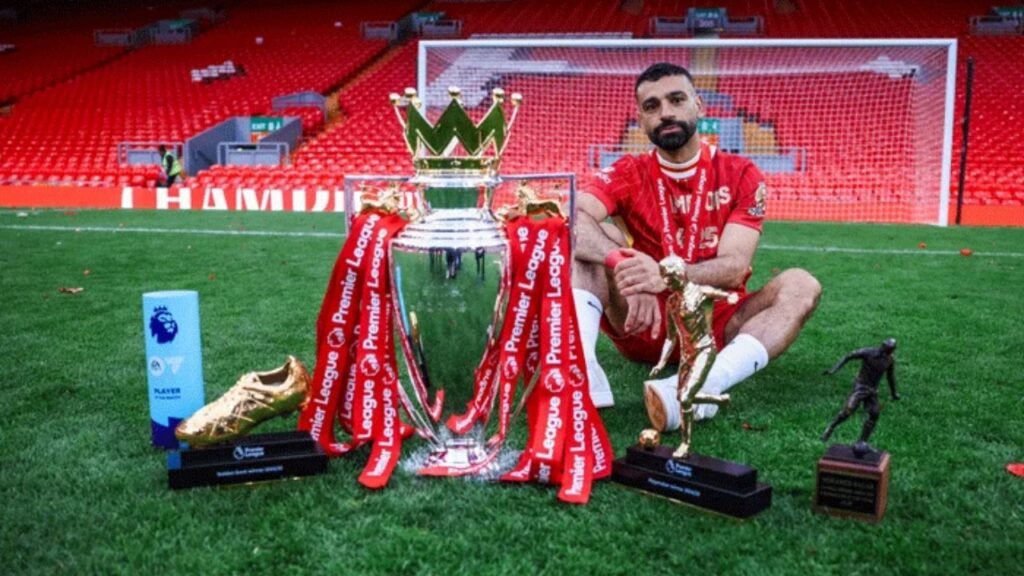
There are three possible interpretations for this entire “Salah downfall” scenario:
- Natural Decline: Age is catching up. Output will gradually taper.
- System Mismatch: Tactical tweaks have reduced his efficiency.
- Temporary Dip: A brutal but reversible slump.
The truth likely lies in a blend of all three.
History suggests Mohamed Salah rarely stays quiet for long. He has recently scored from the spot against Brighton in the FA Cup 4th round. But even if he never returns to 20+ Premier League goals a season, his legacy at Liverpool is already cemented.
Mohamad Salah’s situation cannot be tagged as a collapse or an overnight decline. It is something far less dramatic, and far more human. A 33-year-old legend is navigating physical changes, tactical evolution, transfer instability, and public scrutiny. The unfortunate part is, it is happening all at once.
Liverpool’s bigger issue may not be Salah’s finishing. It may be whether the club has successfully rebuilt the structure that once made him unstoppable. Because sometimes when the king stops scoring, it isn’t just the crown that’s slipping, it’s probably the kingdom that’s changing.

