
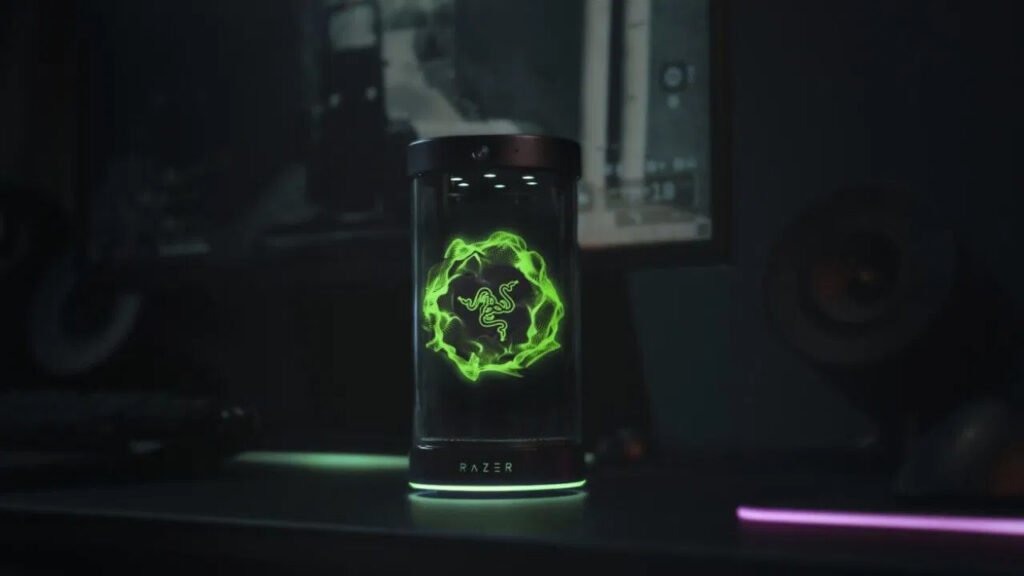
Razer is making strides with new AI tech, as they just unveiled their newest product for the global market. A holographic AI assistant that has raised some eyebrows and become the center of tech discussions for the past two weeks.
In a new interview with Razer CEO, Ming-Liang Tan, who sat down at CES to talk about and explain their approach regarding the usage of AI. He argued that tech everywhere is heading to a point where it will become hard to move away from it. But he also criticized the growing use of generative AI.
“At some point in time, we’re going to see so much slop out there that we’re going to crave for really great art, really great design,” Said Tan during the interview, which was a key highlight. Even though a large chunk of the talk was about the ideation behind a holographic waifu.
What are Razer’s upcoming projects?
In recent years, Razer leaned on massive AI projects, one of which was revealed in 2025. Project Motoko, in which the company revealed its take on AI glasses, but in the form of a gaming headset. Now they have just unveiled their new holographic project, which is titled Project AVA.

Ming-Liang Tan compared the idea of a holographic assistant to the likes of Cortana from Halo; someone who is always there to assist in daily tasks and lighten up the mood. He also touched upon the topic of falling in love with such an AI, which is very plausible.
This is not the first time we have seen a holographic assistant being a part of daily life. In Japan, an individual by the name of Akihiko Kondo became famous for being one of the first ever human to marry a hologram back in 2019. The technology was developed by a company called Gatebox.
The news sparked debates and was a recurring topic for newspaper headliners. But Ming-Liang Tan reaffirmed in the same conversation that “not something” they want to build the experience towards.
Razer wants to stay away from generative AI slop
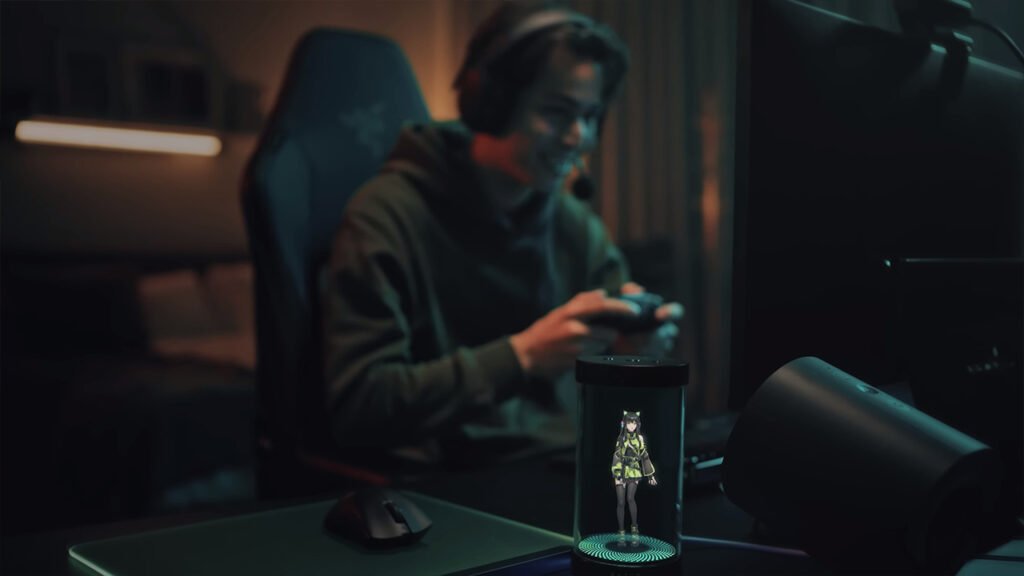
He revealed that the AI assistant was originally conceived as just another app or for more immersive digital assistance. But they soon turned to new grounds, seeking to create something more fun.
Tan addressed the fact that the tech is using xAI, which has been notorious on social media in recent times for its deep fake and generative capabilities. “My focus to date has been more in terms of what’s the best conversational model that we’ve got, and they’re great, they’re fantastic.” He said.

Regarding the issues that the world is facing over generative ‘AI slop’, Razer seems to be clear about their stance as Tan added, “I think for us, we’re all aligned against gen AI slop that is just churned out from a couple of prompts and stuff like that.”
As consumers, most of us will have to stay reserved and see how the situation develops after the tech is launched in the market.

