
What started as a quiet and small update, with patch notes and the fan-favorite mode’s return to Counter-Strike 2, wiped billions off the virtual economy of the game in hours. As per reports, this was not some market correction but a direct message to the developer. The digital collapse, which began in code, also became a financial reckoning for the CS2 players who treated skins like investments. It acted like a wake-up call and cost them dearly.
Why is the crash a reality check for the players?
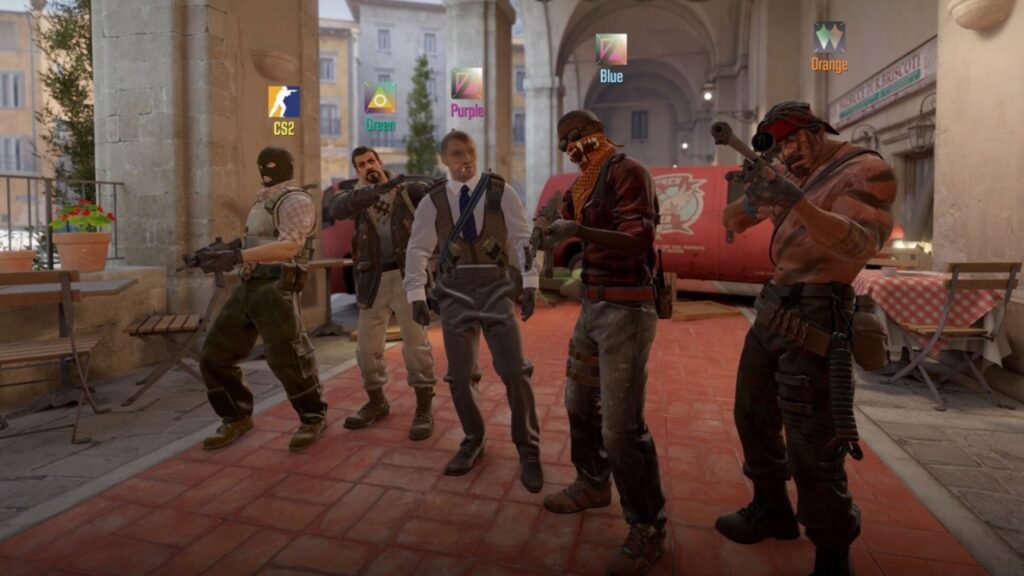
For many years, the skin market of Counter-Strike was not just some feature but was a global marketplace. The collectors poured in their savings within gloves and knives while watching pixelated assets rise faster than some of the stocks. They were more focused on profit margins and not planting in-game bombs. It created a distorted ecosystem.
The thrill of the gameplay in CS2 was secondary to the rare digital loot pursuit. However, Valve’s sudden decision to widen access to high-tier cosmetics now shows how fragile their illusion was. It challenges its community to remember that Counter-Strike is a competitive shooter, first and foremost.
The real money was tied to the digital rarity. As the rarity started to disappear, so did the perceived value of it. The players who built their investments over the years are now facing losses that are not measured in cents but 1000s of dollars. The market, as per reports, shrank by approximately. $2 billion in less than 24 hours.
The update didn’t just devalue the items fans collected. It shattered the trust. For the traders who used to see their accounts like mini-banks, the ability of Valve to alter the market rules overnight proved that the ownership that is outside its ecosystem is just conditional and reversible.
How did Valve tank its own skin market?
The update that was released on October 22, 2025, added some minor optimizations—return of the Retakes mode, performance tweaks and a few map fixes. Hidden below and in between those notes shared was the fuse—expanded Trade-Up Contract. Players can now trade the five Covert or the red-tier skins for the guaranteed gloves or knife.
Until then, the gloves and knives were near-mythic. They rarely dropped and often came from the loot boxes, which unlocked with the $2-$3 keys. It created an artificial scarcity that caused and fuelled years of speculation. It is by letting anyone convert the common Covert into the premium gear that Valve broke the scarcity wall, overnight.
With the open floodgates, Valve cratered. As reported by PriceEmpire, market capitalization slid to $4.25 billion from $6 billion in just a day, with a 30% nosedive. On the Buff163 platform of China, prices fell faster—some of the knives even dropped 60% before the Western markets caught up.
The Falchion Knife Gamma Doppler, which used to trade for over $300 on Steam, is now (as of writing) valued at $151.86 on Buff163. The collectors have liquidated the inventories before the further decline, accelerating the entire crash. The blue gem Karambit, the trader’s once-prestigious status symbol, has lost half of its value in just days.
What does Valve’s decision mean for the future of Counter-Strike 2?
Despite the uproar, Valve’s motivations might be calculated. For many years, the company has earned a reputation for the trades that were conducted on third-party websites like SkinPort and Buff163. It is by making the rare items now obtainable directly via Steam that Valve has been able to reclaim the activity as well as the fees within the closed ecosystem.
Now, this is not the first time that the developer undermined the in-game economy of it. Every change within designs reminds players that the community markets exist only at the discretion of Valve. Their ownership of skins feels absolute till one patch can rewrite their context.
Economically, ripple effects can reshape the Counter-Strike game. With the lower entry barriers, the game is now inviting new players who previously felt priced out of the flashy cosmetics. If Valve could just erase $2 billion with a patch (now close to $3 billion), what would stop another correction from coming tomorrow?
The message is quite simple—skin economies are just meant for fun and not for financial gain. Yet, it is after years of the marketplace culture that the principle might be too late to be restored.
What are the numbers behind the skin’s empire of Valve?
Even amidst all the chaos, the economy of CS2 is staggering. In 2023 alone, the players were able to open up approximately. 400 million cases worldwide. Every case needed a $2.50 key, creating more than $1 billion in direct sales of keys. There was also about $1.2 billion in the total marketplace profit when the transaction fee was factored.
Valve takes up 15% of the cut from all Steam sales—5% Steam fee and 10% game-specific. Every single trade and secondhand deal and all the relisted skin, they all deliver some micro-royalties to Valve. When looking into this view, it broadened access that is not generosity but a long-term strategy. Increased participants would mean more and more marketplace traffic—even the individuals’ skins would be worth less.
The exclusive control of the company also shields it from external audits. It fuels ethical debates around potential market manipulation and transparency.
Valve’s decision makes players experience loss overnight
While the profits continued to soar, the average player experience has declined. Be it performance instability, lack of gameplay depth or ongoing cheat issues, all have drawn criticism. The frame-time spikes reached 6 milliseconds. It doubled the average Valorant and created competitive disadvantages for precision shooters.
The updates have increasingly revolved around the cosmetics and not the content. As reported, one in 3 Premier League matches was plagued by the cheaters. For many, the update of October symbolized the misaligned priorities—economic micromanagement over the core gameplay.
The game, which was once built upon skill and competition, has now drifted towards monetization loops and the players they have noticed.
What other factors shape the skin values?
The future of the market hinges on many measurable trends. It includes,
- Game popularity. The shrinking player base has weakened the demand. There has been a more than 30% drop in the CS2 gaming’s active players from the 2023 peak.
- Market saturation. The new cosmetic floods, including the Trade-Up wave, have depressed old-items scarcity.
- Economic conditions. Global inflation has an impact on in-game spending. The leisure budgets fall before the luxury digital goods.
- Technology and visuals. All the graphical updates could make the older skin look obsolete. It can hurt resale.
- Gameplay changes. The tweak, no matter how small, that restricts visibility or trade could alter the perceived utility.
Historically, the CS2 market has shown a lot of resilience. It quite often recovered months after some major drops. Yet current corrections seem to be different— it is about trust and not demand, which is the missing commodity.
Can CS2 skin markets recover?
Considering reports, data and shared opinions of experts, short-term stabilization is possible with the new equilibrium prices now emerging. The analysts expect that the Western markets will mirror the Chinese valuations in weeks. However, this belief’s foundation, that the knife will hold value for many years, is just cracked.
In the long term, Valve could shift towards the fixed-price models that are seen in Valorant or Fortnite, abandoning some random loot mechanics. It will satisfy the regulators but will end (thrill as well as profit) the speculation. Also, if this occurs, the economy of CS2 might survive, but it will never be the same as before. The scarcity-based excitement will give way to predictability.
The patch from Valve was not a bug but a statement that games aren’t stock markets. Digital goods value exists only inside the controlled ecosystem of the developer. For the traders who treat virtual knives like currencies, that truth came with the $2 billion price tag and a lot of losing their lives.
The irony is, by crashing the market, Valve probably might have saved the game from being a speculative circus. To remind the players that CS2 is to be played and not traded, the company has sacrificed its short-term wealth to preserve its stability in the long term. Now, whether or not the investors will forgive them is a different story. For the rest of the community, it might be the reset that the Counter-Strike game needed.

